Skip to content
Tie-dye is eye-catching—but with so many T-shirt types available, picking the wrong cut can make even a great pattern look out of place.
Tie-dye T-shirts come in many forms: regular fit, oversized, vintage, boxy, crop, longline, fitted, slim, raglan, V neck, scoop neck, henley, boat neck, drop shoulder, cap sleeve, and long sleeve. Each type brings a different fit, feel, and aesthetic.
When I first started sourcing tie-dye tees for overseas buyers, I thought pattern was everything. But buyers rejected entire shipments because the shirt cuts didn’t match their brand identity. That’s when I learned: style matters just as much as color.
What are the main categories of tie-dye T-shirt styles?
How are they defined and what makes each one distinct?
Tie-dye T-shirts fall into core categories based on fit, sleeve construction, and neckline. The most common divisions include fit types, sleeve styles, and neck designs—each affecting how dye patterns are applied and perceived.
Understanding these categories helps brands build better assortments. Here’s how tie-dye T-shirts are typically categorized:
Fit Types
| Fit Type | Key Feature | Target Audience |
|---|---|---|
| Regular Fit | Balanced silhouette | All-purpose, general retail |
| Relaxed Fit | Looser body with structure | Lifestyle, comfort-focused |
| Oversized | Dramatically loose, dropped shoulder | Youth, streetwear |
| Slim Fit | Tapered torso, fitted arms | Smart casual, boutique men’s |
| Fitted | Body-hugging stretch fabric | Gymwear, dance, yoga markets |
| Vintage Fit | Cropped length, narrow shoulders | Retro collections |
| Boxy Fit | Wide body, short length | Modern streetwear, minimal |
| Longline | Extended hem, narrow fit | Urban, edgy, fashion-forward |
| Crop Top | Above-waist cut | Gen Z, festival fashion |
Each of these styles interacts with tie-dye patterns differently. For example, oversized shirts support large spirals, while fitted styles demand precise placement due to body contour.
Sleeve Styles
| Sleeve Type | Construction Detail | Tie-Dye Application |
|---|---|---|
| Short Sleeve | Standard shoulder-to-arm sleeve | Most versatile |
| Long Sleeve | Full arm, often with ribbed cuffs | Great for full-body designs |
| Raglan Sleeve | Diagonal seam from underarm to collar | Ideal for two-tone looks |
| Cap Sleeve | Minimal upper-arm coverage | Best for subtle spirals |
| Drop Shoulder | Seam falls lower on arm | Enhances gradient designs |
Sleeve shape determines how dye flows around the arms. Raglan, for example, gives more visual structure, while cap sleeves simplify the color story.
Neckline Variants
| Neckline Type | Shape Feature | Visual Focus |
|---|---|---|
| Crewneck | Rounded, close to the neck | Universal, safe choice |
| V Neck | Angular, tapers to the chest | Slimming, adds visual depth |
| Scoop Neck | Wider, rounded neckline | Soft and feminine |
| Boat Neck | Straight, shoulder-wide opening | Elegant and minimal |
| Henley | Crew base with a buttoned placket | Textured and vintage |
The neckline doesn’t just impact comfort—it frames the tie-dye artwork. A V neck works best with center-focused patterns, while scoop necks highlight shoulder gradients.
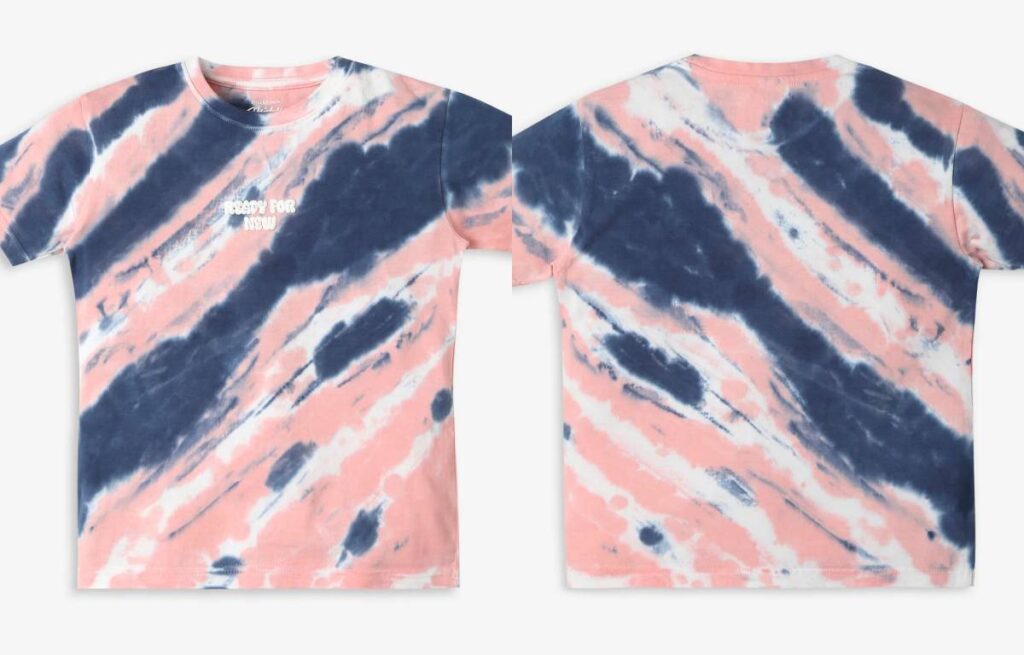
Regular Fit tie-dye T-shirt
What makes the Regular Fit tie-dye T-shirt a classic choice?
It’s the most common style, but is it always the best option?
The Regular Fit tie-dye T-shirt offers a balanced silhouette, suitable for most body types. It is popular in both retail and promotional wear due to its versatility and low return rate.
The Regular Fit tie-dye tee is often the first choice for brands who want mass appeal. It’s neither too loose nor too tight. Here’s a closer look at why it’s considered the “default” by many suppliers and buyers:
Fit and Construction
- Shape: Straight cut through the torso and sleeves
- Length: Falls around mid-hip, standard for most T-shirt patterns
- Neckline: Usually round-neck (crewneck), occasionally V-neck
- Sleeves: Short sleeves that end around mid-bicep
Why Buyers Choose Regular Fit
| Feature | Benefit for Buyer |
|---|---|
| Universal Sizing | Fewer returns due to bad fit |
| Easy to Stock | Works across multiple age groups |
| Cost-Effective | Lower MOQ and lower production waste |
| Fast Production | Simple pattern speeds up output |
Real Use Case Example
A Canadian client of mine — let’s call him Mark — runs a mid-size activewear brand. He tried several styles but came back to Regular Fit after receiving sizing complaints with slim fits. Since switching, his repeat order rate increased by 28%.
Style Adaptability
- Works well with most tie-dye patterns (spiral, crumple, stripe)
- Unisex appeal, making it easier for brands with mixed-gender customer bases
- Great for streetwear, festival wear, or everyday basics
Regular Fit is often the safest bet when introducing tie-dye to a collection. However, “safe” isn’t always the same as “best.” You need to consider your target audience, distribution channel, and product positioning.
How do other tie-dye T-shirt styles compare?
Beyond Regular Fit, each style brings its own vibe.
Other styles include Oversized, Cropped, and Slim Fit tie-dye T-shirts. Each one has different sizing specs and appeals to different target markets.
Oversized tie-dye tees, for example, are popular in youth-driven fashion circles, especially for the streetwear and skatewear scene. They offer an intentionally loose look, often worn layered over other garments.
Cropped tie-dye T-shirts are often aimed at female consumers or younger fashion audiences. They’re shorter in length and often have a raw hem, giving a more casual, edgy feel.
Slim Fit tie-dye T-shirts are designed for a closer, body-hugging look. They require more careful sizing but appeal to activewear and gym-focused brands due to their athletic silhouette.
Here’s a quick breakdown:
| Style | Ideal Audience | Fashion Niche | Risks |
|---|---|---|---|
| Oversized | Youth, Streetwear | Casual, Trendy | High returns if too loose |
| Cropped | Women, Gen Z | Festival, Lifestyle | Limited gender coverage |
| Slim Fit | Fitness, Athleisure | Sporty, Modern | Risk of fit complaints |
Choosing the right style depends on your brand DNA, audience, and margin strategy. Tie-dye is flexible—but the wrong fit can ruin the whole vibe.
Classic Crewneck tie-dye T-shirt

What makes the Classic Crewneck tie-dye T-shirt a timeless staple?
Why do so many brands rely on this basic yet iconic style?
The Classic Crewneck tie-dye T-shirt is the most versatile and widely accepted option. Its round neckline and mid-weight fabric work well for unisex collections, making it ideal for bulk orders.
The Classic Crewneck is often the first choice for brands entering the tie-dye space. It combines comfort, familiarity, and universal appeal. But there’s more depth here than meets the eye.
Design and Construction
- Neckline: Round, snug-fitting collar that holds shape after washing
- Body Fit: Slightly boxy, not too loose or tight
- Length: Standard hip-length
- Fabric: Typically 180–220 GSM cotton, ideal for dye absorption
- Color Hold: Better surface area for deep dye penetration
This structure gives you a stable foundation to showcase bright or intricate tie-dye patterns.
Why Crewneck Works in Tie-Dye
| Feature | Benefits for Tie-Dye Projects |
|---|---|
| Full front canvas | Enhances spiral, rainbow, and stripe patterns |
| Holds color evenly | Less blotching compared to other necklines |
| Unisex appeal | Reduces the need for gender-specific inventory |
| Dye-friendly seams | No puckering, smooth color flow |
Market Insights and Style Positioning
The crewneck style has historical roots in military undershirts from the early 1900s. Its simple neckline made it easy to produce and comfortable to wear. When tie-dye hit its peak in the ’60s and ’70s, the crewneck became a symbol of individuality.
Fast forward to now, it’s still the go-to style for screen-printing and DIY dyeing. Big brands continue using it because it’s scalable. In fact, over 60% of bulk tie-dye shirt orders I receive at Modaknits are for classic crewnecks.
What to Watch Out For
- Neck Rib Quality: Low-quality ribbing stretches out quickly after wash
- Shrinkage Rate: Check if it’s pre-shrunk or needs adjustments in sizing
- Collar Fit: Too tight feels outdated, too loose looks sloppy
You should also ask your supplier how the fabric reacts to different dyeing techniques—some crewnecks take better to reactive dyes than pigment dyes.
Use Cases in B2B Scenarios
For wholesalers and brand owners like my typical client Mark in Canada, crewnecks offer a great balance of cost and marketability. They’re easy to position in streetwear, activewear, or festival collections.
You can also use them in multi-drop capsule releases—changing only the tie-dye pattern while keeping the base cut consistent.
How do other necklines and fits influence tie-dye results?
The cut of the shirt affects not just the look, but also the dye performance.
Other options like V-necks, scoop necks, and sleeveless designs each interact with dye patterns differently. The shape of the shirt changes how color flows and settles.
For example, V-necks create natural focal points where the dye pulls inward. This changes how a spiral or stripe pattern looks. Scoop necks offer more space around the collar, but risk distortion if the stitching is low-quality.
Here’s a side-by-side comparison:
| T-Shirt Style | Pattern Impact | Common Use Case |
|---|---|---|
| V-Neck | Centered patterns shift | Boutique women’s collections |
| Scoop Neck | More dye space at chest | Casual lifestyle brands |
| Muscle Cut | Dye absorbs unevenly | Fitness or beachwear |
While these variations are trendy, they also carry more risk in bulk dyeing. Uneven seams, loose collars, or poor stitching can ruin the finish. Crewneck avoids many of these issues, making it the most stable option for scaling.
Standard Relaxed Fit tie-dye T-shirt

Why is the Standard Relaxed Fit tie-dye T-shirt so popular in today’s market?
Comfort trends are rising, but what makes this style a consistent top performer?
The Standard Relaxed Fit tie-dye T-shirt has a looser cut than regular fits, offering more room in the sleeves and body without looking oversized. It combines comfort with a clean look that appeals to a broad audience.
This fit is especially effective for brands targeting lifestyle, resort, or loungewear markets. It strikes a balance between structure and softness, which is why many buyers—like my North American clients—are shifting away from tighter silhouettes.
Fit Breakdown
- Body Shape: Looser through chest and waist, but not baggy
- Sleeves: Slightly wider and longer, offering more coverage
- Length: Often 1–2cm longer than regular fit for better layering
- Neckline: Still uses crewneck, but may be slightly wider for comfort
- Fabric: Works best with mid- to heavyweight cotton blends (200–240 GSM)
This fit is ideal for all body types, which makes it easier to manage inventory with fewer size complaints.
Why Brands Choose Relaxed Fit
| Factor | Benefit for Wholesale Buyers |
|---|---|
| Increased comfort | Matches current consumer preference for loose fits |
| Better movement | Ideal for lifestyle and casual wear collections |
| Fewer returns | Reduces complaints about tight shoulders or sleeves |
| Broad appeal | Works well for both men’s and women’s collections |
Trend Alignment
Consumer data in North America and Western Europe shows a shift toward “relaxed living” fashion. This includes looser tops, soft color palettes, and breathable fabrics. Relaxed-fit tie-dye T-shirts fit perfectly into this narrative.
My own clients in Canada often source relaxed-fit tie-dye as part of resortwear lines or casual capsule drops. The style is easy to match with shorts, joggers, or yoga pants—especially when using pastel or earthy tie-dye tones.
Pattern Compatibility
- Spiral and crumple dye patterns hold well due to the flat surface
- Less distortion during dyeing compared to oversized styles
- Better dye penetration because the fabric is not stretched tight
Relaxed-fit pieces also have fewer issues with color bleeding around seams. That’s a big plus when working with multi-tone tie-dye designs that require clean color transitions.
Things to Consider Before Bulk Ordering
- Size Grading: Make sure your supplier offers a consistent grading scale
- Fabric Shrinkage: Relaxed fits can become too loose if fabric isn’t pre-shrunk
- Stitch Quality: Loose fits expose stitching more—low-quality seams will show
Also, keep in mind that not every relaxed fit is truly “standard.” I’ve seen factories use the term loosely, which causes confusion. Always request a size spec sheet before sampling.
Use Case: Yoga and Lounge Brands
Many of my yoga-focused clients use this fit for both men’s and women’s lines. One buyer created a “cloud dye” series using a relaxed fit and pastel shades. It became their most profitable product of the season—mainly because customers wanted something easy to wear after workouts or during casual weekends.
What are the risks of using other fits for relaxed-style collections?
Other fits may look similar but don’t always deliver the same wearability.
Oversized styles can overwhelm smaller frames, while slim fits often restrict movement. Only the standard relaxed fit offers the balance needed for broad market acceptance.
Oversized T-shirts are often associated with youth culture and streetwear. They work in fashion-driven contexts but not always in mass-market collections. Too much fabric can cause issues during dyeing, like uneven saturation or color pooling.
On the other hand, slim fits are difficult to size correctly. Minor variations in body type can cause major fit issues—especially in wholesale.
Here’s how the fits compare:
| Fit Type | Comfort Level | Dyeing Stability | Target Market |
|---|---|---|---|
| Relaxed Fit | High | High | Lifestyle, Yoga, Lounge |
| Oversized Fit | Medium | Low | Streetwear, Gen Z |
| Slim Fit | Low | Medium | Activewear, Boutique |
When you need scalability, lower return rates, and consistent dye results, the standard relaxed fit is the safest choice.
Vintage Fit tie-dye T-shirt
What defines the Vintage Fit tie-dye T-shirt and why is it trending?
Why do fashion-forward buyers keep asking for this old-school style?
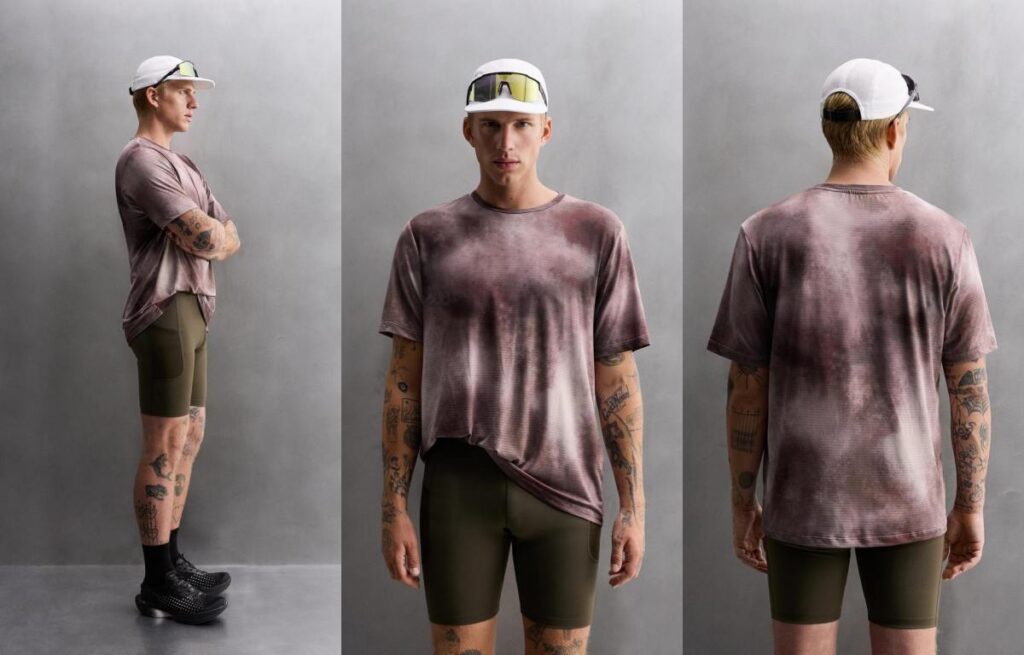
The Vintage Fit tie-dye T-shirt is slightly cropped, narrower at the shoulders, and features a broken-in feel. It mimics T-shirts from the ’80s and ’90s, appealing to retro-inspired fashion markets.
This style is not just about the cut. It’s also about fabric treatment and visual tone. Vintage Fit pieces are often garment-dyed or stone-washed after tie-dyeing to give them a softer, faded look. That adds character and authenticity—two things fashion buyers love.
Key Features of Vintage Fit
- Shorter body length: Often hits right at the waist
- Slightly boxy: Wider in the chest, tighter around the arms
- Tighter neckline: Smaller collar diameter than regular crewnecks
- Washed-down color palette: Soft, muted tones vs bold neon
- Fabric texture: Usually pre-washed or enzyme-washed for a lived-in feel
This fit is less about comfort and more about aesthetic. It’s not made for workouts or loungewear—it’s designed to look cool.
Appeal for Niche Fashion Buyers
| Feature | Buyer Advantage |
|---|---|
| Retro silhouette | Appeals to Gen Z and millennial trends |
| Aged fabric look | Adds perceived value to basic items |
| Layer-friendly proportions | Works with high-rise jeans or jackets |
| Visual uniqueness | Differentiates from mass-market basics |
I’ve seen increasing demand for this style from boutique owners in Australia and Canada. Many are launching capsule collections that lean into the Y2K and vintage revival trends. This fit helps them stand out in a sea of standard T-shirts.
Tie-Dye Application for Vintage Fit
This part is key: the way tie-dye interacts with the fabric is different due to washing and texture. Here are some insights:
- Garment dyeing after tie-dye creates a blended, faded effect
- Pigment dyeing works best—reactive dyes tend to be too bold for this look
- Stone-washing helps soften both color and hand-feel
You’ll often see these shirts with spiral, reverse, or crumple patterns—but with lower color contrast. Think more dusty lavender and faded navy, less neon pink and lime green.
Risks, Opportunities, and Production Notes
Risks
- Sizing Confusion: Customers may think it’s too small if they expect a regular fit
- Color Inconsistency: Wash treatments can cause variation across batches
- Higher Cost: Extra finishing (enzyme wash, stone-wash) increases unit cost
Opportunities
- Perfect for capsule collections
- Can be upsold as “premium vintage dye” products
- Great for online stores with strong visual branding
Sourcing Checklist for Buyers
| Checklist Item | Why It Matters |
|---|---|
| Confirm post-dye wash process | Impacts softness and shrinkage |
| Check pre-shrunk label claims | Vintage fits often run small |
| Ask for lab dips or swatch tests | Avoid color surprises across batches |
| Confirm shoulder width and body spec | Prevent customer returns on sizing |
If your market values aesthetics over athletic performance, vintage fit is a solid pick. It’s not for every collection, but when used right, it adds a strong visual identity.
How does Vintage Fit compare to other tie-dye T-shirt cuts?
Can you mix this style with relaxed or oversized fits?
Vintage Fit is more fashion-forward than relaxed or regular fits. It prioritizes visual design over comfort or function, making it best suited for curated collections rather than mass-market products.
Let’s look at how it compares:
| Fit Type | Style Focus | Comfort Level | Dye Suitability | Ideal Audience |
|---|---|---|---|---|
| Vintage Fit | Aesthetic & vibe | Medium | Pigment dye best | Gen Z, fashion lovers |
| Relaxed Fit | Comfort & ease | High | Most dyes work | Unisex, lifestyle wear |
| Regular Fit | Balance & scale | High | All dyes | General retail market |
This style isn’t for everyone—but if you’re selling to fashion-conscious markets, it offers great differentiation and value.
Oversized tie-dye T-shirt
What makes the Oversized tie-dye T-shirt a top seller for fashion-forward brands?
Why does “bigger” often mean “better” in tie-dye collections?
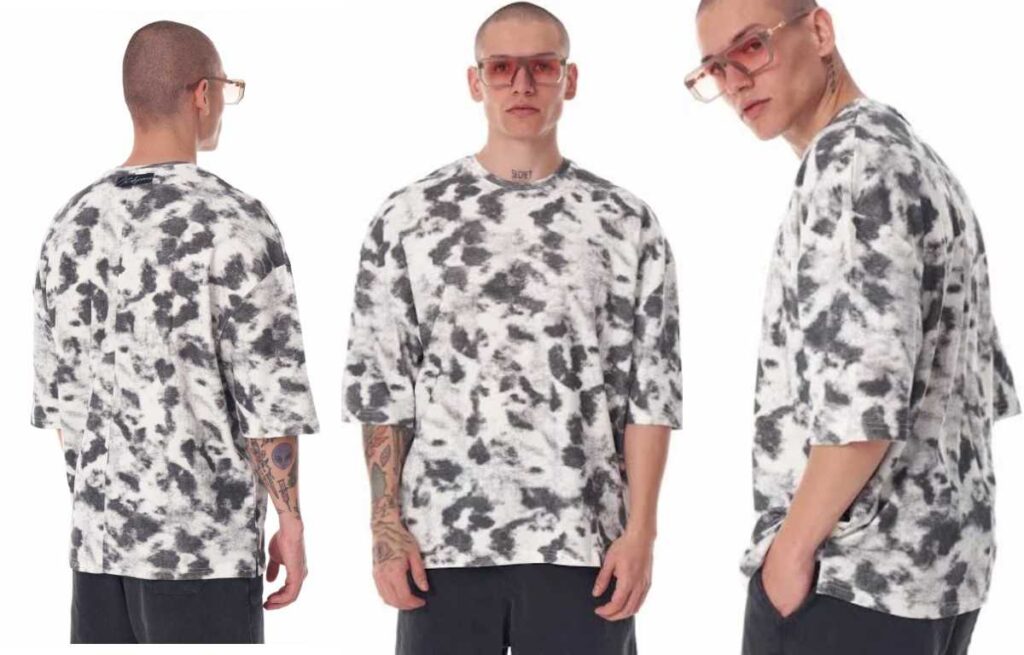
Oversized tie-dye T-shirts offer a loose, roomy fit that adds movement and drama to the dye pattern. They’re favored in streetwear and youth markets for their trendy, laid-back style.
Oversized doesn’t just mean “big.” It’s a specific silhouette with dropped shoulders, long sleeves, and a straight-cut body. This style lets tie-dye patterns expand and stretch across more fabric space—creating visually bold pieces that catch attention.
Key Features of Oversized Fit
- Dropped shoulders: Shoulder seam falls lower, near the upper arm
- Longer sleeves: Often reach to or past the elbow
- Extra body width: Offers airiness and movement
- Straight cut: Hangs away from the body instead of hugging it
- Longer torso: Usually extends 3–5 cm longer than regular fit
Why Streetwear and Youth Brands Prefer It
| Advantage | Market Benefit |
|---|---|
| Maximizes pattern space | Ideal for big spirals and gradient tie-dye |
| Layer-friendly | Works over hoodies, tanks, or long sleeves |
| Gender-neutral design | One style fits multiple demographics |
| Casual silhouette | Matches Gen Z fashion aesthetics |
My clients from Western Europe love this style for capsule drops. One streetwear brand in the UK recently launched a limited-edition tie-dye oversized line and sold out within days. The key? They paired oversized cuts with loud, swirling tie-dye designs that couldn’t be missed.
How Oversized Affects Tie-Dye Outcome
- Better visual flow: More space means larger spirals and fewer fold marks
- Less distortion: Fabric lays flatter during dyeing, especially with batch production
- Higher ink absorption: Due to the use of heavier or looser-weave cotton
But oversized also has its challenges. If the fabric is too thick, colors might not penetrate fully during dyeing. And poor pattern folding can lead to uneven results.
What to Watch For in Production
Oversized Fit: Quality Checklist
| Quality Factor | What to Confirm |
|---|---|
| Stitch durability | Reinforced seams prevent drooping after washes |
| Fabric weight | Aim for 220–240 GSM to balance drape and color |
| Colorfastness | More fabric = more dye = higher fading risk |
| Size chart accuracy | Oversized cuts can vary greatly across factories |
Also, remember that oversized shirts require more dye per piece. That increases dyeing cost and can cause color variations if not managed properly. Make sure your supplier has experience with oversized dyeing procedures.
Potential Challenges
- Storage issues: Bulkier when folded or packed
- Size perception: Some buyers confuse oversized with wrong sizing
- Return risk: Higher among older or more conservative customers
That’s why oversized tie-dye works best in streetwear, youth culture, and event merchandise—not necessarily in formal or corporate apparel lines.
Design Tips for Oversized Tie-Dye
- Use bold patterns like spiral, stripe, and rainbow swirl
- Combine pastel colorways with clean, oversized cuts for gender-neutral looks
- Consider adding graphics or logos in the center chest or oversized back
How does Oversized compare with other fits in terms of visual impact?
Is oversized always better for statement pieces?
Oversized tie-dye T-shirts offer the most canvas for visual expression, but they don’t suit every collection. Other fits offer structure or retro charm—oversized is all about boldness.
Here’s how they compare:
| Fit Type | Dye Pattern Compatibility | Fashion Style | Target Age Group |
|---|---|---|---|
| Oversized Fit | Excellent for large designs | Streetwear, Festival | Teens to early 30s |
| Regular Fit | Balanced for all patterns | Everyday Casual | All ages |
| Relaxed Fit | Great for soft gradients | Lounge, Resortwear | Mid-20s to 40s |
| Vintage Fit | Faded or muted tones | Retro, Boutique | 20s to 30s |
Oversized is not a “one size fits all” solution. But for trend-driven drops and expressive tie-dye art, it’s often the strongest choice.
Boxy tie-dye T-shirt
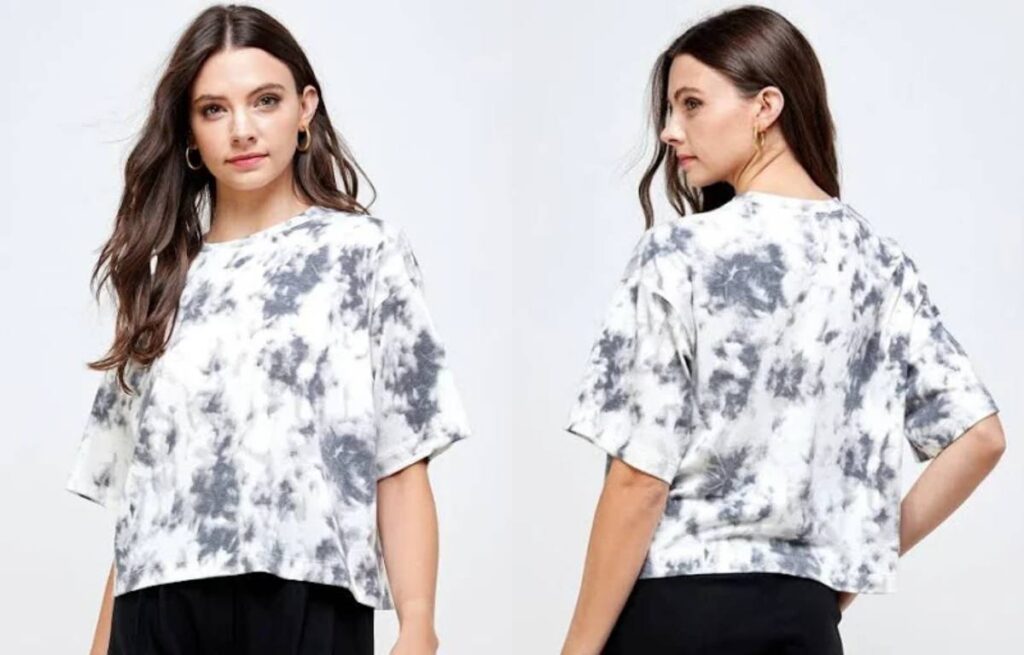
What makes the Boxy tie-dye T-shirt a standout in minimal streetwear collections?
It looks simple, but what makes it work so well in curated apparel drops?
The boxy tie-dye T-shirt features a wide, short-cut body with dropped shoulders and a clean, angular shape. It offers a modern, unisex look that works well with abstract and muted tie-dye designs.
Boxy fits aren’t new, but they’ve become increasingly popular in fashion circles focused on minimalism, gender-fluid styling, and clean design. When combined with tie-dye, this structure softens the wildness of color with a sharp silhouette.
Key Features of Boxy Fit
- Wider body: Straight lines from armpit to hem
- Shorter torso: Usually cropped or waist-length
- Dropped shoulder seams: Adds horizontal volume
- Loose sleeves: Often shorter but cut wider for balance
- Structured collar: Often reinforced to hold shape
This gives the wearer a square, relaxed outline that feels deliberate—not sloppy.
Why It’s Ideal for Fashion-Driven Tie-Dye
| Strength | Why It Matters in Tie-Dye Apparel |
|---|---|
| Balanced proportion | Keeps loud dye patterns from overwhelming body |
| Modern aesthetic | Matches current design trends |
| Gender-neutral appeal | One cut works for all genders |
| Easy to layer | Perfect over tanks or fitted long sleeves |
Many of my wholesale clients in North America and Europe use boxy fits for “drop collections”—limited edition releases focused on artistic branding. They’re not targeting mass appeal, but niche consumers who want shape and style that’s out of the ordinary.
How does the Boxy fit influence dye technique and visual layout?
It’s not just the shape that matters—the fit also affects how the dye looks and spreads.
Boxy fits provide a more controlled surface for dye application. Their flat, symmetrical shape allows for clean color blocks, central spirals, or subtle gradients.
Here’s a closer breakdown of how tie-dye techniques interact with boxy construction:
Dye Behavior on Boxy Silhouettes
- Flatter torso panel: Easier to fold evenly for geometric patterns
- Straight seams: Less distortion around arms and waist
- Shorter length: Works well with centered or upper-body designs
- Fabric handling: Boxy tees are easier to batch dye and dry flat
This makes them ideal for design techniques like:
- Two-tone split dye
- Center spiral with empty bottom half
- Reverse tie-dye (bleach based)
- Vertical or horizontal line folds
Because the boxy tee isn’t long or tapered, you avoid problems like color “bunching” near the hem or underarms. The structure keeps everything evenly laid out.
What Buyers Should Watch For
Critical Factors in Boxy Tie-Dye Production
| Factor | Details to Confirm |
|---|---|
| Shrinkage control | Cropped styles lose shape fast when over-dried |
| Neckline construction | Needs to hold up after multiple washes |
| Shoulder alignment | Asymmetry ruins clean geometric dye patterns |
| Fabric weight | Best range is 200–240 GSM for stiffness + dye |
Boxy tees often look “premium” because of their shape and drape. But not all factories know how to cut and dye them correctly. I always recommend sampling one size up and one size down to test proportions before bulk production.
Business Considerations
- Pricing Strategy: Boxy fits can be positioned as high-end
- Marketing Angle: Use phrases like “sculptural,” “structured,” “genderless”
- Target Market: Works best with Gen Z, creatives, and urban trendsetters
I’ve helped multiple clients brand boxy tie-dye T-shirts as part of “artwear” collections. These aren’t pieces for working out or lounging—they’re statement items, meant to be styled, layered, and noticed.
How does Boxy fit compare to other tie-dye T-shirt styles in terms of trend alignment?
Is it more fashion-forward than functional?
Boxy fits lean toward style and visual appeal over comfort or function. They’re best used in curated collections, fashion drops, and social media-driven campaigns—not mass basics.
Let’s compare:
| Fit Type | Visual Control | Dye Complexity | Trend Alignment |
|---|---|---|---|
| Boxy Fit | High | Moderate | High-fashion, Urban |
| Oversized Fit | Medium | High | Youth, Streetwear |
| Relaxed Fit | Low | Easy | Lifestyle, Wellness |
| Regular Fit | Medium | Easy | Everyday Casual |
In the right market, boxy tie-dye T-shirts can feel artistic and edgy. But outside of that niche, they might confuse buyers who expect longer, more traditional cuts.
Longline tie-dye T-shirt
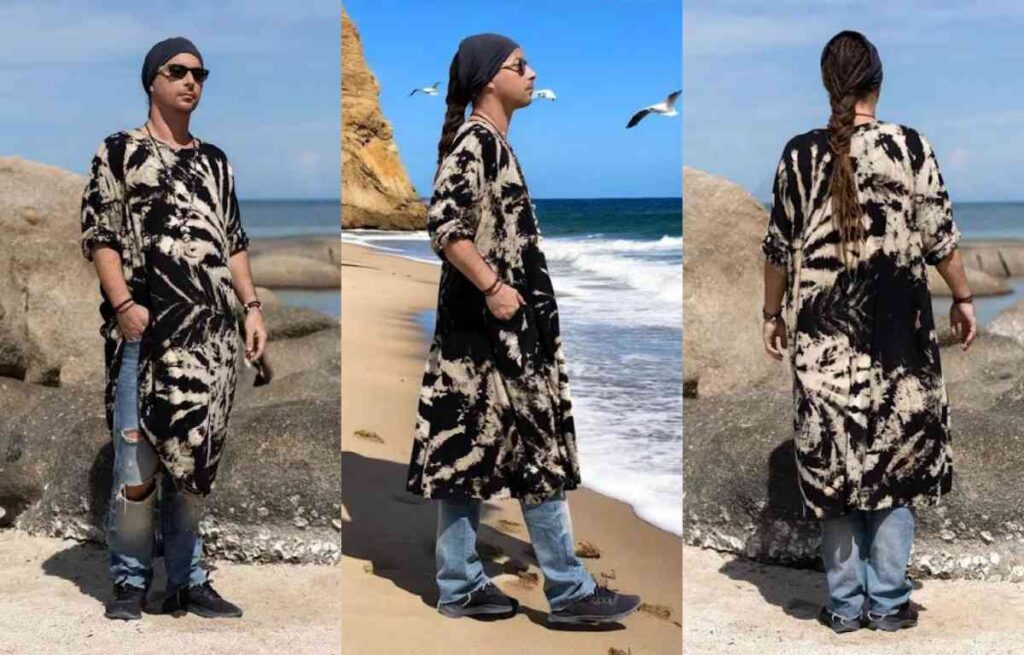
What makes the Longline tie-dye T-shirt a unique addition to your product line?
Why does added length make such a big difference in how a tie-dye shirt performs?
The longline tie-dye T-shirt features an extended torso and often curved hems, creating a sleek silhouette. It’s ideal for layering and pairs well with vertical or ombré dye patterns.
This fit appeals to trend-focused brands in streetwear, festival fashion, and influencer-led online collections. It’s not only about coverage—it’s about building shape, movement, and impact into a basic product.
Key Features of Longline Fit
- Extended length: Usually 6–10 cm longer than regular fit
- Curved or drop tail hem: Adds flow and shape
- Slim or tailored side seams: Prevents a baggy look
- Tapered shoulders: Keeps proportions balanced despite the added length
Many longline tees also use side slits, step hems, or raw finishes to enhance the silhouette.
Why It Works So Well With Tie-Dye
| Design Element | Benefit in Tie-Dye Context |
|---|---|
| Longer fabric panel | Perfect for vertical or ombré dye techniques |
| Fluid movement | Enhances the flow of crumple or stripe effects |
| Layer-friendly shape | Ideal for festival styling or winter drops |
| Versatile sizing appeal | Works across unisex and extended size ranges |
I’ve helped clients in Canada and Australia launch longline tie-dye collections during summer drops. Their most successful SKUs were those with curved hems and muted pastel dye work—easy to wear but visually distinct.
How does the Longline fit affect tie-dye pattern application and production?
Does the added length require new dyeing techniques?
Longline shirts allow for larger dye designs and require careful folding and soaking to maintain pattern consistency. They’re ideal for vertical fades, gradient ombrés, and central stripe effects.
Here’s how longline dimensions influence production:
Tie-Dye Considerations
- Folding Style: Requires longer accordion or vertical fold layouts
- Soaking Time: Longer fabric length means more saturation time needed
- Drying Technique: Needs flat drying racks to prevent dye shift toward the hem
- Color Balance: Dye can settle unevenly near drop hems without proper technique
Longline is also great for reverse tie-dye methods (using bleach or color removal), especially when targeting a streetwear or alternative fashion audience.
What to Plan Before Scaling Production
Quality Control Points
| Element | Why It’s Important |
|---|---|
| Hem stitching | Longer cuts increase stress on lower seams |
| Fabric stretch | Mid-weight cotton blends work best (200–240 GSM) |
| Pre-shrunk treatment | Length shrinkage can ruin the silhouette |
| Pattern scaling | Needs proportional pattern guides for consistency |
I’ve seen factories mess this up by treating longline tees like regular T-shirts—resulting in awkward dye gaps, faded bottoms, or curled hems. Don’t skip the pre-sample stage for this style.
Market Positioning
- High-value item: Can be priced as a premium streetwear piece
- Niche appeal: Works for curated or influencer-led collections
- Visual storytelling: Great canvas for symmetrical or narrative dye patterns
Longline pieces also shoot well for e-commerce. The extra fabric gives better photo flow, especially with movement shots or back-view images.
How does Longline compare to other fits for tie-dye applications?
Is it more versatile or more specialized?
Longline fits are more specialized than regular or relaxed fits, but offer better pattern opportunities and style depth. They’re ideal for trend-conscious buyers.
Here’s a direct comparison:
| Fit Type | Visual Impact | Pattern Flexibility | Market Appeal |
|---|---|---|---|
| Longline Fit | High | Moderate-High | Fashion-forward, Gen Z |
| Relaxed Fit | Medium | High | Everyday, Unisex |
| Boxy Fit | High | Medium | Artistic, Niche |
| Regular Fit | Balanced | High | Mass Market, Safe |
Use longline for collections that need drama, depth, and a vertical story. It’s not your everyday basic—but it makes basics look elevated.
Drop Shoulder tie-dye T-shirt
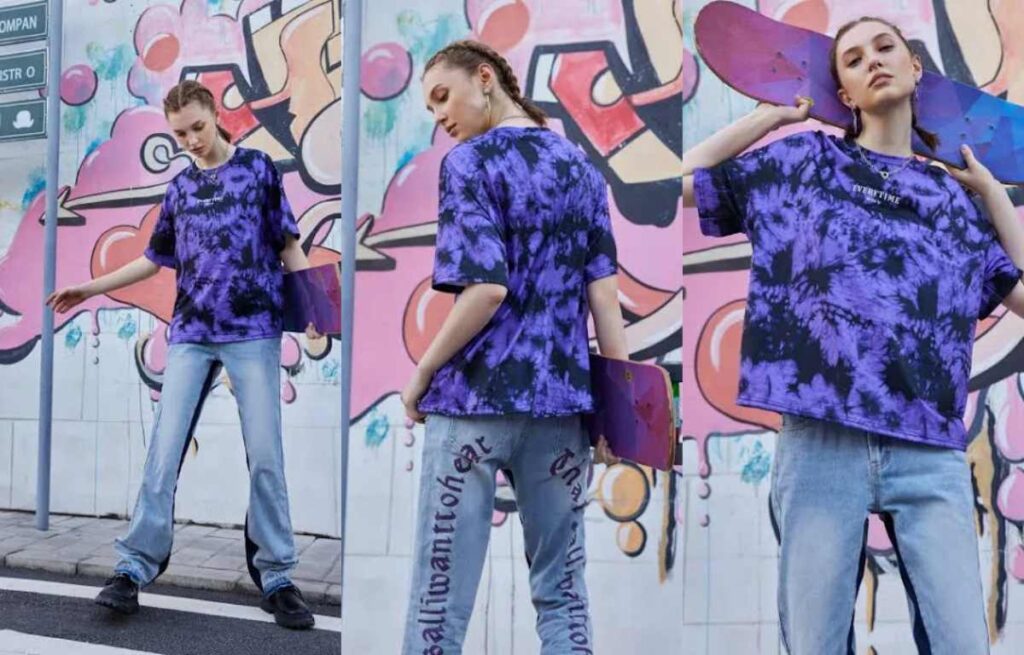
What makes the Drop Shoulder tie-dye T-shirt a must-have in modern casualwear?
Why does this small structural shift matter so much?
The drop shoulder tie-dye T-shirt shifts the shoulder seam lower, creating a slouchy, relaxed look. It enhances casual styling and provides a broader canvas for smooth dye transitions.
This subtle design tweak aligns with today’s comfort-first fashion movement. It’s popular among Gen Z consumers, yoga-focused brands, and laid-back streetwear labels. While it may seem like just a stylistic choice, the drop shoulder affects fit, fabric behavior, and even the final dye result.
Key Characteristics of Drop Shoulder Fit
- Shoulder seam placement: Falls 2–5 cm below the natural shoulder line
- Wider sleeves: Often shorter in length but broader in shape
- Looser upper chest: Adds to the unstructured silhouette
- Flat side panels: Great for achieving clean dye patterns
- Balanced hem: Usually regular length, but sometimes paired with boxy or longline cuts
Functional Advantages in Tie-Dye Production
| Feature | Tie-Dye Benefit |
|---|---|
| Wider upper body | Allows for smoother color gradients |
| Seam placement | Avoids heavy dye pooling at natural folds |
| Shoulder volume | Enhances abstract or freestyle patterns |
| Flat drape | Easier to fold for symmetrical effects |
Clients who use drop shoulder tees often push for color combinations that feel calm, grounded, and organic—like beige, sage, dusty rose, or vintage indigo. These shades pair well with the natural “slouch” of the design.
How does Drop Shoulder construction influence tie-dye pattern techniques?
Is the dye result noticeably different?
Yes. Drop shoulder construction creates a flatter upper panel, making it easier to apply dye evenly across the shoulders, chest, and back. This reduces pattern distortion and color pooling around seams.
Here’s how this plays out in production:
Pattern Flow on Drop Shoulder Tees
- Better symmetry: Perfect for center-based spiral or mandala designs
- Improved blending: Colors move more naturally across the chest and sleeves
- Reduced warping: Fewer tension points than set-in sleeve constructions
- Neater armhole coverage: Dye has less tendency to “bleed out” of pattern
One buyer I work with in the lifestyle niche prefers this cut for pastel ripple patterns. She said it helped eliminate 30% of the uneven dyeing issues she had with traditional crewnecks.
Technical & Strategic Considerations
Key Production Notes
| Element | Why It’s Important |
|---|---|
| Sleeve angle | Affects how dye travels from shoulder to cuff |
| Fabric tension | Less stretch near seam = more uniform dyeing |
| Sample folding | Should test vertical + radial patterns for effect |
| Fabric weight | 200–220 GSM ideal for drape + color absorption |
Another important note: not all drop shoulder tees are created equal. Some are more oversized, some more tailored. Always ask for flat measurements and shoulder drop distance when placing orders.
Strategic Use Cases
- Yoga and wellness brands: Adds softness and fluidity to the look
- Streetwear capsules: Works with muted or hand-dyed techniques
- Eco-conscious collections: Natural cut pairs well with organic dyes
These tees also photograph well—especially when draped on diverse body types. The looseness of the shoulder cut creates dynamic folds and subtle color shadows that pop on camera.
How does Drop Shoulder compare with other tie-dye-friendly fits?
Is it more versatile than it looks?
Drop shoulder fits offer the softness of relaxed fits with the structure of boxy cuts. They’re not as bold as oversized, but more expressive than regular fits—making them a great middle ground.
Here’s a detailed comparison:
| Fit Type | Structure | Dye Compatibility | Aesthetic Appeal |
|---|---|---|---|
| Drop Shoulder | Semi-structured | High | Soft, casual, modern |
| Regular Fit | Structured | High | Clean, all-purpose |
| Oversized | Unstructured | Medium-High | Youth, bold, expressive |
| Boxy | Structured | Medium | Artistic, cropped style |
Drop shoulder is a versatile fit, great for both minimalist branding and expressive tie-dye designs. It creates softness in look and comfort in feel—something today’s buyers truly value.
Crop Top tie-dye T-shirt
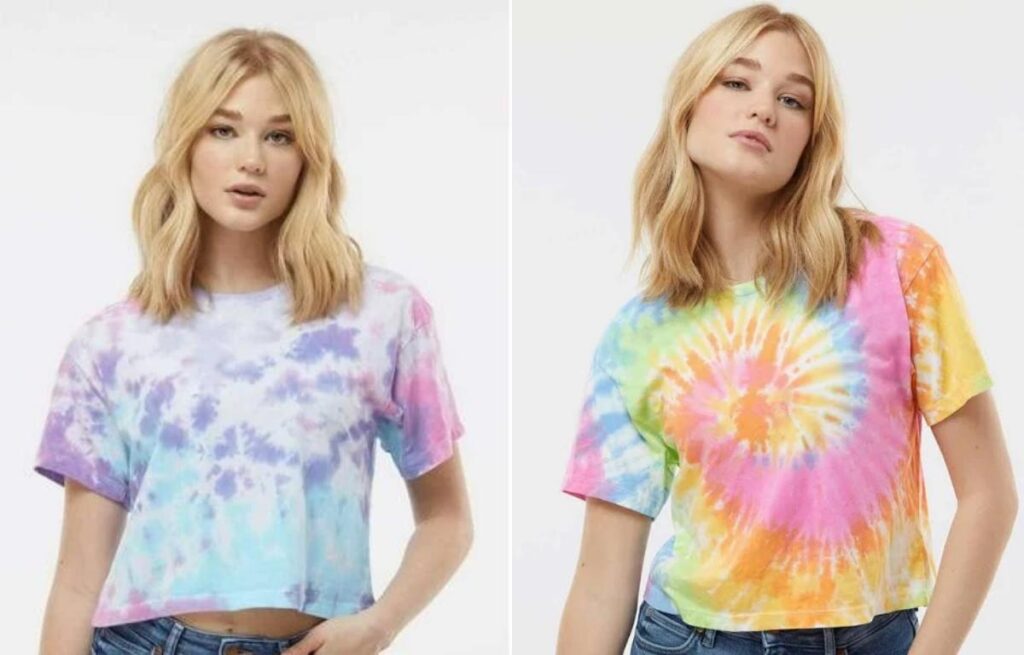
Why is the Crop Top tie-dye T-shirt a favorite in youth and festival fashion?
What gives this short silhouette such strong market appeal?
The crop top tie-dye T-shirt is cut above the waist, exposing the midriff and highlighting the dye work around the chest and sleeves. It’s trendy, eye-catching, and ideal for summer or festival-ready collections.
This style blends bold color with body positivity. It’s popular among young women and gender-fluid fashion audiences, especially in North America and Australia. Often paired with high-waisted bottoms, it creates a sharp fashion contrast.
Key Features of Crop Top Fit
- Shortened torso: Typically ends 5–10 cm above the waist
- Straight or raw hem: Some finished, others left raw for edge
- Sleeve variation: Cap sleeves, short sleeves, or even sleeveless
- Snug fit options: Some use stretch blends for a tighter profile
- High necklines: Often kept traditional to balance the shorter body
This shape works best when combined with high-contrast or detailed tie-dye techniques that focus visual attention on the upper chest and shoulders.
Design & Retail Advantages
| Feature | Retail Benefit |
|---|---|
| Visual upper-body focus | Enhances logo placement or symmetrical patterns |
| Minimal fabric use | Lower cost per unit in dyeing + sewing |
| Festival-ready vibe | Easy to market with bold styling |
| Fast-moving trend | Ideal for seasonal or capsule collections |
One of my activewear clients uses cropped tie-dye tees in their post-workout loungewear set. By keeping the tie-dye soft and pairing it with matching high-waist leggings, they created a relaxed but on-trend ensemble that sells especially well online.
How does the Crop Top shape impact tie-dye technique and presentation?
Does less fabric change how dye behaves?
Yes. Crop tops limit the amount of dyeable surface, so placement becomes more strategic. Designs focus on upper-body symmetry, and any mistake in color blending becomes more visible.
Here’s how the structure affects dye work:
Dye Techniques Best Suited for Crop Tops
- Spiral patterns centered on the chest or shoulder
- Stripe or “V” folds that emphasize the neckline and sleeve edges
- Pastel crumple or cloud dye for subtle, wearable looks
- Bleach reverse dye over black or navy bases for bold contrast
Because crop tops often use thinner fabric or blends (180–200 GSM), they absorb dye faster but may require gentler washing and setting procedures.
Sourcing and Production Tips
Key Considerations Before Placing Orders
| Detail | What to Check |
|---|---|
| Hem finish | Raw hems save money but can curl excessively |
| Fabric composition | Stretch blends need special dye handling |
| Size range | Crop tops can fit inconsistently across sizes |
| Print placement control | Smaller area means tighter print alignment |
Crop tops are also popular for influencer marketing and TikTok-ready visuals. The cut naturally draws attention in photos and videos—especially when paired with movement or dramatic lighting.
Market Segmentation Strategy
- Target age: 16–30
- Main channels: Instagram shops, e-commerce stores, and summer pop-ups
- Best seasons: Spring and summer, with extended sales during festival season
- Price positioning: Slightly higher per gram due to trend-driven appeal
How does the Crop Top compare to other tie-dye T-shirt styles in branding flexibility?
Is it more limited or more expressive?
Crop tops are more expressive than regular fits but less flexible in audience reach. They serve niche markets very well, especially when combined with bold visuals and lifestyle branding.
Here’s a side-by-side comparison:
| Fit Type | Branding Style | Visual Impact | Audience Range |
|---|---|---|---|
| Crop Top | Trendy, Youthful | High | Gen Z, Festival Fashion |
| Oversized | Bold, Streetwear | Very High | Gen Z to early 30s |
| Regular Fit | Clean, Universal | Medium | All ages |
| Relaxed Fit | Chill, Lifestyle | Medium-High | Adults, unisex buyers |
Crop tops work best in trend-aware, fast-moving fashion environments. They’re perfect for visual storytelling—but not for every market.
Fitted tie-dye T-shirt
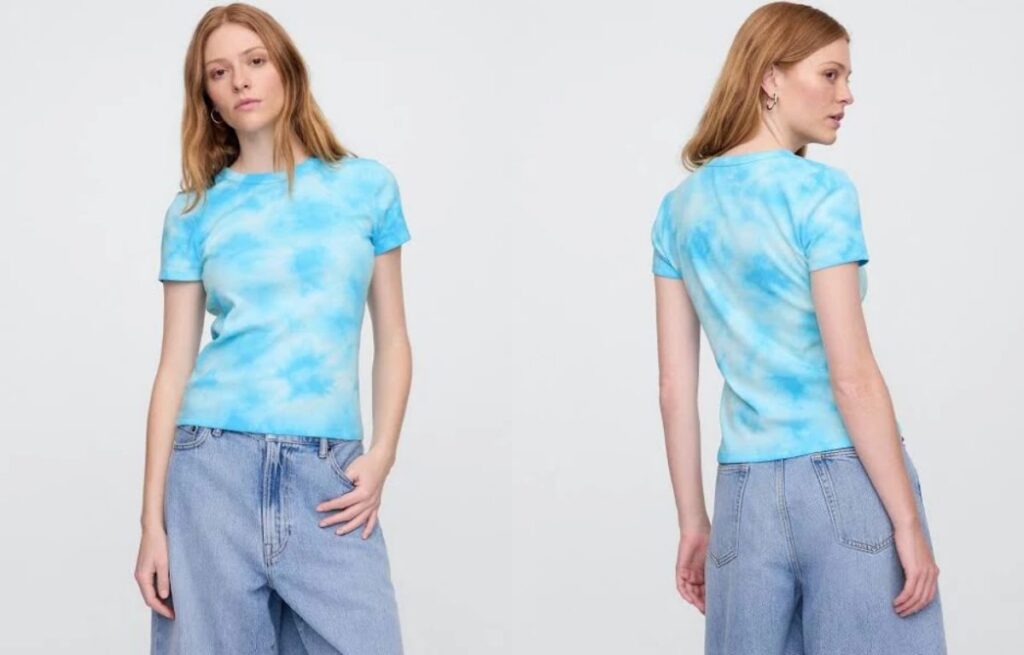
Why is the Fitted tie-dye T-shirt a strong choice for active and fashion-forward markets?
Can something this tight still show off the dye work?
The fitted tie-dye T-shirt follows the natural lines of the body. It’s often made with stretch-blended fabrics and works well in activewear, streetwear, and modern fashion capsules.
This cut is popular among brands selling to gym-goers, dancers, and fashion buyers who prefer form-fitting silhouettes. When done right, the dye enhances—not overwhelms—the shape.
Key Characteristics of Fitted Fit
- Snug through chest and waist: Often uses spandex blends (like 95/5 cotton/elastane)
- Shorter sleeves: Usually sit tighter around the biceps or upper arm
- Defined side seams: Create a sculpted visual line
- Shorter torso length: Falls just below the beltline, not oversized
- Crewneck or scoop neck: Both work, depending on target market
Some fitted tees are double-stitched at the hem and collar to maintain shape after repeated stretching and washing.
Why Brands Choose Fitted for Tie-Dye
| Feature | Benefit in Retail Context |
|---|---|
| Clean silhouette | Allows dye to follow body shape cleanly |
| Stretch fabric options | Adds comfort, supports movement |
| High perceived value | Looks tailored and premium |
| Styling flexibility | Can be casual or activewear |
In many of my wholesale orders, the fitted tie-dye tee becomes part of a set—paired with leggings or joggers in coordinated patterns. It builds a “finished” look that flatters the body and enhances the product’s perceived value.
How does the Fitted cut affect tie-dye application and pattern design?
Can you still use bold spirals and crumples?
Yes—but fitted T-shirts require careful planning to avoid pattern distortion. The tighter shape reduces dye space, so color application must be more controlled and placement-driven.
Here’s how the fitted structure influences the dye process:
Considerations for Tie-Dye on Fitted Shirts
- Limited surface area: Best suited for micro-spirals, gradients, or side panels
- Stretch risk: Patterns may look stretched or warped when worn
- Fabric blend: Natural fibers like cotton absorb dye well, but blends require special dyes
- Heat setting: Stretch fabric must be cured carefully to avoid shrinkage or cracking
Production Strategies and Buyer Insights
Fabric Selection Tips
| Fabric Blend | Notes for Tie-Dye Use |
|---|---|
| 100% Cotton | High dye absorption, soft hand feel |
| Cotton-Spandex (95/5) | Best for fitted stretch + comfort |
| Cotton-Poly-Spandex | May require pre-treatment for even dyeing |
Fitted shirts should always be tested in multiple sizes before bulk dyeing. What looks great flat may stretch oddly on the body. I advise clients to do at least 3 wear tests per batch to check dye stretch behavior.
Sizing and Fit Challenges
- Tight chest areas may bleed colors if under-dried
- Arm seams may create ring marks during certain dye folds
- Long torso fits may roll up if hem tension isn’t correct
When done right, the final product looks sleek and modern—especially in reverse dye, soft rainbow swirl, or monochrome fades.
Ideal Markets
- Activewear brands: Tie-dye adds a fresh layer to gym basics
- Boutique fitness clubs: Branded fitted tees in custom dye = high perceived value
- Dancewear lines: Light-stretch fitted tees with tie-dye match performance needs
How does the Fitted style compare to other tie-dye fits in functionality?
Is it the most wearable—or the most risky?
Fitted tie-dye T-shirts offer the most defined shape but also carry the most production risk. They’re best suited for controlled campaigns, not general bulk runs.
| Fit Type | Body Contour | Dye Complexity | Target Use Case |
|---|---|---|---|
| Fitted Fit | High | High | Activewear, Style-focused |
| Relaxed Fit | Medium | Low | Lounge, Resortwear |
| Oversized Fit | Low | Medium-High | Streetwear, Youth Drops |
| Crop Top Fit | Medium-High | Medium | Festival, Gen Z Fashion |
Fitted works well when you need shape, movement, and visual clarity. But it’s not forgiving—either the execution is right, or it looks messy.
Slim Fit tie-dye T-shirt
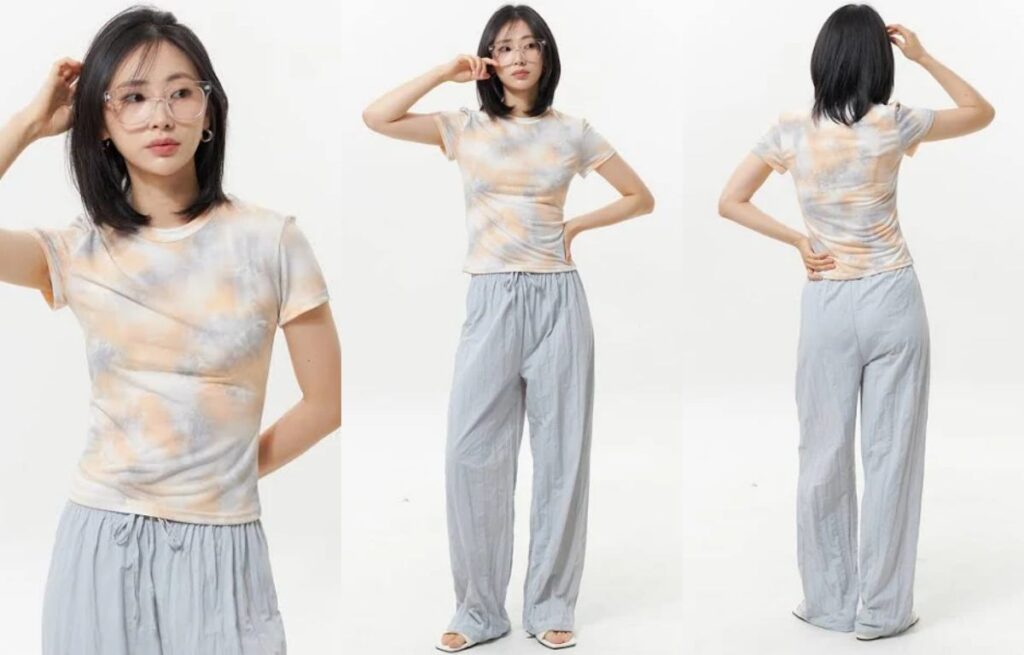
Why is the Slim Fit tie-dye T-shirt a smart choice for style-conscious markets?
Can form-fitting and tie-dye really go together?
Yes. The slim fit tie-dye T-shirt is shaped close to the body, offering a clean silhouette that still showcases bold dye patterns. It’s ideal for casualwear brands targeting modern, design-driven consumers.
This cut bridges fashion and function. It hugs the body without being restrictive, giving the tie-dye pattern a refined edge. You’ll see this style used in premium lifestyle labels, men’s fashion, and even fashion-forward tech companies’ swag.
Slim Fit Construction
- Tapered waist: Slight narrowing at the torso for definition
- Narrow sleeves: Closer to the arms, offering a streamlined look
- Slightly shorter hem: Not cropped, but ends at the beltline
- Shoulder width: Cut to follow the natural shoulder line closely
- Stretch-enhanced fabrics: Often cotton-spandex blends
Unlike fitted cuts (which are tight all over), slim fits allow a little more breathing room while still looking polished.
Benefits for Tie-Dye Collections
| Feature | Tie-Dye Advantage |
|---|---|
| Defined shape | Prevents the “loose dye mess” effect |
| Clean upper body lines | Works well with centralized dye patterns |
| Modern retail appeal | Popular in e-commerce and boutique markets |
| Gender-neutral options | Works for both men’s and women’s silhouettes |
I’ve seen brands use this fit to position tie-dye as a minimalist design element, rather than a loud fashion statement. Think navy with subtle bleach fade, or tonal spiral on gray.
How does the Slim Fit change how tie-dye patterns are planned and executed?
Is dye application harder with a tighter shape?
Yes, precision is critical. Slim fits have less surface area and tighter seams, which means any dye pattern must be placed thoughtfully. Misalignment or bleed is more noticeable than on looser cuts.
Let’s break it down:
Dye Planning Considerations for Slim Fit
- Pattern scale: Use tighter spirals, chest-centered designs, or vertical flows
- Color restraint: Avoid overly bold color combinations—they can overwhelm the silhouette
- Fold method: Symmetrical folds work best (fan, accordion, side spiral)
- Pre-wash: Required to avoid uneven dye due to tighter fabric weave
This fit is also less forgiving in post-processing. Poor rinsing or under-curing will show faster in slim silhouettes, especially if the fabric includes spandex or polyester.
What to Manage in Bulk Production
Sizing, Fabric, and Dye Control
| Factor | Production Risk | How to Mitigate |
|---|---|---|
| Shrinkage | May tighten the already slim profile | Use pre-shrunk or enzyme-washed fabrics |
| Stitch distortion | Dye can bleed around seams | Use tighter thread and test dye pull |
| Stretch breakdown | Heat can damage spandex | Lower heat curing or air-drying |
| Color visibility | Tight shape reveals every detail | Use soft, tonal blends or patterns |
I always recommend sampling all size ranges before going into mass dyeing. What fits great on size M may feel constrictive in size XL, especially when dyed and dried.
Use Cases and Style Positioning
- Menswear brands: Offers structure while embracing color
- Smart-casual lines: Tie-dye without the “boho” feel
- Athleisure brands: Looks sleek when paired with joggers or fitted shorts
Slim fit tie-dye also does well in online retail, as it photographs neatly on mannequins or flat-lay setups—making product pages look clean and professional.
How does Slim Fit compare to other tie-dye shirt styles in real-world wearability?
Is it more fashion, or more function?
Slim fit tie-dye T-shirts strike a balance between tailored appearance and design expression. They’re not as casual as oversized styles, but more wearable for everyday fashion than fitted activewear cuts.
Comparison table:
| Fit Type | Wearability | Design Control | Market Niche |
|---|---|---|---|
| Slim Fit | High | High | Smart Casual, Men’s Style |
| Relaxed Fit | Very High | Medium | Lifestyle, Unisex |
| Fitted Fit | Medium | Medium-High | Activewear, Gym |
| Oversized Fit | High | Medium | Streetwear, Festival |
If you’re targeting a stylish but mature audience—those who want tie-dye without looking “too young”—this is the right fit.
V Neck tie-dye T-shirt
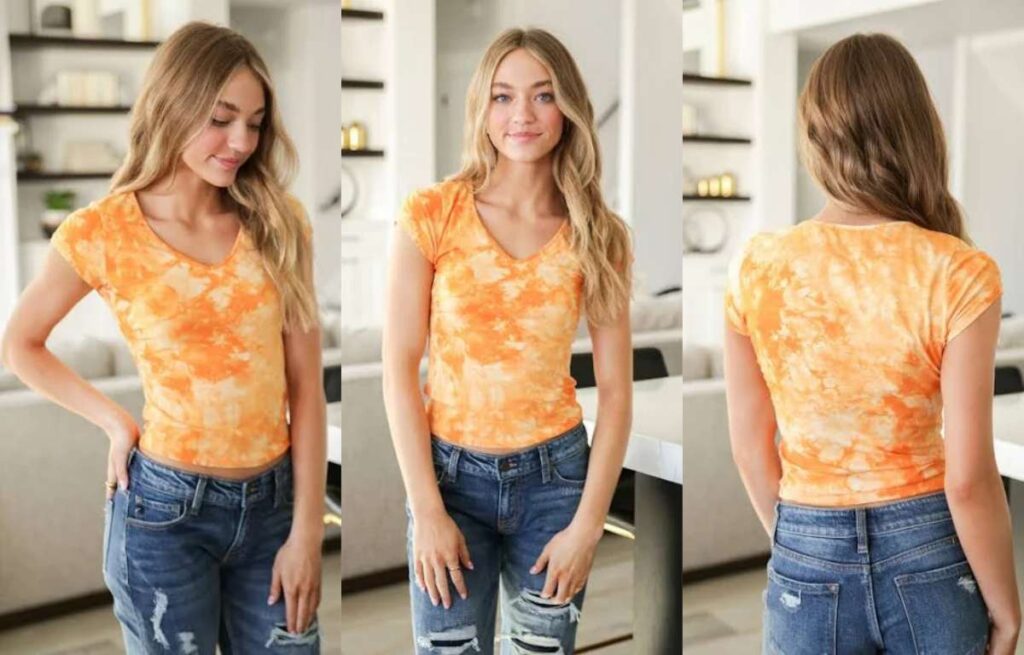
Why is the V Neck tie-dye T-shirt ideal for casual chic collections?
What makes this neckline more than just a styling detail?
The V neck tie-dye T-shirt features a pointed neckline that adds visual length to the neck and torso. It provides a more refined alternative to classic crewnecks, while still being casual and dye-friendly.
This silhouette is popular in women’s fashion, resortwear, and yoga-inspired brands. Its slightly dressier look allows tie-dye designs to shift from “playful” to “polished,” which is especially useful for brands aiming at a mature but relaxed audience.
Defining Characteristics of V Neck Fit
- V-shaped neckline: Ranges from shallow to deep depending on style
- Standard or slim torso: Often based on regular or fitted cuts
- Short or capped sleeves: Especially in women’s versions
- Clean hems: Generally more refined than raw or oversized styles
- Neck trim: Often uses a ribbed band or folded binding for shape retention
The neckline gives space for jewelry, printed logos, or minimal dye details—making it both functional and aesthetic.
Visual and Retail Advantages
| Element | Retail Advantage |
|---|---|
| Focal neckline | Draws the eye to the chest and shoulders |
| Slimming effect | Makes the upper body look longer |
| Versatile styling | Works with jeans, skirts, or yoga pants |
| Elevated casualwear | Great for cafes, studios, or leisure fashion |
In my own sourcing experience, V neck tie-dye shirts are often chosen by brands that want to offer something more refined in women’s wear or unisex streetwear collections.
How does the V Neck shape influence dye techniques and layout?
Is the dye pattern affected by the pointed neckline?
Yes. The V neck creates a natural central line that influences how color flows across the chest and shoulders. Dye patterns must be placed with this angle in mind to avoid distortion or misalignment.
Here’s a closer look at how this cut changes the tie-dye strategy:
Design Planning for V Necks
- Centralized spirals: Should start slightly below the V to maintain balance
- Chevron or “V” stripes: Enhance the neckline shape
- Diagonal folds: Work well with the angled collar
- Bleach outlines: Can trace the V for added dimension
This neckline is especially sensitive to color imbalance. For example, if one side absorbs more dye due to seam placement, the asymmetry becomes more obvious than it would on a crewneck.
Technical & Market-Level Considerations
Production Factors to Manage
| Factor | Why It Matters |
|---|---|
| Neck binding quality | Poor trims will warp or curl after dyeing |
| Collar symmetry | Even slight misalignments distort patterns |
| Pattern centering | V shape creates a strong visual anchor |
| Fabric weight | 180–220 GSM ideal for balance and drape |
In my experience, deeper V necks are best paired with softer dye styles—like ombré fades, light crumples, or pastel spirals. Bold or high-contrast patterns can sometimes overpower the more delicate neckline unless managed carefully.
Style Use Cases
- Yoga brands: Adds femininity without compromising comfort
- Boutique streetwear: Can pair with soft grunge or mineral wash looks
- Eco-lifestyle brands: Great for organic cotton + soft dye tones
- Corporate casualwear: A polished alternative to logo-heavy crewnecks
V necks are also better suited to retail environments with higher style expectations—boutiques, online collections, or curated concept stores.
How does the V Neck fit compare to other tie-dye T-shirt styles in versatility?
Is it less universal or more refined?
V neck tie-dye T-shirts are more style-specific than crewnecks or relaxed fits. They serve a narrower but more design-sensitive market, often leaning toward mature, feminine, or elevated-casual brands.
Comparison breakdown:
| Fit Type | Pattern Compatibility | Style Tone | Market Position |
|---|---|---|---|
| V Neck | Moderate-High | Refined Casual | Boutique, Lifestyle |
| Crewneck | High | Universal | Mass, Unisex |
| Oversized | High | Trendy, Youth | Streetwear, Festival |
| Fitted | Moderate | Athletic/Sharp | Gym, Performance |
If your brand targets women or lifestyle buyers, the V neck is a quiet standout—it’s subtle, flattering, and looks more “put together” than most other tie-dye shapes.
Scoop Neck tie-dye T-shirt
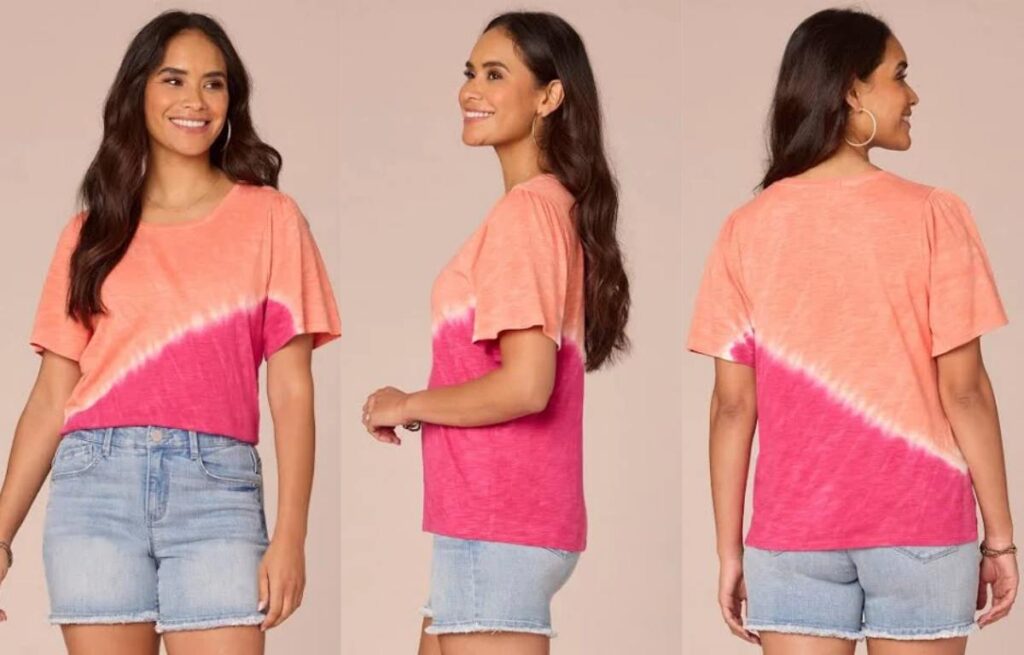
What makes the Scoop Neck tie-dye T-shirt a strong fit for lifestyle and wellness fashion?
Is it just a deeper neckline—or something more?
The scoop neck tie-dye T-shirt features a wide, rounded neckline that exposes more collarbone and shoulder area. This shape softens the overall look, making it perfect for relaxed, feminine styling.
Unlike crewnecks, which sit closer to the throat, scoop necks create a more open upper body frame. This makes them ideal for brands selling comfort-first clothing with a gentle, easygoing aesthetic—such as loungewear, yoga gear, and coastal fashion.
Defining Features of Scoop Neck Fit
- Wider and lower neckline: Often reaches just above the chest line
- Relaxed fit through shoulders: Sometimes includes drop shoulders
- Shorter sleeves: Often paired with cap sleeves or feminine cuts
- Draped torso: Hangs softly over the body without being boxy
- Rounded hems: Frequently used to enhance softness and flow
This neckline gives extra visibility to the upper chest and shoulders—prime space for creative dye placement.
Style and Retail Benefits
| Element | Tie-Dye Advantage |
|---|---|
| Larger neckline canvas | Great for subtle color blending or spirals |
| Relaxed structure | Enhances “cloud dye” and pastel palettes |
| Feminine silhouette | Aligns with spa, resort, and studio branding |
| Layering flexibility | Pairs well with bralettes or strappy tops |
I’ve seen scoop necks succeed in both short-sleeve and long-sleeve versions. They often become go-to pieces in casualwear collections, especially those focused on feel-good, self-care inspired branding.
How does the Scoop Neck design influence dye technique and color placement?
Does the neckline shift the pattern strategy?
Yes. The scoop neck alters how color flows near the collar and upper chest. It opens up the neckline area for focused patterns or tonal gradients, which can enhance the visual depth of a tie-dye shirt.
Here’s how dyeing needs to adapt:
Pattern Techniques for Scoop Necks
- Halo or circular gradients: Radiate from neckline outward
- Soft fades: Gentle transitions that complement the open shape
- Subtle spirals: Start just below the neckline for balanced symmetry
- Center folds: Work best when dye expands around collar curvature
Since the neckline is wider and lower, bold patterns can dominate the visible area. That’s why many successful scoop neck designs use restraint—letting muted tones and gentle dye flows take the lead.
DTechnical Production and Sourcing Notes
Key Manufacturing Considerations
| Area | Critical Points |
|---|---|
| Neckline stitching | Needs stable binding to prevent curling |
| Shrinkage control | Scoop shapes are prone to misshaping when over-dried |
| Collar symmetry | Misalignment is very visible with this cut |
| Fabric choice | Best with soft knits or modal-cotton blends |
Because of the neckline’s openness, poor sewing or low-quality dye application is easier to spot. I always recommend double-checking collar construction and using enzyme-washed or pre-shrunk fabrics to avoid issues post-dyeing.
Best Use Cases
- Resortwear or spa brands: Tie-dye in water or sunset tones
- Yoga and pilates apparel: Works well layered over active bras
- Wellness merchandise: Pairs with candles, journals, and slow living themes
- Minimalist fashion stores: Especially with one-tone or dip-dye designs
This fit is all about softness and emotional connection. When presented with natural tones and clean photography, scoop neck tie-dye pieces feel elevated and intentional.
How does the Scoop Neck compare to other necklines in style direction?
Is it more limited or more refined?
Scoop neck tie-dye T-shirts are more refined and gender-specific than crewnecks or V necks. They lean into softness and subtlety, making them a go-to for lifestyle and boutique collections.
Here’s how they measure up:
| Neckline Style | Visual Appeal | Dye Focus Area | Best Market Fit |
|---|---|---|---|
| Scoop Neck | Soft, Relaxed | Upper chest | Women’s, Wellness |
| Crewneck | Balanced, Basic | Center torso | Unisex, Everyday |
| V Neck | Defined, Sharp | Chest & collar | Smart casual, Boutique |
| Boat Neck | Wide and flat | Shoulder focus | Niche, Artistic lines |
Scoop necks may not suit every collection—but when aligned with branding, they create a sense of flow, calm, and easy style that’s hard to replicate with other cuts.
Henley tie-dye T-shirt
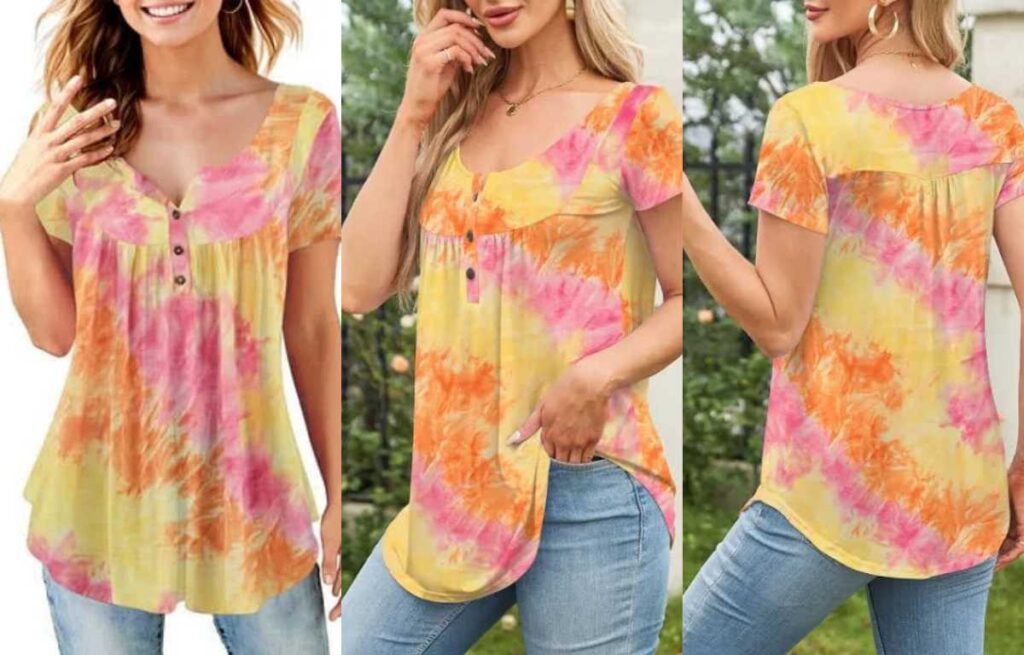
What makes this buttoned-neck design stand out in tie-dye fashion?
The henley tie-dye T-shirt features a round neckline with a short placket and buttons, adding visual texture and a hint of vintage workwear. It’s great for brands that want their tie-dye to feel grounded and masculine.
Originally a functional design used in 19th-century undergarments, the henley has since become a favorite in men’s casualwear and Americana-inspired fashion. When combined with tie-dye, it balances softness and strength—color and structure.
Key Features of the Henley Fit
- Placket neckline: Typically 2–4 buttons, front center
- Round neck base: Like a crewneck but more open when unbuttoned
- Regular or slim fit body: Works in structured or relaxed shapes
- Mid-weight fabrics: Often 200–240 GSM cotton or cotton-blend knits
- Functional buttons: Sometimes decorative, sometimes practical
This added detail makes the shirt look more like a styled item—not just a basic tee. And that creates more value in markets looking for elevated casual options.
Retail & Styling Benefits
| Feature | Benefit in Tie-Dye Context |
|---|---|
| Button placket | Adds dimension and layering options |
| Heritage design | Appeals to men’s fashion and rugged brands |
| High perceived value | Looks more detailed than a basic tee |
| Dye framing effect | Directs attention to chest and shoulder patterns |
Henleys are also great for brands targeting “conscious masculine” consumers—those who want fashion that feels earthy, expressive, and practical.
How does the Henley neckline affect tie-dye design and placement?
Can you still use bold spirals and folds?
Yes, but the button placket creates a new centerline that must be considered when placing dye patterns. Misaligned spirals or stripe fades can look off if they clash with the vertical button line.
Let’s explore how dye techniques adapt to this structure:
Design Tactics for Henley Tie-Dye
- Spirals: Start slightly lower than usual to keep symmetry below buttons
- Crinkle or scrunch dye: Works well around buttons without distortion
- Vertical stripe patterns: Use the placket as a natural visual divider
- Dip-dye techniques: Focus on sleeve, hem, or bottom fades
Dye often absorbs differently around the placket stitching and button seams. I always recommend testing dye saturation near those areas, especially on thicker fabrics.
Manufacturing Notes and Fit Strategy
Key Points for Henley Production
| Detail | Importance in Tie-Dye Work |
|---|---|
| Placket seam stitching | Must be durable—dye and wash cycles add stress |
| Button material | Natural shell or plastic may react differently |
| Fabric structure | Heavier knits hold patterns better |
| Symmetry in cut | Misaligned plackets ruin spiral-centered designs |
In many cases, I’ve seen buyers use henleys in tonal dye palettes—like indigo, forest green, terracotta, or charcoal. These feel grounded and mature, which matches the workwear roots of the henley style.
Strategic Use Cases
- Men’s lifestyle brands: Especially for rustic, outdoor, or Americana themes
- Unisex heritage collections: Paired with denim or heavy twill pants
- Eco-conscious or natural dye brands: Henleys look great with muted botanicals
- Premium basics: Higher price point justified by design complexity
Henley tie-dye T-shirts also allow for mix-and-match capsules, with each piece showing slight variations while still sharing a central neckline theme.
How does Henley compare to other tie-dye styles in depth and identity?
Is it more niche, or more versatile?
The henley tie-dye T-shirt is more niche—but in the right market, it delivers strong identity and premium appeal. It’s not for everyone, but it elevates collections aiming for craftsmanship and detail.
Comparison table:
| T-Shirt Style | Design Focus | Dye Adaptability | Ideal Market |
|---|---|---|---|
| Henley | Structured + Textured | Moderate | Men’s fashion, Heritage |
| Crewneck | Basic + Universal | High | Mass market, All genders |
| V Neck | Clean + Feminine | Moderate | Lifestyle, Boutique |
| Oversized | Bold + Loose | High | Youth, Streetwear |
Henleys work best when the rest of the collection carries the same design language—natural colors, textured fabrics, utility-inspired details.
Boat Neck tie-dye T-shirt
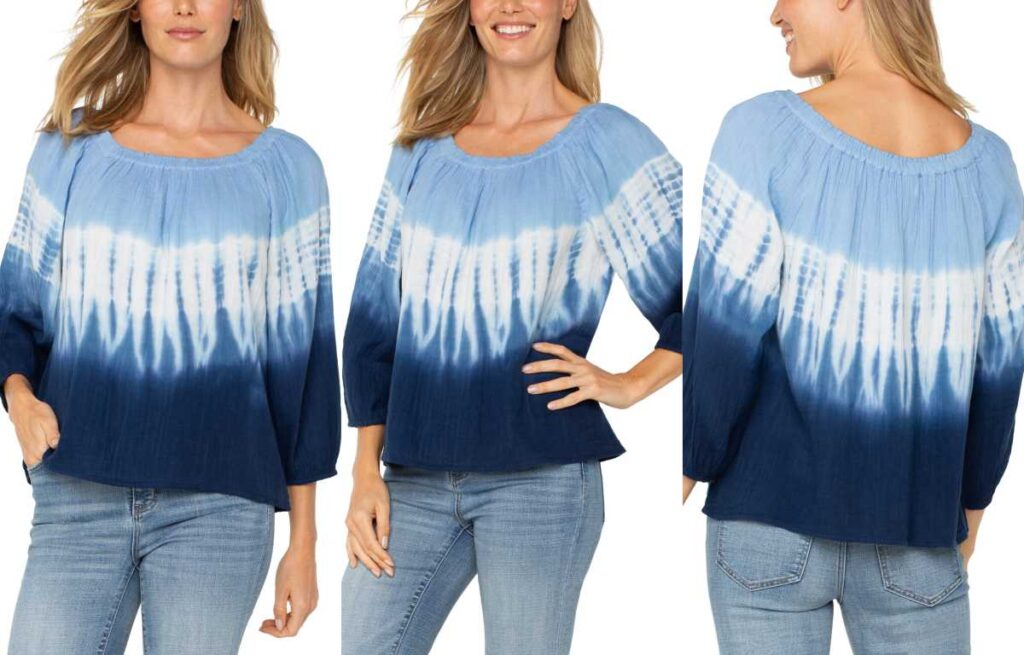
Why is the Boat Neck tie-dye T-shirt ideal for elegant casualwear?
What makes this neckline more graceful than the rest?
The boat neck tie-dye T-shirt features a wide, high neckline that runs horizontally from shoulder to shoulder. It flatters the collarbone area and softens the overall look—making it ideal for upscale casualwear.
This silhouette is especially popular in women’s fashion and minimalist collections. It’s often used when brands want to offer tie-dye that feels mature, soft, and subtly artistic. The neckline draws attention to the upper chest and shoulders—prime space for gentle, layered dye patterns.
Key Characteristics of Boat Neck Fit
- Wide neckline: Usually cuts straight across from one shoulder to the other
- High collarbone exposure: Creates a flattering, feminine shape
- Shorter sleeves or three-quarter length: Balances the open neckline
- Draped body: Often paired with soft fits and rounded hems
- Minimal seams: Cleaner finish around the neckline
This design gives the shirt a timeless, graceful look—especially when paired with natural dye tones like indigo, stone, sage, or sand.
Fashion and Retail Advantages
| Feature | Why It Works in Tie-Dye Fashion |
|---|---|
| Horizontal neckline | Perfect for gentle spirals or shoulder fades |
| Feminine silhouette | Appeals to women’s resort and boutique buyers |
| Subtle styling flexibility | Easily dressed up or down with accessories |
| Airy design | Ideal for warm-weather and breathable looks |
Boat necks perform especially well in collections that focus on comfort, aesthetics, and light movement—like loungewear, resortwear, or coastal lifestyle brands.
How does the Boat Neck affect tie-dye pattern choice and application?
Does the neckline limit certain techniques?
Yes, boat necklines require more delicate tie-dye applications. Large or centered patterns may be disrupted by the wide neckline, so designers often shift focus to shoulder gradients, sleeve dyes, or side-flow effects.
Here’s a breakdown of what works best:
Tie-Dye Styles that Complement Boat Necks
- Shoulder-fade dye: From neckline outward to the sleeve tips
- Diagonal flows: From upper chest to lower side for visual motion
- Two-tone split dye: Vertically or diagonally, not centered
- Cloud dyeing: Soft, subtle crumples for a breathable feel
Because the neckline is so open, asymmetrical dye designs tend to look more natural and flattering than central spirals or high-contrast patterns. You want the colors to “frame” the neckline—not compete with it.
Manufacturing and Design Strategy
Key Considerations for Production
| Element | Why It Matters |
|---|---|
| Neckline symmetry | Even a slight shift is highly noticeable |
| Fabric drape | Lighter cotton-modal blends enhance softness |
| Stitching reinforcement | Wide openings need clean, strong finishes |
| Dye absorption | Best with midweight natural fibers (180–220 GSM) |
Boat necks are best paired with high-quality stitching around the collar. Poor execution here ruins the elegance of the entire piece. Also, make sure dye doesn’t pool around the collar seam—it’s a common issue when the neckline is laid flat for dyeing.
Market Fit and Merchandising Strategy
- Women’s resortwear: Styled with linen pants or flowy skirts
- Yoga and meditation apparel: Tie-dye + open neckline = calm, easy vibe
- Beach boutique collections: Ideal in pastel or neutral tones
- Eco-luxe brands: Pairs well with natural dyes and organic fabrics
Photos of boat neck tie-dye shirts tend to perform well on e-commerce platforms because of their shape. The wide neck and flowing silhouette create movement, especially in breeze or sunlight shots.
How does the Boat Neck compare to other tie-dye styles in elegance and wearability?
Does it sacrifice comfort for style?
Not at all. Boat neck tie-dye T-shirts balance elegance and comfort. While they are more niche than crewnecks or V necks, they offer a graceful option for buyers seeking subtle, design-forward pieces.
Comparison chart:
| Neckline Style | Visual Effect | Dye Strategy | Best Market |
|---|---|---|---|
| Boat Neck | Elegant, Open | Shoulder/side-based | Women’s, Resortwear |
| V Neck | Defined, Tapered | Center/stripe-based | Boutique, Fitness |
| Crewneck | Classic, Balanced | Spiral, Crumple | Mass Market, Unisex |
| Scoop Neck | Soft, Relaxed | Fade, Spiral | Lifestyle, Yoga |
The boat neck is less common—but that’s also its strength. It helps brands stand out without shouting. Perfect for curated lines, slow fashion brands, and thoughtful design narratives.
Long Sleeve tie-dye T-shirt
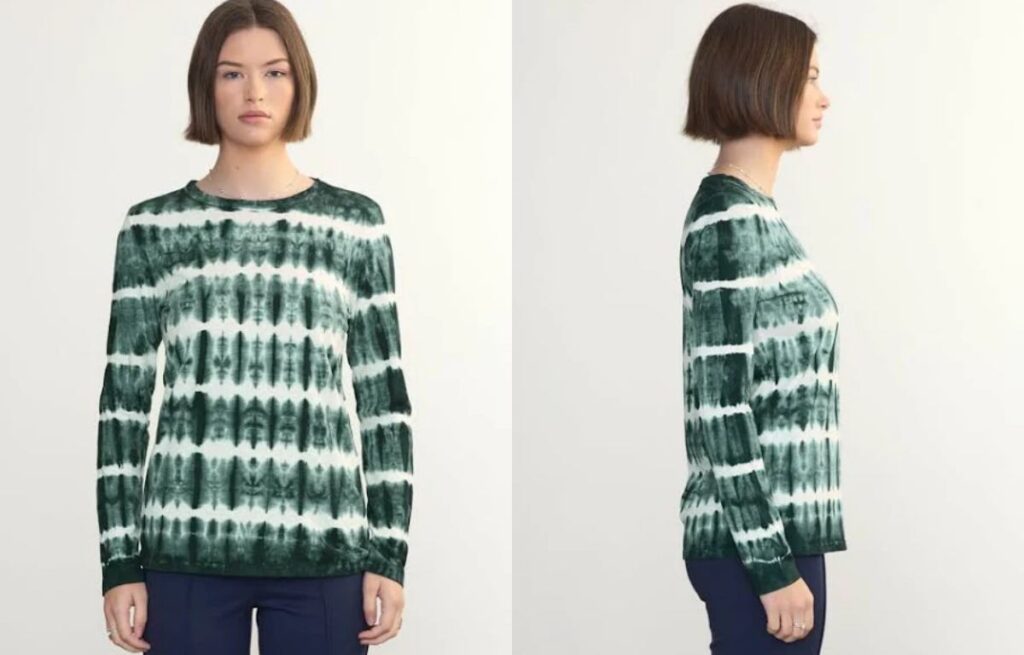
Why are Long Sleeve tie-dye T-shirts a strong year-round seller?
Is it just for colder weather—or more versatile than that?
The long sleeve tie-dye T-shirt provides both warmth and style, offering extra space for dye patterns along the sleeves. It works across seasons, from layered winter wear to lightweight summer coverups.
Unlike short sleeve styles, the long sleeve version becomes a full-body visual canvas. That extra surface adds complexity to the design, giving you more opportunities to apply unique folds, fades, and combinations of color.
Key Characteristics of Long Sleeve Fit
- Full sleeve coverage: Reaches wrist or slightly past
- Standard or relaxed body cut: Often mirrors regular-fit torso
- Ribbed cuffs: Prevents dye bleed but adds texture contrast
- Shoulder structure: Drop or regular seam depending on silhouette
- Fabric weight: Ranges from lightweight (180 GSM) to mid-heavy (240 GSM)
These shirts work well across multiple fashion genres—streetwear, surfwear, yoga, and even niche grunge or artistic brands.
Functional & Fashion Benefits
| Feature | Tie-Dye Advantage |
|---|---|
| Sleeve surface | Adds extra space for pattern complexity |
| Seasonal flexibility | Works in summer (lightweight) or fall layering |
| Gender-neutral appeal | Strong option for unisex and oversized fits |
| Easy upsell item | Higher perceived value than basic tees |
Some of my wholesale clients use long sleeve tie-dye as their “hero product” during spring/fall launches—paired with matching joggers or dyed accessories for bundled looks.
How does the Long Sleeve format affect tie-dye application and pattern planning?
Does the sleeve change how designs are laid out?
Absolutely. Long sleeves dramatically alter dye planning. Designers must coordinate sleeve patterns with torso dyes to avoid visual disconnect or pattern imbalance.
Here’s how long sleeves shape the dye process:
Sleeve-Specific Dye Techniques
- Sleeve-only designs: Arms hold contrasting color or separate gradients
- Continuous spiral: Starts at the center and runs into the sleeves
- Dip-dye or fade: Applied at cuffs, moving up toward the elbows
- Sleeve wraps: Rolled sleeve folds create textured stripes or rings
The key challenge is pattern alignment. If sleeve folds aren’t done symmetrically, your finished piece can look unbalanced. This is especially noticeable on spirals or symmetrical layouts.
Technical and Strategic Sourcing Factors
Important Production Details
| Detail | What to Monitor |
|---|---|
| Sleeve fold symmetry | Ensures mirrored dye patterns |
| Cuff fabric composition | Rib knits dye differently from body cotton |
| Seam dye resistance | Shoulder and underarm seams may disrupt flow |
| Pre-wash fabric check | Required to prevent dye buildup at sleeve ends |
Some long sleeve tees use contrasting materials at the cuffs, which can absorb dye differently. Always ask your supplier for fabric consistency or send a swatch test before finalizing bulk production.
Strategic Use Cases
- Layered streetwear: Long sleeves under tees or vests
- Surf/skate brands: Tie-dye + long sleeves = instant appeal
- Athleisure lines: Brings color to yoga and studio wear
- Online drops: Limited-edition dyed sleeves add “premium” feel
Long sleeves also perform well in online photoshoots and influencer content. When the model moves, the sleeves create a flowing, dynamic dye reveal that adds emotional impact to the product.
How does the Long Sleeve style compare to other tie-dye fits in retail performance?
Is it a niche piece or a core product?
Long sleeve tie-dye T-shirts sit between niche and essential. They’re not everyday basics, but they offer enough flexibility to act as both collection anchors and seasonal spotlights.
Comparison table:
| T-Shirt Style | Pattern Real Estate | Style Versatility | Seasonal Strength |
|---|---|---|---|
| Long Sleeve | High | High | Spring, Fall, Layered |
| Short Sleeve | Medium | High | Year-round |
| Crop Top | Low | Trend-focused | Summer, Festival |
| Oversized | High | Youth, Urban | Year-round |
Used strategically, long sleeve tie-dye tees become go-to pieces for building themed collections, adding visual drama, or offering warm-weather color without the bulk.
Raglan Sleeve tie-dye T-shirt
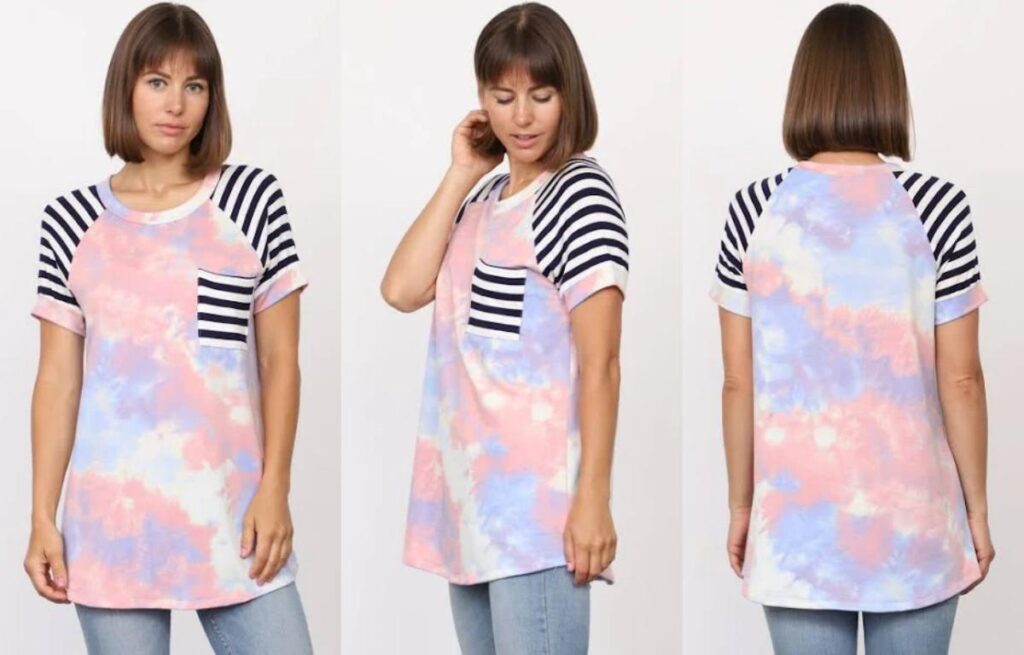
Why is the Raglan Sleeve tie-dye T-shirt popular in sport, street, and vintage fashion?
What makes its sleeve design different from the rest?
The raglan sleeve tie-dye T-shirt features sleeves that extend in one piece to the collar, forming a diagonal seam from underarm to neckline. This design allows greater arm mobility and a distinctive two-tone dye effect.
This structure is most recognized in baseball-style shirts, and it’s often used to give a sporty, active silhouette. For tie-dye, the unique seam layout allows for more dynamic color blocking, especially between body and sleeve.
Structural Features of Raglan Fit
- Diagonal shoulder seams: Starts from underarm to collarbone
- Sleeves in one continuous piece: No shoulder seam interruption
- Rounded collar: Often paired with crew or Henley neck
- Fitted or semi-relaxed torso: Depending on target market
- Contrast-color potential: Ideal for two-fabric or two-dye effects
These construction differences make the raglan sleeve not just a style statement—but a functional upgrade, especially in motion-heavy or performance-oriented apparel.
Why It Works Well in Tie-Dye Collections
| Feature | Tie-Dye Advantage |
|---|---|
| Unique seam lines | Create natural divisions for dual-tone dyes |
| Sleeve-body contrast zones | Enable eye-catching color blocking |
| Athletic aesthetic | Broad appeal across sports, casual, and retro |
| Movement-friendly fit | Preferred for yoga, skating, or dance brands |
From a retail perspective, raglan tie-dye tees often stand out on the rack due to their color combinations and non-traditional cut lines. This helps them sell as “highlight pieces” rather than filler basics.
How does the Raglan Sleeve construction affect tie-dye planning and execution?
Does the diagonal seam change dye behavior?
Yes. The raglan’s angled seams create natural dye boundaries, allowing for controlled pattern separation and creative two-tone effects. But it also requires more technical precision to maintain balance and alignment.
Tie-Dye Approaches for Raglan T-Shirts
- Sleeve vs body contrast: Apply one color to sleeves, another to torso
- Dip-dye from shoulder down: Emphasizes the raglan seam line
- Radial folds centered on back or chest: Must account for angled sleeves
- Stripes or chevrons: Follow the seam’s diagonal direction for impact
For example, if the shirt is laid flat and dyed in a fan fold, the dye will travel unevenly unless the raglan seam is aligned during folding. Misalignment can cause awkward breaks in symmetry, especially with bold or linear patterns.
Technical Production Notes and Fit Strategy
Key Considerations Before Bulk Dyeing
| Element | Impact on Tie-Dye Result |
|---|---|
| Seam reinforcement | Dye pools along seams—needs clean stitching |
| Fabric uniformity | Sleeves and body should match in absorption |
| Panel symmetry | Misaligned cutting affects dye pattern balance |
| Sleeve flexibility | Looser sleeves may expand dye beyond planned lines |
I recommend pre-testing dye runs on raglan samples from each size range. Raglan cuts stretch differently across sizes, which may shift the dye placement—especially on multi-tone or gradient designs.
Market-Driven Applications
- Streetwear and skate lines: Great for expressive contrast designs
- Retro collections: Revives the 90s/early-2000s athletic look
- Athleisure sets: Matches well with joggers or color-block shorts
- Kids and youth apparel: Adds energy and movement to casualwear
Raglan styles also photograph well—those angled sleeves add a sense of motion and energy, especially in active model shots or stylized flat-lay displays.
How does Raglan Sleeve compare to other tie-dye styles in terms of versatility?
Is it more flexible or more niche?
Raglan sleeve tie-dye T-shirts sit in the middle: more expressive than regular fits, but more grounded than oversized or cropped styles. They’re especially useful when color contrast and structure are needed together.
Here’s how they stack up:
| Style Type | Dye Design Flexibility | Structural Detail | Market Appeal |
|---|---|---|---|
| Raglan Sleeve | Moderate-High | High | Street, Sport, Retro |
| Crewneck | High | Basic | Universal |
| Long Sleeve | High | Medium | Seasonal, Layered |
| Boxy Fit | Medium | Moderate | Boutique, Fashion niche |
When your tie-dye design needs both movement and structure, raglan is a top-tier option. It makes even simple dye work look engineered and intentional.
Cap Sleeve tie-dye T-shirt
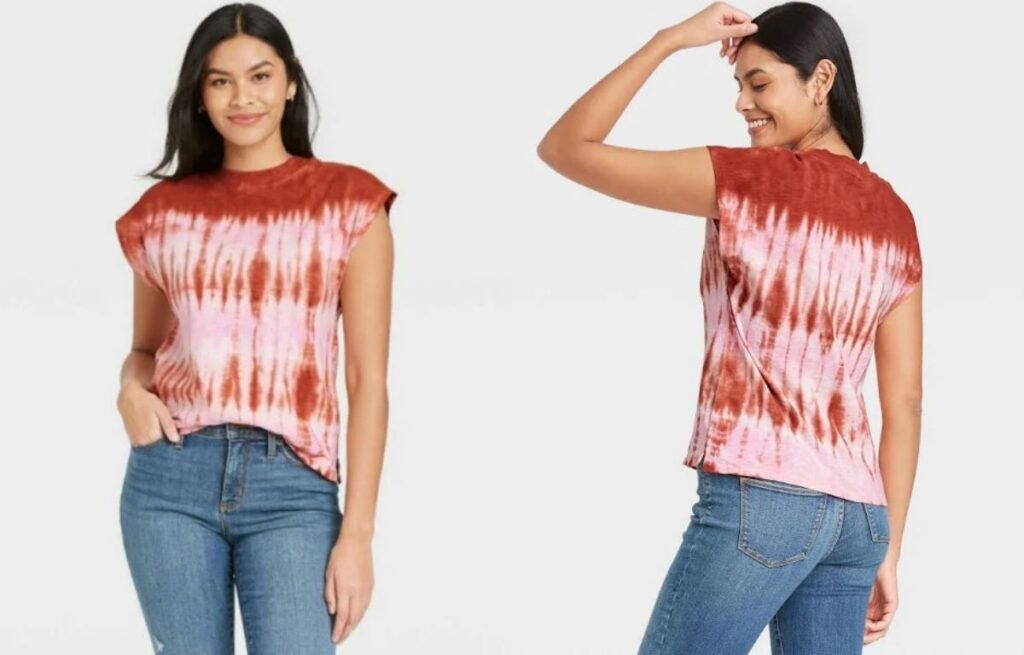
What makes the Cap Sleeve tie-dye T-shirt ideal for active and feminine collections?
Why does this small sleeve style make a big visual difference?
The cap sleeve tie-dye T-shirt features short, rounded sleeves that barely cover the shoulders. It emphasizes the arms and collarbones, making it perfect for fitted, soft, or movement-friendly clothing lines.
Cap sleeves add a subtle curve to the silhouette, helping the garment look lighter and more tailored without sacrificing comfort. This design is especially popular in women’s activewear, wellness loungewear, and resort-ready casual collections.
Key Features of Cap Sleeve Cut
- Minimal shoulder coverage: Just extends slightly from the bodice
- No underarm seam: Often built into the body panel
- Feminine shape: Highlights arms and upper chest
- Tapered or fitted torso: Often combined with slim-fit styling
- Pairs well with scoop or boat necks: For balance and softness
This cut is often preferred by brands selling to consumers who value detail, flow, and elegance—even in basics.
Why Cap Sleeve Works with Tie-Dye
| Style Element | Dye Strategy Benefit |
|---|---|
| Short sleeves | Focuses color toward the torso and shoulders |
| Soft silhouette | Best with pastel or gradient-based dyeing |
| Upper-body emphasis | Perfect for spiral, V-fold, or shoulder fades |
| Fewer seams | Easier dye application across panels |
The open upper-body area gives tie-dye more “breathing room” and makes colors look intentionally placed—even on compact garments.
How does Cap Sleeve construction affect tie-dye application and design layout?
Is there less room for creativity—or more?
There’s less fabric, but more precision. Cap sleeves focus attention on the chest and shoulders, which means color placement must be strategic and subtle. Large, chaotic patterns can easily overpower the clean lines.
Let’s break down how designers can work with this silhouette:
Best Tie-Dye Techniques for Cap Sleeve Shirts
- Shoulder spirals: Small spirals placed near the neckline or collarbone
- Sunburst effects: Radiate outward from shoulder or upper chest
- Diagonal soft fades: Flowing from one shoulder to the opposite waist
- Two-tone dyeing: One tone on top, fading into another at the hem
With less fabric to fold or bunch, many dye artists use light-hand crumpling, brushing, or mist dyeing techniques to add softness without cluttering the design.
Manufacturing Strategy and Fit Control
Critical Production Factors
| Detail | Why It Matters |
|---|---|
| Armhole binding quality | Poor finishing shows more on short sleeves |
| Seam flatness | Dye bleeds easily into seams without care |
| Neckline symmetry | Needed for balanced dye visuals |
| Fabric shrinkage control | Tight fits show every flaw post-wash |
I always recommend sampling cap sleeve cuts in smaller batch tie-dye production. Because of their size, even minor dye misplacement or seam puckering becomes highly visible.
Ideal Use Cases and Merchandising
- Women’s yoga/lifestyle brands: Light pastel dye with inspirational prints
- Minimalist loungewear lines: Solid-colored fade or soft ombré blends
- Boutique casualwear: Pairs well with high-waisted pants or skirts
- Travel/resort capsules: Breathable, lightweight, and photogenic
Cap sleeve tie-dye T-shirts also perform well on social media due to their flattering fit and bright visuals. Many brands use this cut as their “entry product” for building trust and visual consistency online.
How does the Cap Sleeve style compare to other tie-dye T-shirt types?
Is it more limiting, or just more focused?
Cap sleeve tie-dye T-shirts are more focused than limiting. They serve a specific audience—style-conscious, comfort-first, and often women-centered—but within that group, they offer high impact and design versatility.
Comparison table:
| Style Type | Dye Area | Visual Focus | Best For |
|---|---|---|---|
| Cap Sleeve | Medium | Upper Body | Women’s Activewear, Resortwear |
| Raglan Sleeve | High | Shoulder Contrast | Unisex Street/Sport Collections |
| Crop Top | Low-Medium | Chest Area | Youth Fashion, Festival Drops |
| Slim Fit | Medium | Full Body Contour | Boutique, Gymwear, Retail |
Cap sleeves aren’t meant to serve everyone—but for targeted lines, they’re one of the most elegant and commercially reliable fits you can use.
How do brands choose the right tie-dye T-shirt types for their audience?
What strategy ensures style aligns with buyer expectations?
Choosing the right type involves aligning cut, fabric weight, and dye technique with your customer’s lifestyle. You must match the visual style of tie-dye with the wearability expectations of your target market.
Here’s how to approach it:
1. Match Fit with Function
- Activewear brands → Go for slim fit, fitted, or crop tops
- Streetwear brands → Use oversized, boxy, or longline styles
- Boutique fashion → Opt for boat necks, henleys, or vintage fits
- Wellness brands → Use scoop neck, relaxed, or drop shoulder tees
2. Match Color with Cut
- Large spirals → Oversized or longline
- Muted tones → Fitted, boat neck, or henley
- Gradient fades → Raglan, scoop, or drop shoulder
- Crumple dye → Regular, relaxed, or boxy cuts
3. Plan by Season
| Season | Ideal Shirt Types |
|---|---|
| Spring | Cap sleeve, raglan, boat neck |
| Summer | Crop tops, oversized, scoop neck |
| Fall | Long sleeve, henley, relaxed fit |
| Winter | Layered longline, crewneck, slim fit |
By planning around seasonality, lifestyle, and market trends, you can build collections that not only look good—but move inventory quickly.
Conclusion
Understanding the different types of tie-dye T-shirts helps you design with intention. It’s not just about color—it’s about cut, context, and consumer fit.