Skip to content
Shirts are no longer just wardrobe basics—they’ve evolved into a central piece of modern fashion that blends functionality, expression, and versatility. From classic button-downs worn in boardrooms to oversized streetwear staples spotted on influencers, shirts now span across a wide range of silhouettes, fabrics, and cultural references. Understanding the types of shirts available today is essential not only for individual style but also for brands, designers, and clothing manufacturers aiming to stay ahead of fast-moving fashion trends.
This ultimate guide explores the most popular and modern shirt styles for men and women, categorized by design intent, fit, function, and global influence. Whether you’re a fashion entrepreneur curating your next collection, a clothing wholesaler researching product categories, or a designer looking for inspiration, this guide will break down trending shirt types—starting from everyday essentials to statement pieces that dominate the fashion-forward scene.
Dress Shirt
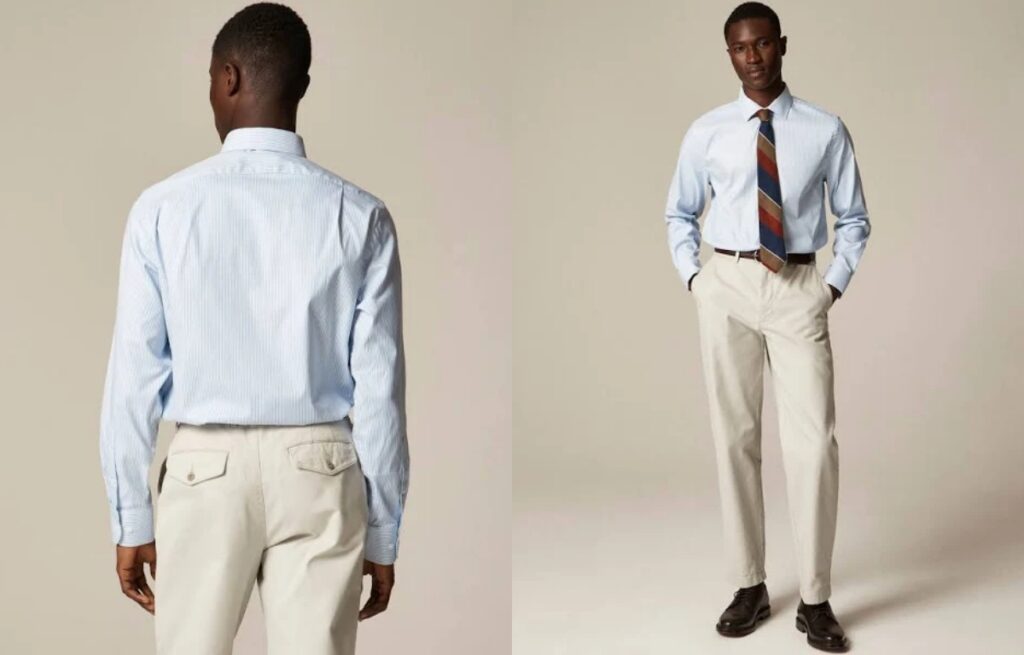
The dress shirt has long been a symbol of formality and professionalism. But today’s versions go far beyond boardroom basics. From stretch fabrics to slim silhouettes, modern dress shirts are now style-flexible, functional, and globally appealing. This evolution is especially important for clothing brands, designers, and sourcing managers who need to deliver premium quality with a contemporary edge.
Modern dress shirts feature upgraded fabrics, precision fits, and subtle tailoring details that support both formal and casual styling. These shirts are no longer just for suits—they’re foundational pieces in business-casual, elevated streetwear, and capsule wardrobes.
Let’s break down the key elements that make dress shirts a core item in today’s apparel market.
Technical Fabrication
Unlike casual shirts, dress shirts require structure, drape, and breathability in balance. Modern fabric selections are designed for comfort during long hours of wear while maintaining a crisp appearance.
Common materials include:
- Premium cotton poplin or twill for structure and smoothness
- Cotton blends with 3–5% elastane or spandex for stretch and ease
- Tencel, rayon, or bamboo blends for softness and sustainability
- Wrinkle-resistant finishes for low-maintenance wear
High-end shirts often use double-ply yarns and long-staple fibers to enhance durability and a clean finish. Some brands integrate moisture-wicking or odor-control technologies for active professionals.
Fabric selection directly affects shirt weight, fit retention, and wearer experience. It’s one of the first decisions brands must align with positioning—whether they’re targeting classic luxury or smart-casual versatility.
Design & Construction Details
A modern dress shirt is a technical product. Each panel, seam, and stitch influences the final fit and performance.
Key design updates include:
- Slimmer patterns with darting or back seams for a close fit
- Wider range of collar styles: spread, cutaway, hidden button-down
- Convertible cuffs (button + cufflink compatible) for flexibility
- Shortened hem lengths for untucked wear (especially in hybrid workwear)
- No-pleat or minimal pleat backs for a streamlined shape
Construction details matter. At our factory, we often implement:
- 14–16 SPI (stitches per inch) for durability
- Cross-lock button stitching
- Pattern-matched plackets and cuffs
- Interfaced collars using fusing or floating canvas
- Double-needle side seams for clean edges and better hold
Brands may also request reinforced shoulder seams, especially for larger sizes, or thermo-fused collars that maintain structure through repeated washes.
Target Audience & Use Cases
The modern dress shirt isn’t limited to one demographic. It serves multiple fashion segments with different functional needs.
| Segment | Primary Motivation |
|---|---|
| Business Professionals | Sharp appearance with long-hour comfort |
| Smart-Casual Consumers | Versatility: work to dinner to events |
| Minimalist Fashion Lovers | Clean, timeless look with high-quality finish |
| Startup/Remote Workers | Need polished but not overly formal garments |
| Fashion Brands | Base piece for layering, styling, or capsule wardrobes |
In many Western and Asian markets, dress shirts are now styled with relaxed blazers, knit vests, jeans, or tapered trousers, creating a professional but accessible image.
Manufacturing Considerations
From a production standpoint, dress shirts require high pattern precision and stable QC systems.
Challenges & key controls include:
- Pattern grading across sizes: Neck, sleeve, and shoulder adjustments must stay proportional
- Fabric shrinkage allowance: Especially critical for cotton blends and enzyme-washed fabrics
- Button alignment & placket straightness: Deviations >2mm can affect overall visual alignment
- Collar and cuff consistency: Requires precise fusing pressure and trimming
- High rework cost: Errors in yoke alignment or shoulder slope are hard to fix post-assembly
We often produce 3–4 pre-production samples to finalize grading, fit, and collar behavior before bulk cutting.
Brand Strategy & Differentiation
For fashion brands and DTC labels, the dress shirt is a category that offers deep brand-building potential.
Strategic advantages:
- Minimal design = fabric and construction stand out
- High repeat purchase rate if quality and fit meet expectations
- Opportunity for capsule collections using collar or placket variations
- Mass appeal across geographies and age groups
- Personalization: Embroidery, monograms, branded buttons, or custom-size fits
Differentiation can also come from:
| Area | Strategy Example |
|---|---|
| Fabric | Bamboo-cotton blends or anti-odor tech yarns |
| Construction Detail | French seams, hidden buttons, or contrast piping |
| Sizing Strategy | Introducing “Short”, “Tall”, and “Athletic” fit variants |
| Styling Collaboration | Designer collabs, minimalist branding, or cultural tie-ins |
The key is to build a dress shirt that’s not just safe—but smart, wearable, and quietly impressive.
Oxford Shirt
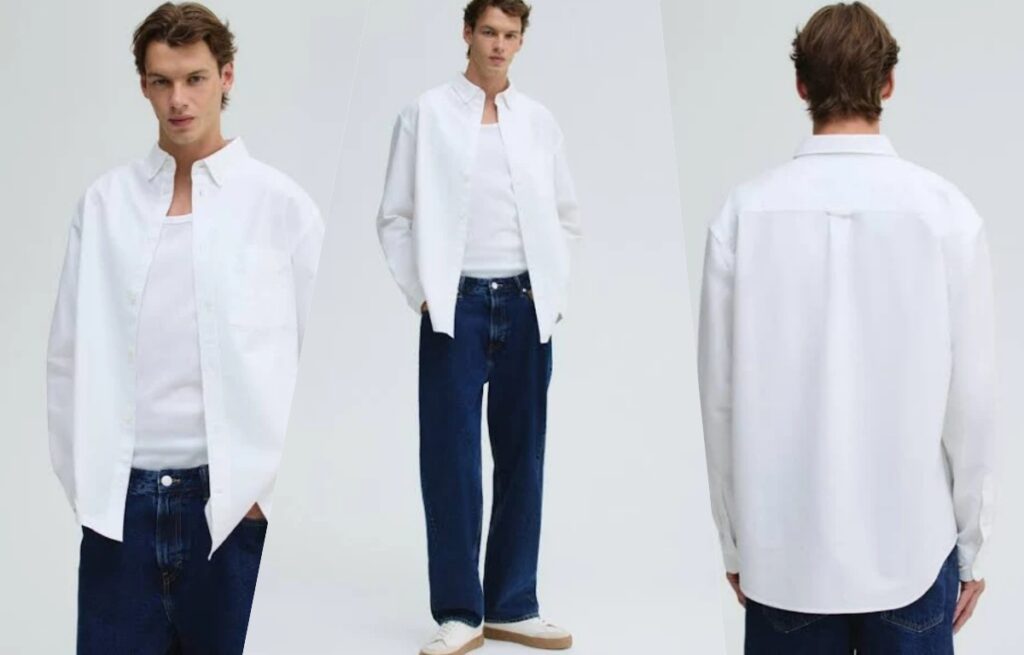
When it comes to shirt styles, few items strike a better balance between casual and formal than the Oxford shirt. It’s not flashy, but it never fades. From Ivy League halls to streetwear lookbooks, this shirt remains a core piece for brands targeting versatility and durability.
An Oxford shirt uses a distinctive basketweave fabric that gives it texture, structure, and durability—making it ideal for smart-casual wear. Unlike dress shirts, it leans more casual but can still dress up with the right styling.
Let’s dive deep into what makes this timeless piece so relevant in modern fashion.
Technical Fabrication
The Oxford shirt stands apart because of its fabric construction, not just its fit or design. It’s made using a basketweave technique, where two yarns cross over two yarns—creating a visible texture.
Core material options include:
- Cotton Oxford – the standard, sturdy yet breathable
- Cotton-poly blends – easier care, more wrinkle resistance
- Stretch Oxford – includes 2–4% elastane for comfort
- Brushed Oxford – offers a softer, warmer handfeel for fall/winter
There are two main variants:
| Type | Texture & Feel | Use Case |
|---|---|---|
| Oxford Cloth | Coarser, rugged | Casual and workwear styling |
| Pinpoint Oxford | Finer, smoother basketweave | Dressier casual to business wear |
The heavier weight gives Oxford shirts more structure than poplin or broadcloth, making them drape differently. This makes the shirt less wrinkle-prone and better for layering under jackets or over t-shirts.
Design & Construction Details
Oxford shirts aren’t built like dress shirts. Their strength lies in sturdy design and multi-occasion wearability.
Key construction details include:
- Button-down collar – invented to keep the collar in place during sports
- Chest patch pocket – a casual staple, not always present in dressier versions
- Box pleat at back – for ease of movement and relaxed fit
- Curved hem – often worn untucked, but long enough for tucking
- Bar-tack reinforcements – at pocket corners or side seam splits
In modern production, Oxford shirts are usually:
- Sewn with thicker thread, suited for their heavier fabric
- Built with single-needle stitching for durability
- Finished with contrast buttons or woven labels for casual branding cues
Some brands opt for no-fuse collars or lightly lined plackets to keep the shirt soft and flexible—especially in casualwear lines.
Target Audience & Use Cases
Oxford shirts sit in the middle of formal and casual, which gives them broad audience appeal.
| Segment | Motivation |
|---|---|
| Smart-Casual Workers | Want a shirt that works in office and after-hours |
| College Students | Preppy or vintage style with layering potential |
| Menswear Enthusiasts | Appreciate heritage garments and classic fabrics |
| DTC Brands | Use it as a core piece for minimalist collections |
| Outdoor/Workwear Fans | Value texture and structure in their basics |
Typical styling:
- With chinos or jeans for clean casual looks
- Under sweaters or shirt jackets for preppy or utility layering
- Open over t-shirts as a lightweight overshirt
Manufacturing Considerations
From a production point of view, Oxford shirts require different handling compared to dress shirts.
Key points include:
- Cutting heavier cloth requires sharper blades and slower feed speeds
- Shrinkage rates must be closely monitored, especially in brushed versions
- Collar roll needs careful pattern shaping—it’s what gives the Oxford its character
- Button placement is crucial for balance; 7-button plackets are most common
- Back pleat positioning affects drape and comfort for broader shoulders
Many Oxford shirts also need enzyme or stone-washing to soften the fabric and remove stiffness before packing. If not processed correctly, the shirts may feel too rigid or tight after washing.
Brand Strategy & Differentiation
Oxford shirts offer brands a reliable foundation for:
- Essentials lines – clean silhouettes for year-round capsules
- Sustainability messaging – long-lasting construction means less frequent replacement
- Streetwear fusion – oversized cuts with embroidery or patches
- Heritage storytelling – tapping into Ivy League or vintage Americana aesthetics
Differentiation ideas include:
| Strategy Area | Examples |
|---|---|
| Fit Variants | Relaxed, cropped, oversized, athletic fit |
| Fabric Finishes | Brushed, garment-dyed, enzyme-washed |
| Design Tweaks | Double pockets, hidden buttons, contrast inner collar |
| Collaborations | Artist patches, embroidered drops, TikTok influencer edits |
A well-executed Oxford shirt doesn’t scream for attention—but it keeps selling across seasons.
Button-Down Shirt
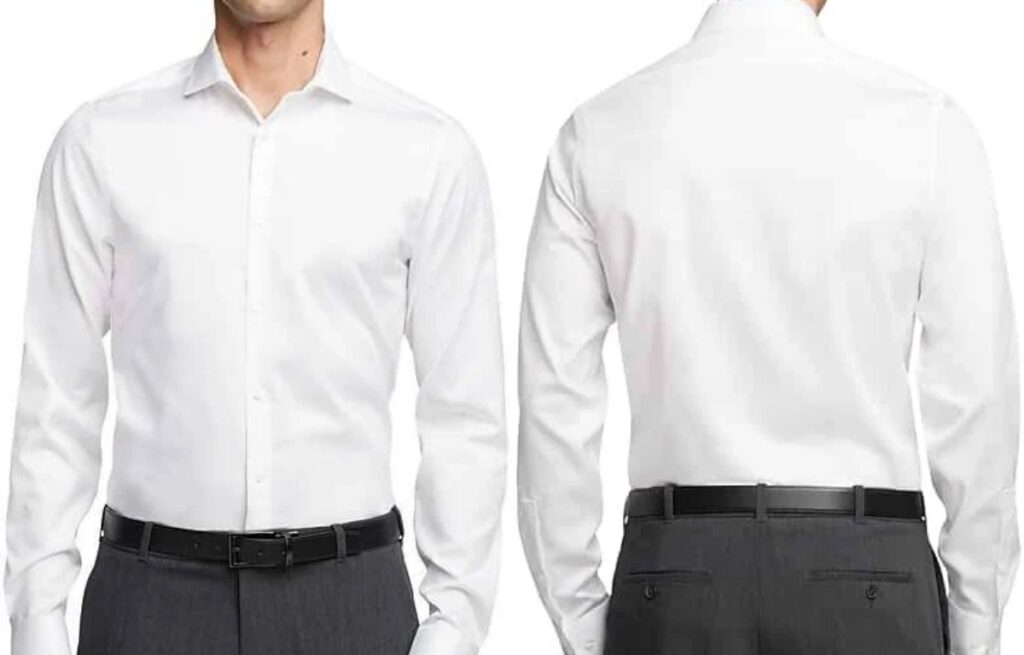
Many people confuse button-down shirts with dress shirts. But they’re not the same—and that difference makes button-downs more useful in real life.
A button-down shirt has small buttons that fasten its collar points, giving it a casual look with smart structure—great for work or weekend.
Let’s look at what makes this shirt so versatile and why it remains a go-to style today.
They may look similar, but they serve different styles.
Button-down shirts are softer, more casual, and built for comfort, unlike dress shirts designed for ties and suits.
The buttons on the collar keep it in place and give the shirt its relaxed feel.
It’s about keeping the shirt clean, wearable, and low-maintenance.
Modern button-downs use soft structured fabrics, curved hems, and relaxed fits for everyday versatility.
Fabric
| Fabric | Key Feature |
|---|---|
| Oxford cotton | Textured and durable |
| Chambray | Soft and casual |
| Cotton-spandex | Easy movement, better fit |
| Twill | Wrinkle-resistant |
Many use enzyme washing to add softness.
Construction
- Button-down collar with small visible buttons
- Back pleats for shoulder ease
- Curved hem for tuck/untuck options
- Chest pocket adds casual detail
- Flat-felled seams or single-needle for strength
A good button-down must balance structure and comfort in every stitch.
The appeal is wide.
Anyone who wants clean, easy style without being too formal wears this shirt.
| Group | Use Case |
|---|---|
| Young pros | Office to weekend |
| Students | Everyday with jeans |
| Designers | Layering piece |
| Capsule brands | Core product |
Common pairings:
- Over tees
- Under blazers
- As a light jacket
Precision matters—even on basic styles.
If the collar roll, buttons, or fit are off, the shirt loses its shape and appeal.
Manufacturing Notes
- Collar curve needs shaping—not flat, not stiff
- Buttonholes must hold firm, especially at the collar
- Hem finishing must stay smooth when worn untucked
- Shrinkage should be controlled post-wash
- Grading must work for both fitted and relaxed cuts
Washing and pressing affect the final silhouette—these need testing before production.
Subtle upgrades work best.
Success comes from better fabric feel, smarter collars, and styling details buyers notice.
| Feature Area | Options to Try |
|---|---|
| Collar | Hidden button, unlined, long-roll |
| Flap, double pockets, or no pocket | |
| Fabric | Garment-dyed, organic cotton, stretch |
| Fit | Cropped, oversized, or drop shoulder |
| Branding | Labeling, embroidery, minimal logos |
The key: feel great on try-on, look clean in photos.
Tuxedo Shirt
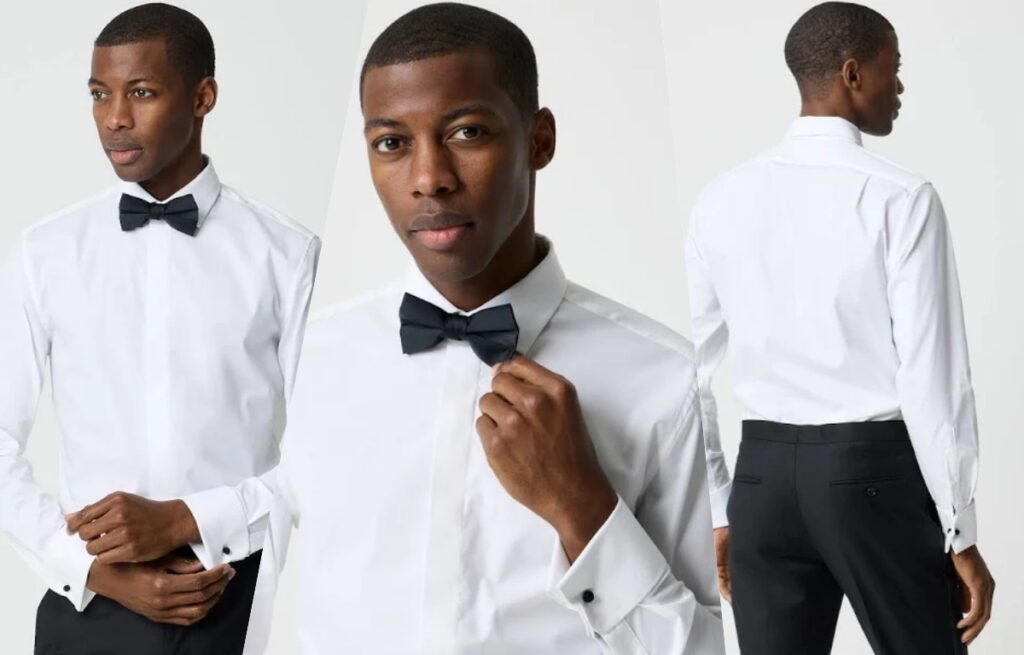
When people think of tuxedos, they often ignore the shirt. But the wrong shirt can ruin the whole look. A tuxedo shirt does more than complete a black-tie outfit—it defines it.
A tuxedo shirt is a formal shirt with specific front panels and collar styles, designed to pair with a tuxedo jacket for black-tie occasions. It adds structure, balance, and texture to the outfit.
Let’s dive deeper into why this classic shirt still matters, and how we approach it in modern manufacturing.
What makes a tuxedo shirt different from regular formal shirts?
Tuxedo shirts are built for elegance, not just structure.
They include features like pleated or pique fronts, French cuffs, and formal collars that elevate the entire outfit.
Regular shirts may look clean, but they lack the texture, sheen, and dress codes that tuxedo shirts follow.
What technical elements define a high-quality tuxedo shirt?
It’s not just about looking crisp. The shirt must maintain shape and formality all night long.
A good tuxedo shirt uses fine cotton, stiff construction, and tailored details that hold up during events.
What We Focus on During Production
Fabric Matters
| Fabric Type | Purpose |
|---|---|
| Pima / Egyptian Cotton | Smoothness and shine |
| Cotton Piqué | Textured front panels |
| Twill / Broadcloth | Durable, tight weave |
| No stretch blends | Maintain formal structure |
We avoid stretch fibers in tuxedo shirts. Too much movement softens the shape, which is not ideal for black-tie.
Core Design Features
- Bib Front: Often pleated or pique, covers the chest area
- French Cuffs: Require cufflinks, add formal polish
- Wingtip or Spread Collar: For bow ties or formal neckwear
- Stud Front or Hidden Placket: Replaces visible buttons for cleaner lines
- Longer Shirt Tails: Designed to stay tucked through long events
These details are small but strict. For premium results, every millimeter counts.
Finishing Touches
- Stiff collar interlining keeps shape under bow tie tension
- Buttonholes for studs must be reinforced and well-aligned
- Pleat symmetry must hold under movement or seated wear
- Double-layered bib to avoid see-through issues under flash photography
Every piece must function under real-life formal scenarios—banquets, ceremonies, and long hours of wear.
Who wears tuxedo shirts and when?
These shirts are highly occasion-specific—but very high-impact when used right.
Men wear tuxedo shirts for formal events like weddings, galas, award nights, or luxury dinners.
| Audience | Use Case |
|---|---|
| Grooms | Wedding suits, evening receptions |
| Celebrities | Red carpets, black-tie events |
| Executives | Formal branding dinners |
| Rental Companies | Suits and shirts for events |
| Premium Brands | Capsule collections with tuxedo sets |
They’re almost never worn casually—but in their space, they’re irreplaceable.
What must manufacturers control when producing tuxedo shirts?
There’s less room for error in formalwear.
Precision, symmetry, and stiffness matter more here than in any other shirt style.
Production Challenges
- Stud buttonholes must align perfectly—or the placket twists
- Bib center lines must remain straight and centered
- French cuff balance affects how they lay under jacket sleeves
- Shrinkage allowance must be exact to keep post-wash fit
- Pleats or pique panels require precise pattern alignment
Many tuxedo shirts also go through light starching and require special pressing to hold their shape. That adds a step to finishing and packing.
How do brands stand out with tuxedo shirts?
Most brands don’t offer tuxedo shirts. That’s a chance to lead.
Focus on fabric quality, customizable bibs, or collar options for different tuxedo looks.
| Differentiation Angle | Ideas That Work |
|---|---|
| Bib Design | Pleated, pique, smooth front |
| Collar Options | Wingtip, cutaway, mandarin |
| Stud Systems | Removable vs. built-in |
| Formal Sets | Bundled with cufflinks or bow tie |
| Size Strategy | Custom fit or sleeve-length options |
For us, precise sewing and upscale packaging make a big difference in customer perception.
French-Cuff Shirt
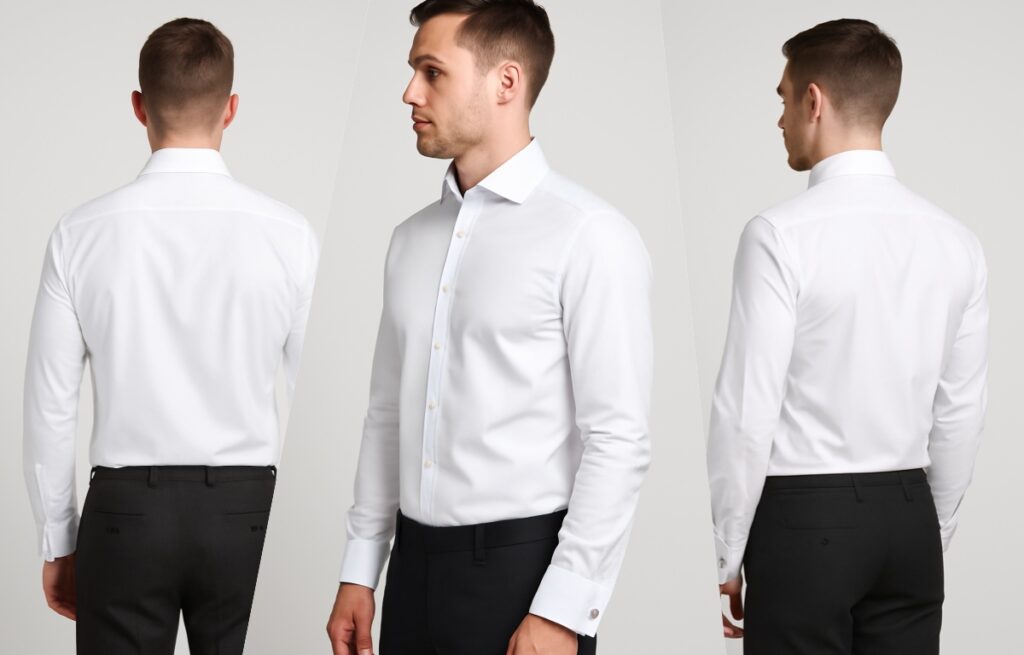
Most shirts fade into the background. But a French-cuff shirt commands attention. It signals detail, intention, and polish—traits buyers in the formalwear space look for.
A French-cuff shirt features double-length cuffs that are folded back and fastened with cufflinks, making it one of the most refined shirt styles in menswear.
Let’s explore why this shirt matters and how we, as manufacturers, get every detail right.
What makes a French-cuff shirt different from other formal shirts?
It’s all about the cuffs. No shortcuts.
French cuffs are longer, folded, and designed to be worn with cufflinks—not buttons—adding formality and presence.
They’re worn when style and status matter: business meetings, weddings, awards, and formal dinners.
What are the key technical elements of a French-cuff shirt?
It starts with the cuff—but it’s not only about the cuff.
A good French-cuff shirt uses fine cotton, stiff construction, and precise cuff shaping to support the weight and alignment of cufflinks.
What Matters in Production
Cuff Engineering
| Element | Manufacturing Focus |
|---|---|
| Double-length cuff | Must fold evenly with sharp edge |
| Cufflink holes | Perfect alignment on both layers |
| Interfacing | Adds structure, must not be too thick |
| Stitching | Seam must hold under stress from cufflinks |
If one side is even 2mm off, the cuff won’t lay flat. That’s unacceptable.
Shirt Construction
- Spread or cutaway collar: Matches the shirt’s formal look
- No pocket: Keeps front clean and upscale
- Hidden or stud placket: Optional for black-tie appeal
- Longer sleeve length: Cuffs sit outside the jacket by 1–2cm
- Yoke and back pleats: Adjusted to keep arms mobile
We often pre-shrink and lightly starch the cuffs to ensure they hold shape after wash and wear.
Who wears French-cuff shirts and when?
This shirt isn’t for everyday wear—but it has a loyal, global market.
French-cuff shirts are worn by professionals, grooms, speakers, and style-conscious individuals who want to project authority and attention to detail.
| Segment | Use Case |
|---|---|
| Executives | Presentations, high-level meetings |
| Grooms | Weddings and receptions |
| Formalwear brands | Core product for black-tie and white-tie |
| Cufflink collectors | To showcase unique accessories |
Some customers wear them daily. For others, it’s a once-a-year shirt. Either way, expectations are high.
What do manufacturers need to control during production?
These shirts require extra accuracy. Small flaws get noticed.
Precision in cuff construction, sleeve length, and fabric behavior is critical for quality and comfort.
Key Production Points
- Cuff symmetry: Stitch line, fold line, and buttonholes must align
- Collar and cuff stiffness: Balanced for structure without bulk
- Sleeve length tolerance: Usually tighter (+/- 0.5cm) than standard shirts
- Cufflink hole durability: Must reinforce with extra stitching or tight density
- Packaging: Cuffs must be packed to retain fold line and shape
Many brands also request custom monograms or embroidered initials to add exclusivity.
How can brands differentiate with French-cuff shirts?
It’s a classic category—but there’s still room for innovation.
Differentiation comes from fine fabric choices, cuff design variations, and refined details that speak to discerning buyers.
| Area | Ideas for Standing Out |
|---|---|
| Fabric | Sea island cotton, 120s+ fine yarn count |
| Cuff Style | Square vs. rounded fold, wider fold for statement |
| Custom Options | Monogramming, exclusive cufflink sets included |
| Packaging | Gift box with fold support and care guide |
| Fit Strategy | Slim, classic, tall-fit sizing for all markets |
In this space, quality wins. The buyer already expects to pay more—they just want it to feel worth it.
Wingtip Collar Shirt
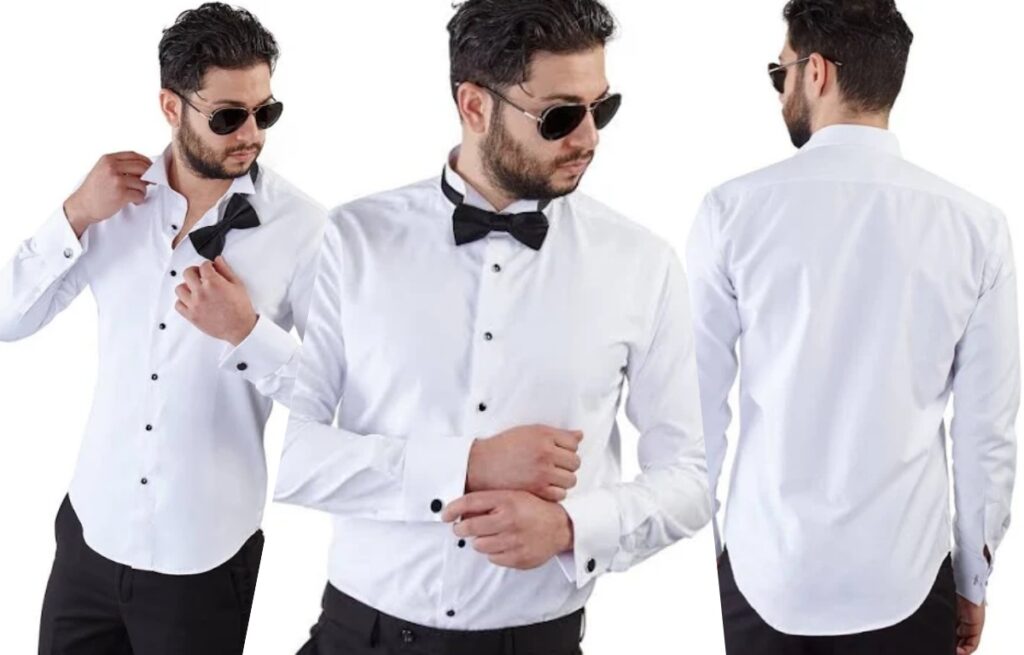
Most people focus on the tuxedo or the suit. But in black-tie wear, the collar leads. If the collar looks wrong, the whole outfit fails. That’s where the wingtip collar shirt comes in.
A wingtip collar shirt features short, pointed collar tips that fold down and sit flat above a bow tie, making it the most formal shirt style for tuxedo events.
Let me show you why this shirt matters, and what to focus on when producing or sourcing one.
What makes a wingtip collar shirt different from other dress shirts?
It’s about function and formality.
Wingtip collars are designed for bow ties. The small, folded tips sit above the tie knot, creating a clean, formal neckline.
They’re not for everyday suits. This shirt is built for the red carpet, not the boardroom.
What construction features define a proper wingtip collar shirt?
Details make or break this shirt.
A true wingtip shirt must have a stiff collar, clean placket, and formal elements that hold up under scrutiny.
Design and Fabric Requirements
Collar Construction
| Element | Detail |
|---|---|
| Wingtip collar | Tips are short and sharp, angle outward slightly |
| Interlining | Must be stiff to stay upright under a bow tie |
| Collar height | Higher back height helps balance the jacket line |
| Shape retention | Starch or fused base keeps form |
We usually avoid fusing too aggressively, so the tips don’t look bulky. Precision shaping is critical. Even 1mm asymmetry is visible under formal lighting.
Shirt Body Features
- Bib front (pleated or pique) adds texture and structure
- French cuffs support cufflinks for a polished finish
- Stud placket or hidden buttons maintains a clean center line
- No pockets for a sleek appearance
- Long shirttail ensures it stays tucked throughout an event
Fabric is usually 100% long-staple cotton in broadcloth or twill. These hold crisp lines and resist wrinkling under jackets.
Who wears wingtip collar shirts and when?
It’s a niche product—but with clear use cases.
Wingtip collar shirts are worn by grooms, award recipients, performers, and anyone attending black-tie events.
| Buyer Type | Reason to Wear |
|---|---|
| Grooms | Paired with tuxedos for weddings |
| Celebrities | For red carpets and galas |
| Opera/Dance Performers | Required by costume specs |
| Formalwear brands | Essential in tuxedo packages |
| Rental companies | High-turnover, must hold up to repeated use |
They’re rarely worn twice a week—but when needed, they must be perfect.
What production challenges are common with wingtip collar shirts?
This shirt is unforgiving in QC.
Mistakes in symmetry, collar shaping, or front construction are visible even from a distance.
Manufacturing Notes
- Collar wing tips must be perfectly mirrored and symmetrical
- Stitch line at collar base must be straight and aligned with placket
- Buttonhole placement for studs must be exact
- Bib pleats must remain flat after washing and pressing
- Shrinkage must be minimal—post-wash collar change ruins fit
We recommend testing samples with bow ties during fitting, especially when making for brands or rentals.
Also, packing matters. Cuff and collar shaping must be protected in transit with inserts and collar stays.
How can brands stand out with wingtip collar shirts?
Most brands treat this as a commodity. That’s a mistake.
You can stand out by focusing on small upgrades—fabric, collar refinement, and smart packaging.
| Differentiator | Strategy |
|---|---|
| Collar Variation | Slightly curved wing shape for modern look |
| Fabric Options | 120s cotton, TENCEL blends for softer handfeel |
| Presentation | Boxed shirt with collar guard and cuff guide |
| Add-ons | Optional bow tie, studs, and cufflink sets |
| Fit Strategy | Tall and slim sizing for global markets |
For formalwear, perception equals value. The better it looks out of the box, the faster it sells.
Mandarin Collar Shirt
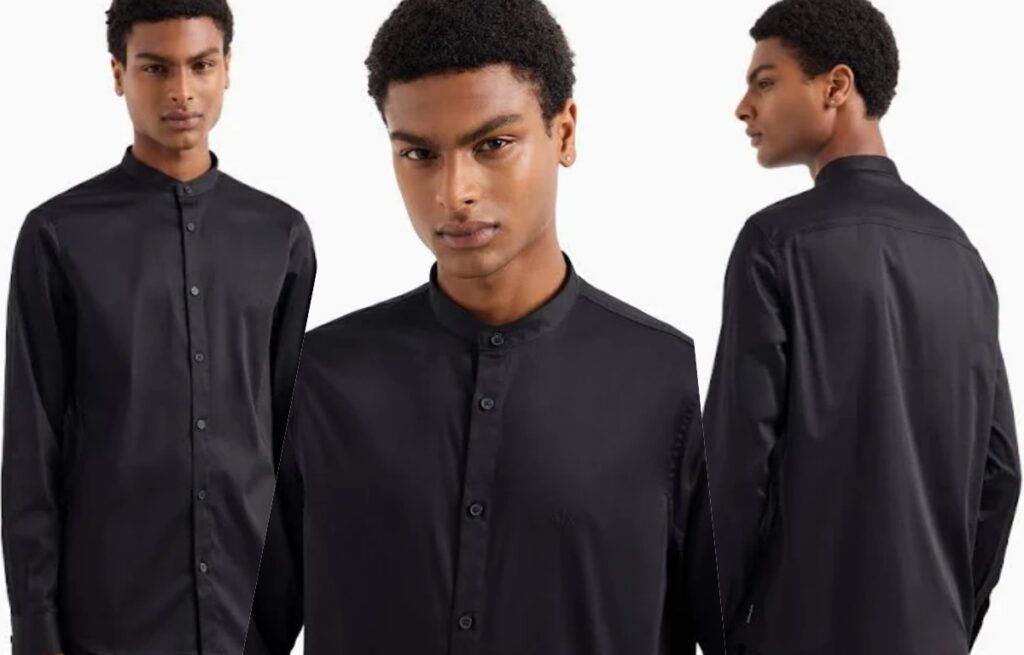
Many shirts follow the same formula: pointed collars, button plackets, and repetition. But the mandarin collar shirt breaks that pattern—clean, minimal, and different. That’s why more designers are adopting it.
A mandarin collar shirt features a short, stand-up band collar without collar flaps. It offers a sleek, modern look often associated with Eastern aesthetics and minimalist fashion.
Let’s explore why this shirt works, how it’s built, and where it fits in today’s shirt market.
What makes a mandarin collar shirt different from other collar styles?
It’s all about simplicity and structure.
The mandarin collar stands upright and wraps around the neck without folding down, creating a clean neckline that removes bulk and signals modern design.
It’s not meant for ties. That’s the point. The shirt speaks on its own.
What technical details define a quality mandarin collar shirt?
Structure, proportions, and neckline comfort are everything.
A well-made mandarin collar shirt balances sharp edges with soft support, using light interfacing and precise measurements.
How We Engineer the Collar and Body
Collar Specifications
| Feature | Key Requirement |
|---|---|
| Band height | Usually 2.5–4cm depending on face shape |
| Interlining stiffness | Medium-light to avoid neck irritation |
| Button position | Closer to throat for secure closure |
| Closure options | One visible button or concealed tab |
The collar must curve naturally without pressing into the neck. If too stiff or tall, it becomes uncomfortable.
Shirt Body Considerations
- No lapel or flaps: Reduces visual clutter
- Straight or hidden placket: Keeps the front clean
- Minimal seams: Often used in high-end or Zen-inspired design
- Soft shoulder construction: Supports flow and relaxed style
We often use enzyme-washed cotton, linen blends, or TENCEL to match the shirt’s minimal tone and light movement.
Who wears mandarin collar shirts and why?
It’s a niche with expanding demand.
This shirt is favored by those seeking clean, modern, or cultural alternatives to Western collars.
| Audience | Motivation |
|---|---|
| Minimalist brands | Clean aesthetics, fewer details |
| Eco-conscious wearers | Natural fabrics with reduced styling |
| Designers | Used in unisex or Asian-fusion collections |
| Formalwear brands | Modern black-tie alternatives |
Mandarin collars are seen at weddings, art events, resort wear, and upscale leisurewear collections.
What must manufacturers consider when making mandarin collar shirts?
This shirt looks simple—but flaws are obvious.
Any misalignment in the collar, placket, or neckline becomes very visible due to the minimal design.
Key Manufacturing Points
- Collar curve and height must match the shoulder slope
- Stitch line around the neck needs to be even and smooth
- Interfacing must be fused evenly to avoid bubbling
- Placket symmetry must be perfect, especially for hidden versions
- Shrinkage can shift collar angle—requires pre-washing for accuracy
Because there are fewer visual elements, every stitch gets noticed. That’s why mandarin collar shirts require stricter QA—even in small batches.
How can brands stand out with mandarin collar shirts?
It’s all about refinement.
Great mandarin collar shirts stand out by using better fabrics, clean construction, and thoughtful styling variations.
| Area | Differentiation Idea |
|---|---|
| Fabric | Bamboo cotton, linen-TENCEL blends |
| Placket | Hidden snaps, asymmetrical designs |
| Collar shape | Rounded edges or notch openings |
| Cultural fusion | Embroidery, Mandarin knot buttons, minimal print |
| Gender-neutral fit | Popular in capsule and sustainable brands |
This shirt fits modern branding: less is more, and detail equals value.
Spread Collar Shirt
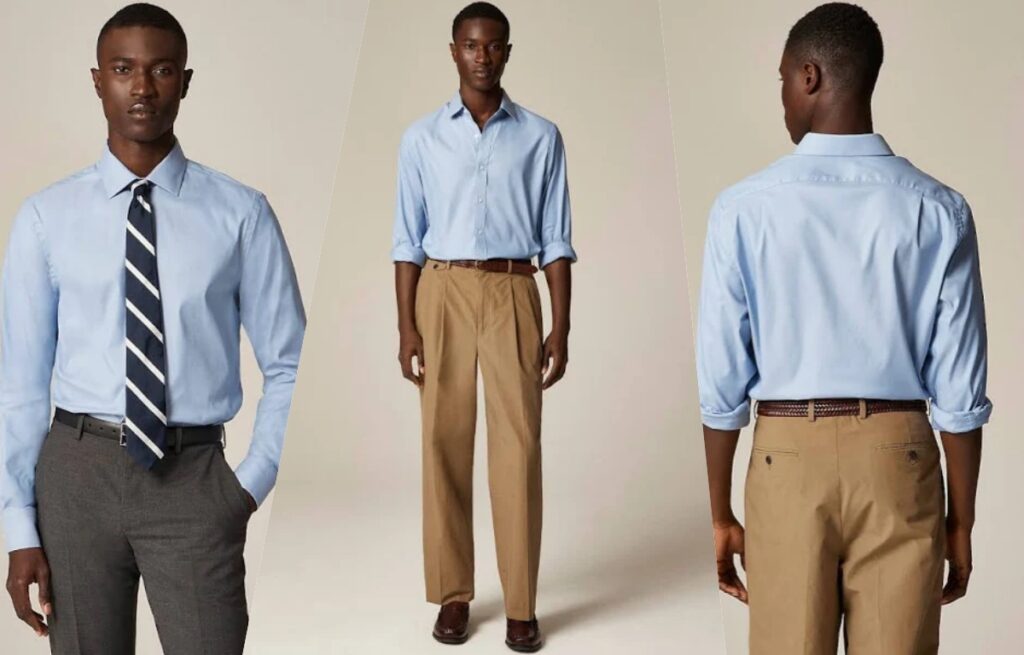
Some collars are functional. Others make a statement. The spread collar does both. That’s why it’s one of the most used shirt styles in high-end tailoring and office fashion.
A spread collar shirt features a wide collar point angle—typically 45° to 90°—designed to frame the face, accommodate wider tie knots, and project a sharp, confident appearance.
Let’s break down what makes this shirt technically refined and consistently in demand.
What sets the spread collar apart from other shirt collars?
It’s all about proportions and posture.
Unlike point collars or button-downs, spread collars open wide—visually balancing wider faces or suits with broad lapels.
The design helps tie knots sit neatly in the gap, especially Windsor or half-Windsor knots, making it a favorite for formal and business styling.
What technical elements define a proper spread collar shirt?
Balance and control are everything here.
A good spread collar shirt must maintain structure, collar angle symmetry, and neckline height—so it holds up under a jacket or stands alone.
Design Logic and Construction Details
Collar Engineering
| Element | Key Specifications |
|---|---|
| Spread angle | 45°–90°, depending on formality level |
| Collar point length | 6–9 cm for proportional framing |
| Back height | Slightly higher for jacket compatibility |
| Interlining | Medium-stiff for hold, not rigidity |
Collar roll must look natural when worn with or without a tie. Uneven fusing or poor pressing will warp the visual line.
Shirt Features That Support the Collar
- Placket strength: Reinforced to support tie tension
- Stitch density: Clean finish around collar base (14+ SPI)
- Collar stays: Removable or sewn-in to retain edge sharpness
- Back yoke construction: Helps control collar lift and shoulder slope
Our premium clients often request split yokes, fused plackets, and single-needle side seams to match the collar’s quality.
Who wears spread collar shirts and in what context?
The spread collar appeals to professionals, stylists, and premium brands alike.
It’s worn by those who value a bold neckline, polished look, and tailored symmetry—whether in boardrooms or fashion shoots.
| Wearer Profile | Use Case |
|---|---|
| Business Executives | Suit-and-tie formalwear |
| Fashion-forward buyers | Editorial styling with minimal accessories |
| Wedding clients | Dress shirts with vests or tuxedos |
| DTC brands | Elevated basics for workwear collections |
When styled correctly, it communicates attention to detail and confidence. It works equally well with ties or open collars.
What challenges do manufacturers face when producing spread collar shirts?
Small errors in cutting, pressing, or sewing will distort the collar’s visual line—instantly noticeable to the wearer.
Manufacturing Priorities
- Symmetrical collar angle: Must match exactly on both sides
- Point alignment: Tips should not flare unevenly under jackets
- Interlining control: Avoid bubbling or stiffness post-wash
- Stitching around the curve: Smooth and gap-free
- Shrinkage allowance: Especially critical for fused collars
We also recommend test-fitting on mannequins with various tie knots to ensure collar spacing holds under tension.
How can brands differentiate with spread collar shirts?
This is a classic—but there’s still room to lead.
Differentiation comes through fit refinement, collar variants, and branding details that elevate the everyday.
| Area of Focus | Differentiation Example |
|---|---|
| Collar Style | Semi-spread, cutaway, tall spread |
| Fabric | 100s/120s cotton, wrinkle-free finish |
| Branding | Minimal inner label, contrast inner band |
| Fit Range | Athletic/slim/tall cuts |
| Customization | Collar stay options, monogramming |
In a saturated category, precision and packaging matter more than reinvention.
Point Collar Shirt
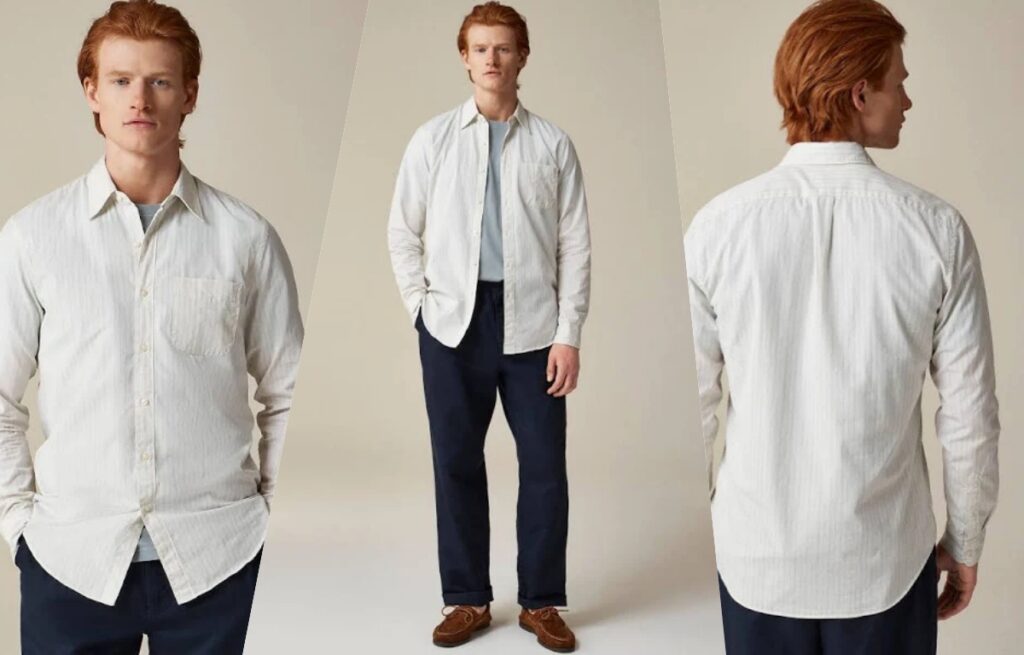
Shirt collars evolve with trends. But the point collar never disappears. Its sharp angle, long lines, and narrow spread make it a staple for business, uniforms, and timeless menswear collections.
A point collar shirt features a narrow collar spread with long, downward-pointing collar tips—ideal for slimmer faces, tie-centric looks, and classic silhouettes.
Let’s explore what makes this shirt functionally reliable and stylistically enduring.
What defines the point collar compared to other collar styles?
It’s all about the angle and length.
The point collar has a narrow spread (usually under 60°) with elongated tips, creating a vertical visual effect and neatly framing small to medium tie knots.
It’s less bold than spread collars but more traditional and clean—especially when worn with a suit.
What are the key construction features of a point collar shirt?
Precision is critical in such a focused design.
A proper point collar shirt must control tip length, interlining stiffness, and neckline proportions to achieve its sharp, elongated appearance.
Crafting the Collar and Supporting Structure
Collar Dimensions
| Feature | Standard for Point Collar |
|---|---|
| Collar spread | 30°–60° |
| Collar point length | 7–9 cm |
| Back height | Moderate, for tie compatibility |
| Interfacing stiffness | Medium-light to allow natural roll |
Too short, and the collar loses its identity. Too long, and it overlaps the tie or jacket lapels. We use templated collar boards to ensure repeat accuracy.
Supporting Elements
- Tie space: Narrow to center smaller tie knots
- Collar stay slots: Often included for better edge control
- Fused or sewn interlining: Must resist curling at the tips
- Button position: Precisely placed to keep collar centered
Collars are sewn using 1/8″ or narrower edge stitching to preserve clean lines. Stitch tension must be consistent to avoid distortion after pressing.
Who wears point collar shirts and when?
It’s the quiet professional’s collar of choice.
Point collar shirts are worn by business professionals, uniformed roles, and conservative dressers who prioritize neat, understated styling.
| Group | Use Case |
|---|---|
| Office workers | Works well under tailored jackets |
| Corporate dress codes | Conservative, reliable appearance |
| Uniform manufacturers | Police, airline, and hospitality shirts |
| Heritage brands | Focused on classic American tailoring |
It’s less trendy, but always appropriate. And that’s why many clients keep it as their go-to collar.
What production challenges come with point collar shirts?
Every millimeter matters—especially at the tip.
Point collars reveal quality issues fast: uneven tip length, poor symmetry, or inconsistent interfacing stand out immediately.
Manufacturing Risk Areas
- Tip point accuracy: Collar point stitching must align across layers
- Tip turn technique: Poor turning causes bunching or rounding
- Edge pressing: Over-pressing can flatten the collar curve
- Tie space distortion: Must remain centered and tight
- Interlining bubbling: Controlled via even fusing pressure and temperature
For bulk orders, we recommend building collar-specific quality checkpoints, especially if using multiple machines or operators.
How can brands modernize or differentiate point collar shirts?
Tradition is the base—but smart tweaks can refresh the look.
Brands can explore subtle updates in collar angle, tie space, and construction techniques to adapt the point collar for modern wardrobes.
| Area | Upgrade Option |
|---|---|
| Collar shape | Button-down point, soft-roll, extended point |
| Interlining | Non-fused for a natural roll |
| Fabric | 100s poplin, easy-iron finishes |
| Branding | No-pocket options, tonal logo embroidery |
| Fit strategy | Slim cuts with extended yoke shaping |
This shirt may not trend, but it builds long-term buyer trust—especially for brands targeting professionals.
Club Collar Shirt
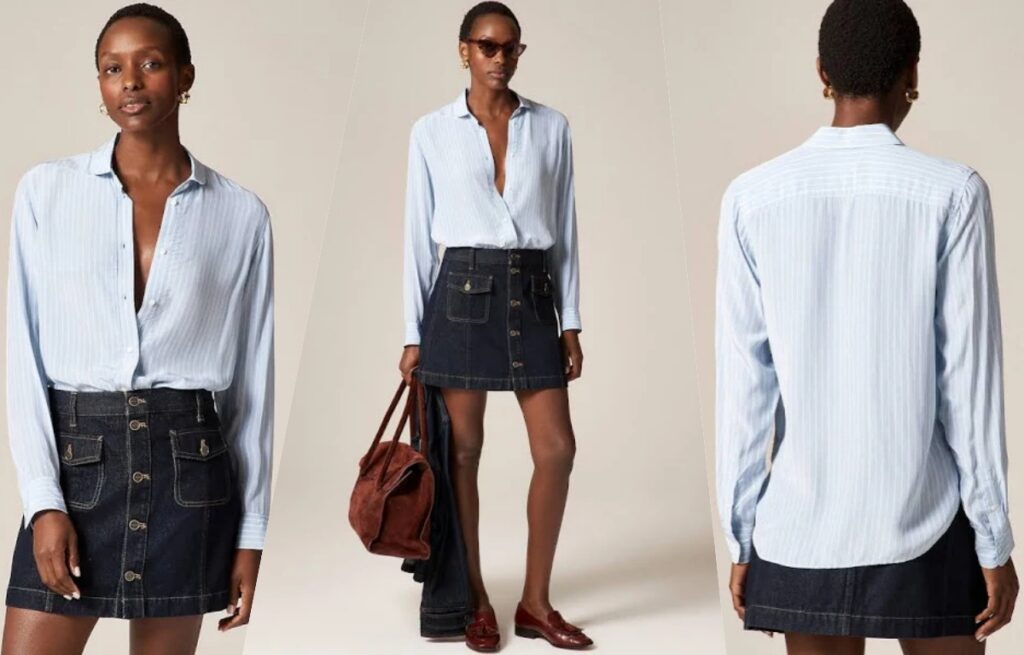
Most collars are sharp and angular. But the club collar curves. Once a symbol of upper-class exclusivity, today it signals subtle rebellion, vintage elegance, and refined individuality.
A club collar shirt features rounded collar tips instead of pointed ones, offering a softer, vintage look that’s ideal for classic, retro, or stylistic wardrobes.
Let’s explore what makes this unique style technically challenging and culturally significant.
What makes the club collar shirt different from other collars?
It’s the curve that counts.
Unlike standard collars, the club collar has rounded ends—removing sharp lines and creating a softer, more vintage appearance.
Originally used in English prep schools to signal elitism, it’s now worn for its style—not status.
What construction details define a proper club collar shirt?
The curve requires control. You can’t fake it with a normal collar pattern.
A well-made club collar shirt uses custom shaping, tight edge stitching, and light interfacing to keep the curve neat and balanced.
Collar Pattern and Manufacturing Notes
Collar Design Specifics
| Feature | Technical Focus |
|---|---|
| Collar tip shape | Circular arc radius must be consistent |
| Collar length | Shorter than point/spread to match curve |
| Spread angle | Often tighter (30°–60°) for compact design |
| Interlining | Soft to medium, preserves subtle roll |
We use collar templates to mark consistent roundness across batches. If stitching or fusing is off, the collar looks uneven or collapses.
Supporting Shirt Features
- Collar height: Typically low-profile for vintage proportion
- Edge stitching: Tight and close (1/16″–1/8″) to hold the shape
- Optional collar pinholes: For clients who want a pin collar variation
- Cuff match: Barrel cuffs or French cuffs depending on formality
Some high-end designs even fuse the collar lightly for structure but still allow it to move naturally when worn open.
Who wears club collar shirts and why?
It’s not for the mainstream—but that’s the point.
Club collar shirts are favored by fashion stylists, vintage lovers, and modern professionals who want a subtle, distinct detail.
| Wearer Type | Motivation |
|---|---|
| Fashion creatives | Retro styling, editorial shoots |
| Menswear enthusiasts | Heritage tailoring and subtle uniqueness |
| Brides/grooms | Vintage or themed wedding ensembles |
| Designers | For niche capsule collections |
It’s rarely a mass-market item—but it earns loyalty in the right segments.
What production challenges do club collar shirts present?
The curve exposes flaws instantly.
Even a slight mismatch in collar tips or stitch tension will break symmetry—making QC crucial.
Manufacturer’s Checklist
- Template cutting: Needed for curve accuracy and left-right consistency
- Curve pressing: Requires special molds or collar clamps
- Interlining placement: Must not shift during sewing or collar warps
- Tip turning: Rounded tips are harder to reverse cleanly than pointed ones
- Shrinkage tolerance: Small collar designs can deform easily post-wash
Some factories avoid producing this style due to its precision needs. But with the right process, it becomes a high-margin specialty piece.
How can brands use club collar shirts to differentiate?
This is a niche product—perfect for brands seeking identity.
You can stand out with fabric contrast, retro detailing, or modern tailoring that highlights the collar’s curve.
| Brand Tactic | Example |
|---|---|
| Fabric pairing | Use poplin or twill with soft collar roll |
| Collar decoration | Pinhole or contrast edge piping |
| Fit strategy | Slim fit with higher armhole for vintage cut |
| Styling bundles | Sell with collar pin or vest combo |
| Editorial positioning | Market as heritage revival or creative twist |
Done right, the club collar shirt builds brand personality—and attracts a loyal following.
Casual Button-Up Shirt
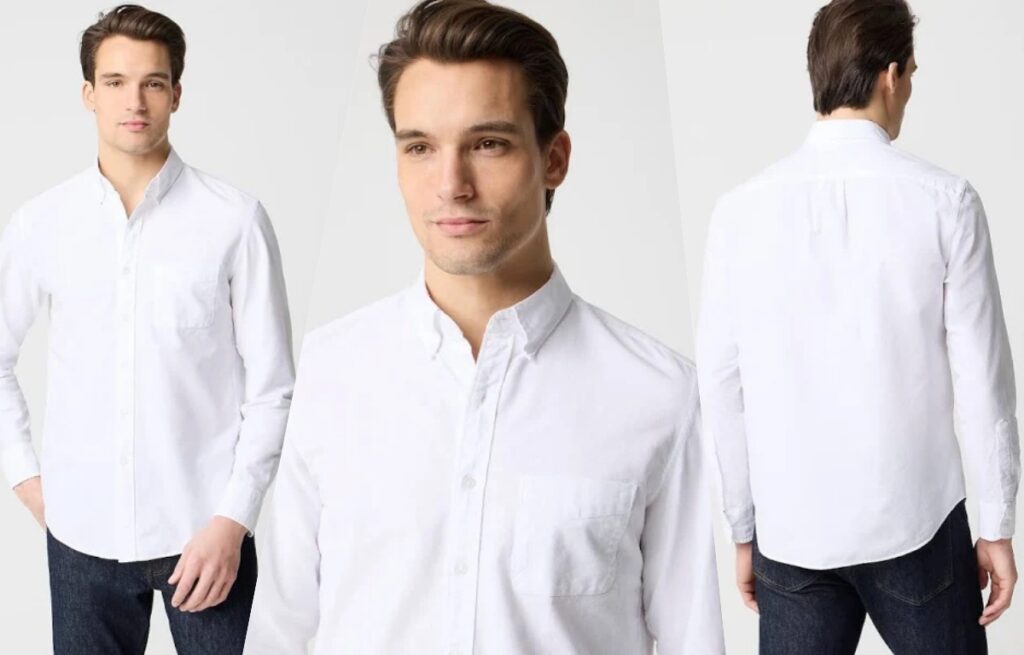
Not every shirt needs a tie—or a collar that stiffens up your posture. That’s why the casual button-up shirt has become a go-to in modern wardrobes. It bridges structure and comfort, formal and relaxed.
A casual button-up shirt features a front button closure and a soft collar but is made with relaxed fabrics, cuts, and construction details for informal wear.
Let’s explore what makes this shirt functional, flexible, and widely adopted across global fashion markets.
It’s all about intent and comfort.
Casual button-up shirts have softer collars, relaxed cuts, and lighter construction—designed for layering, untucked wear, and versatility.
They keep the structure of classic shirting but remove the rules.
Durability meets comfort. That’s the formula.
A good casual button-up uses breathable fabrics, slightly looser patterns, and simplified details—allowing the shirt to move naturally and age well.
What We Focus on in Production
Fabric Selection
| Fabric Type | Benefit |
|---|---|
| Washed cotton | Soft touch, slightly wrinkled for texture |
| Linen blends | Lightweight and breathable |
| Flannel | Warm and casual, ideal for layering |
| Chambray | Denim-like but softer and lighter |
Fabrics are often enzyme-washed or garment-dyed for a worn-in look.
Construction Details
- No stiff interlining: Collars and cuffs are soft and flexible
- Straight or curved hem: Often shorter for untucked wear
- Topstitching: Adds casual flair and visible durability
- Double-needle seams: Strong but not overly formal
- Back yoke with pleats: For better shoulder movement
We may skip internal stays, heavy fusing, or hidden plackets—this shirt is made to breathe.
This is one of the most versatile shirts available.
Men across age groups and lifestyles wear casual button-ups for work, travel, weekend errands, and social gatherings.
| Customer Type | Use Case |
|---|---|
| Office casual workers | Worn without ties or jackets |
| Travelers | Layered over T-shirts or tanks |
| Streetwear buyers | Styled with joggers or shorts |
| DTC lifestyle brands | Core item in capsule collections |
It fits nearly every brand’s audience—from vintage to techwear to coastal.
They look simple—but inconsistency shows.
If collars shrink unevenly, hems twist, or fabric bleeds during washing, it ruins the shirt’s relaxed effect.
Key QA and Production Points
- Shrinkage control: Pre-wash or enzyme wash to reduce post-purchase shrink
- Seam puckering: Use compatible thread and presser foot pressure
- Hem curve consistency: CNC cutting recommended for precision
- Topstitching alignment: Affects both durability and style
- Collar shape retention: Even with no fusing, it must hold form
We also recommend fit-testing across 2–3 sizes to ensure shoulder and body widths match relaxed wear expectations.
It’s all about execution.
You can’t over-design this shirt. Success depends on fabric feel, fit, and how well it integrates into everyday life.
| Strategy Area | Differentiation Idea |
|---|---|
| Fabric | Garment-dyed twill, hemp, or TENCEL |
| Construction | Raw edge hem, utility pockets |
| Branding | Contrast buttons, tonal embroidery |
| Fit options | Boxy, oversized, cropped, or curved cuts |
| Styling bundles | Sold with matching shorts or tees |
The shirt must feel easy—and look intentional.
Flannel Shirt
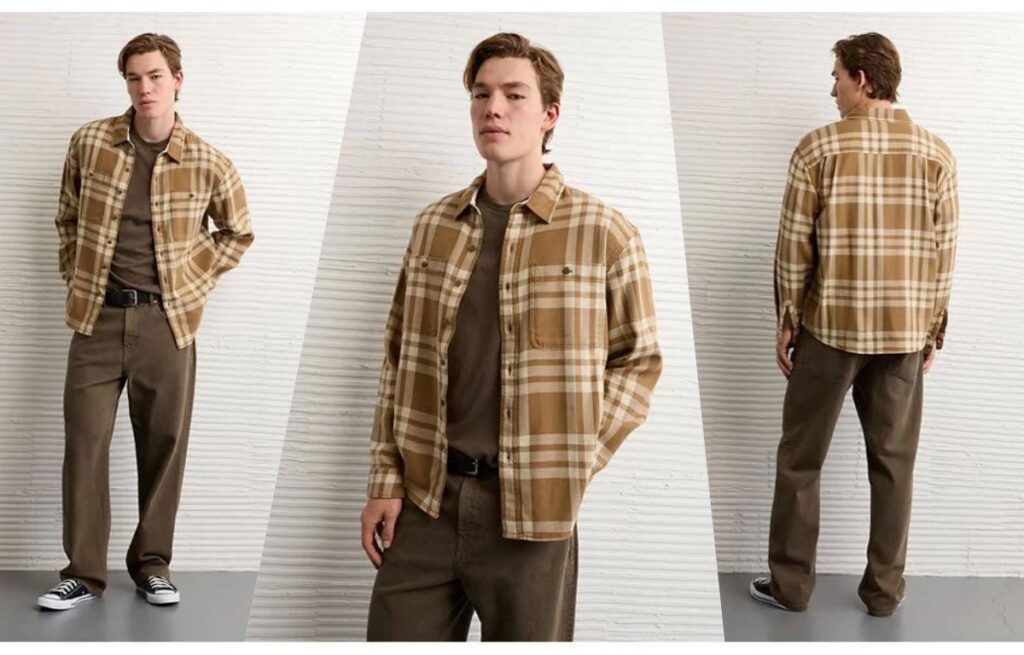
Flannel shirts never really go out of style. They shift—from lumberjack to streetwear to workwear—but they always come back. That’s because they’re not just cozy—they’re built to last.
A flannel shirt is made from brushed cotton or wool, offering a soft texture and heavier weight ideal for layering in casual, outdoor, or transitional-weather wardrobes.
Let’s explore the functional, technical, and cultural value behind this rugged staple.
What makes flannel shirts different from other casual shirts?
It’s all about the fabric.
Flannel shirts use brushed or napped fabrics that trap warmth, create a soft hand feel, and add natural thickness—making them distinct from regular button-ups.
They’re designed for colder months, not boardrooms.
What technical features define a high-quality flannel shirt?
Warmth, softness, and structure must work together.
A good flannel shirt balances density, surface texture, and long-term shape retention without feeling stiff or bulky.
Material Specs and Construction Priorities
Fabric Requirements
| Fabric Type | Key Characteristics |
|---|---|
| Cotton flannel | Soft, breathable, easy to wash |
| Wool blend flannel | Insulating, moisture-wicking, more durable |
| Brushed both sides | Enhanced softness and thickness |
| Yarn-dyed | Better color retention after washing |
Weight typically ranges from 180gsm to 280gsm, depending on seasonality and intended layering.
Structural Features
- Boxy or relaxed fit: Allows layering over tees or thermals
- Double-stitched seams: Prevent stress at elbows and shoulders
- Straight or curved hem: Based on style—workwear or streetwear
- Chest pockets: Usually dual for utility and balance
- Heavy-duty buttons or snap closures: Reinforce the rugged feel
We often pre-wash or garment wash flannel shirts to reduce post-sale shrinkage and improve softness out of the box.
Who wears flannel shirts and where?
This shirt moves across subcultures and lifestyles.
Flannel shirts are worn by outdoor workers, fashion-forward city buyers, and heritage brand loyalists seeking warmth, weight, and casual identity.
| Segment | Use Case |
|---|---|
| Outdoor/labor brands | Fall/winter workwear or layered uniforms |
| Streetwear brands | Oversized fit, worn open with hoodies |
| Heritage Americana | Paired with denim, boots, utility vests |
| Minimalist designers | Neutral-toned, brushed cotton capsule pieces |
This shirt adapts from farm to fashion runway with minor construction tweaks.
What manufacturing challenges come with flannel shirts?
Soft fabric can behave badly under pressure.
Brushed flannel is prone to distortion, shrinkage, seam puckering, and uneven pressing during production.
Key Factory Considerations
- Fabric tension control: Brushed surfaces stretch under sewing machines
- Shrinkage management: Needs aggressive pre-washing or sanforization
- Buttonhole stitching: Threads must match thickness of dense fabric
- Pattern alignment: Especially on yarn-dyed plaids—visually sensitive
- Seam reinforcement: Necessary at cuffs, elbows, and shoulders
Many brands also request heavier thread, taped shoulder seams, and custom hang loops for rugged positioning.
How can brands use flannel shirts to stand out?
The silhouette is common—but the execution sets you apart.
You can differentiate through texture, weight, fit strategy, or storytelling—positioning your flannel for outdoor, lifestyle, or fashion use.
| Differentiation Area | Strategy Example |
|---|---|
| Fabric | Organic flannel, recycled blends, brushed wool |
| Fit | Oversized, cropped, shacket hybrid styles |
| Closure | Metal snaps, contrast buttons, hidden plackets |
| Branding | Utility labels, workwear tags, co-branded patches |
| Add-ons | Sold as part of matching lounge or outerwear sets |
The key: own a narrative—outdoorsy, nostalgic, or comfort-first.
Chambray Shirt
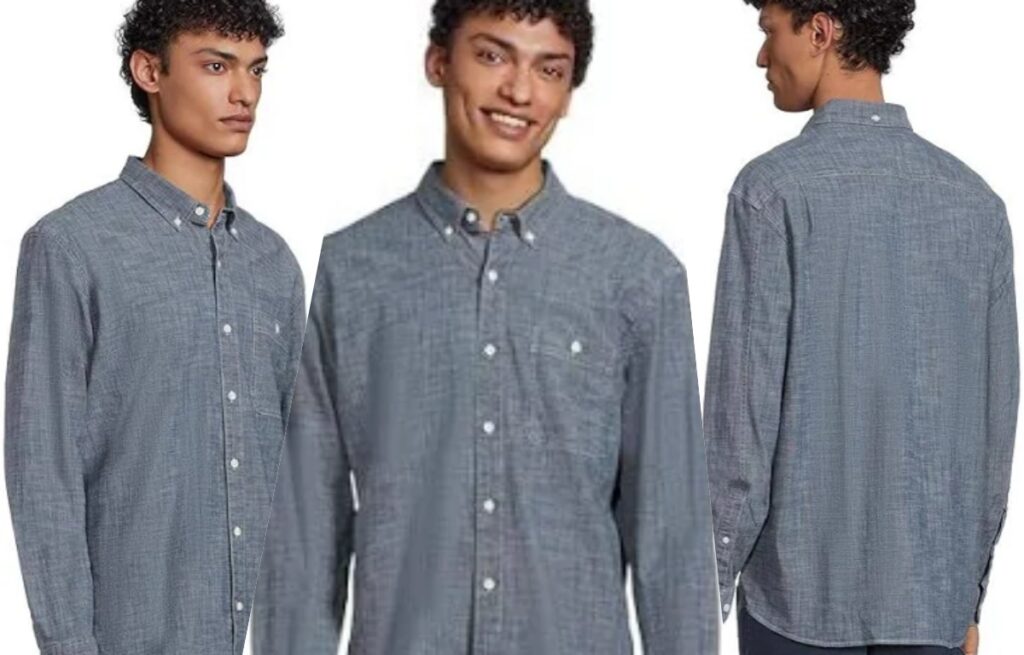
It looks like denim, but feels nothing like it. The chambray shirt delivers texture, breathability, and versatility—without the stiffness of jeans. That’s why it’s found in everything from summer collections to workwear capsules.
A chambray shirt is made from plain-weave fabric, usually cotton, featuring white weft and colored warp yarns—offering a denim-like appearance with much lighter weight and softer texture.
Let’s explore why this fabric—and this shirt—continues to earn its place across different fashion markets.
It’s all in the weave.
Unlike denim’s twill weave, chambray uses a plain weave, resulting in a smoother surface, lighter handfeel, and improved breathability.
It offers a similar look with less bulk, making it ideal for warm-weather or all-day wear.
What technical features define a good chambray shirt?
It needs to feel soft, last long, and hold its shape over time.
A well-made chambray shirt balances fabric density, structure, and thread quality—while keeping the overall weight down.
Fabric Specs and Construction Guidelines
Fabric Properties
| Feature | Specification |
|---|---|
| Weave type | Plain weave (not twill) |
| Yarn composition | 100% cotton or cotton-linen blends |
| Weight range | Typically 100–160gsm |
| Visual effect | Blue warp + white weft = subtle color depth |
Chambray is often garment-washed to enhance softness and reduce shrinkage. Some versions are even enzyme-treated for a smoother handfeel.
Shirt Construction Elements
- Soft collar (button-down or band): Reinforces casual feel
- Double-needle seams: Adds strength without bulk
- Single chest pocket: Standard in most workwear or utility styles
- Box or side pleats: Allows more mobility
- Curved hem: Designed for untucked or tucked wear flexibility
This shirt needs to look broken-in, not starched. We use topstitching and light fusing to match the relaxed structure.
Who wears chambray shirts and why?
It fits across climates, markets, and body types.
Chambray shirts are worn by professionals, outdoor buyers, and casual fashion enthusiasts looking for breathable texture with a denim look.
| Customer Type | Use Case |
|---|---|
| Urban professionals | Business-casual alternative to Oxford shirts |
| Outdoor brands | Lightweight long-sleeve for sun protection |
| Heritage fashion fans | Americana, ranchwear, or rugged style |
| Summer collections | Worn open or layered with tanks and tees |
It’s one of those shirts that works tucked in or open over anything.
What challenges does chambray present during production?
It’s subtle—but sensitive to construction quality.
Because the weave is looser than twill, poor sewing or finishing can result in puckering, color bleeding, or seam twisting after wash.
Manufacturing Considerations
- Shrinkage management: Chambray has high cotton content—pre-wash essential
- Seam control: Plain weave can pucker more easily under tension
- Edge finishing: Raw edges fray faster—must overlock or flat-fell properly
- Color fading: Must test for wash fastness due to indigo-dyed yarns
- Pattern alignment: Subtle weave still shows misalignment in high-end lines
Some brands reinforce key seams like the shoulder or side seam with bar-tacks, especially for outdoor-leaning products.
How can brands stand out with chambray shirts?
Don’t overcomplicate. Focus on feel, fit, and storytelling.
Great chambray shirts are soft, breathable, and timeless—enhanced through details like stitching contrast, sustainable dyeing, or vintage-inspired cuts.
| Differentiation Area | Strategy Example |
|---|---|
| Fabric Innovation | Organic cotton, linen-cotton blends |
| Fit Strategy | Relaxed, short-sleeve, or shacket silhouette |
| Construction Tweaks | Triple stitching, side gussets, utility tabs |
| Brand Story | American workwear roots or Japanese selvedge |
| Presentation | Wrinkle-washed, garment-dyed, pre-washed |
Positioning matters. When presented as a breathable everyday essential—not denim’s little cousin—it sells fast.
Denim Shirt
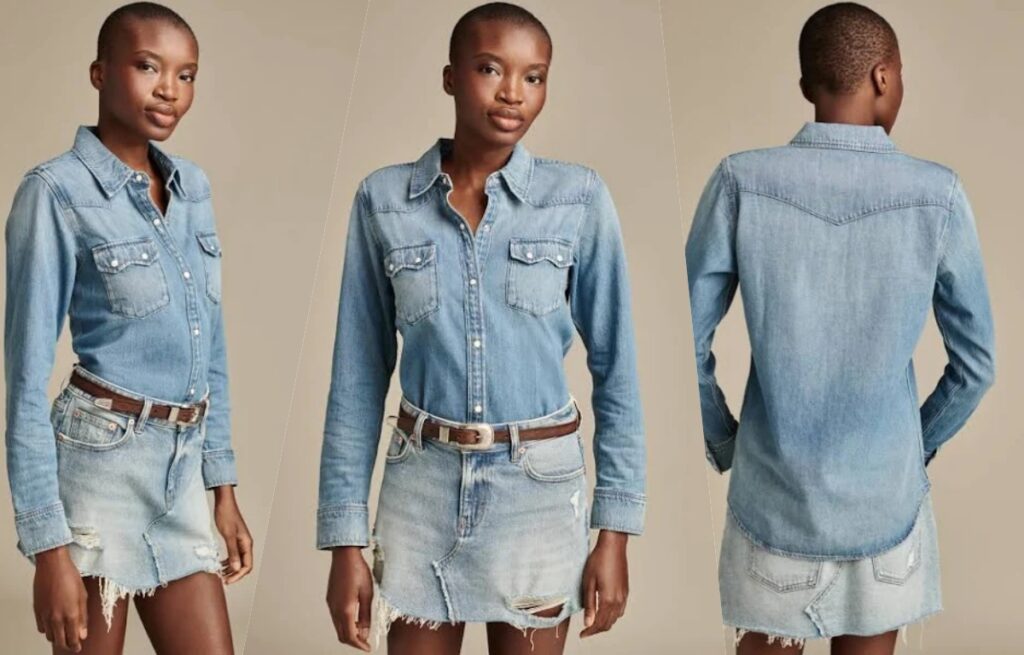
When fabric and fashion intersect, few shirts are as iconic as the denim shirt. It’s rugged, versatile, and built with attitude. From workwear to runway, it continues to evolve.
A denim shirt is made from twill-woven cotton—heavier and more structured than chambray—offering durability, visual texture, and timeless appeal across casual and utility fashion.
Let’s dive into why this staple still dominates and what goes into crafting a great one.
What makes a denim shirt different from chambray or cotton shirts?
It’s about the weave and the weight.
Denim shirts use twill weave, making them denser, more textured, and naturally more durable than plain-woven cotton or chambray shirts.
Unlike chambray, which looks similar but is light and smooth, denim holds its shape and gets better with wear.
What technical features define a high-quality denim shirt?
It’s not just about fabric strength—it’s about aging well.
A proper denim shirt uses mid- to heavyweight fabric, reinforced seams, and finishes that allow the shirt to soften, fade, and mold to the wearer over time.
Fabric and Construction Fundamentals
Fabric Selection
| Attribute | Specification |
|---|---|
| Weave | 3×1 or 2×1 twill |
| Yarn Type | Ring-spun cotton (often slubbed for texture) |
| Weight | 6oz–10oz (200–350gsm) |
| Wash Treatment | Rinse, enzyme, stone-wash, or acid-wash |
For rigid styles, raw or one-wash denim is used. For comfort-driven pieces, softened or stretch blends (1–2% elastane) are added.
Construction Standards
- Double or triple-needle stitching: Reinforces side seams and yoke
- Western or workwear pockets: Often pointed flap, bar-tacked corners
- Curved or straight hem: Varies by target customer
- Metal snaps or cat-eye buttons: Durable, style-specific closures
- Back yoke and pleats: Support upper-body movement and fit
We often use chainstitch runoff at side hems to match heritage workwear standards.
Who wears denim shirts and how are they styled?
This shirt moves across generations and style tribes.
Denim shirts are worn by laborers, fashion influencers, and casual dressers who value structure, texture, and utility.
| Segment | Use Case |
|---|---|
| Heritage workwear fans | Layered under jackets with raw denim |
| Streetwear buyers | Oversized fits with cargo pants or joggers |
| Casual office workers | Worn open over a tee or buttoned clean |
| Outdoor brands | Paired with flannel or canvas trousers |
It’s one of few shirts that gains value through wear—aging becomes an asset.
What production challenges does denim present?
Heavy fabric adds pressure at every step.
Denim shirts require precise machinery setup, stronger needles, and special handling to avoid seam distortion, skipped stitches, or uneven puckering.
Key Manufacturing Notes
- Seam tension: Needs higher torque to avoid skipped stitches
- Needle choice: Use size 16 or 18 to penetrate 8–10oz fabric
- Shrinkage control: Fabric must be pre-shrunk or washed post-sewing
- Topstitch alignment: Visible thread means mistakes are obvious
- Hardware application: Snap fasteners require precision to avoid cracking
We also monitor seam bleed during washing, where indigo dye transfers to internal threads or pocket linings.
How can brands differentiate with denim shirts?
Denim is everywhere—but execution sets you apart.
Differentiation comes from fabric weight, finishing, pocket style, fit, and brand storytelling.
| Differentiation Area | Strategy Example |
|---|---|
| Fabric | Raw selvedge, slub denim, recycled cotton |
| Fit | Western slim, utility relaxed, boxy modern |
| Closure | Metal snaps, button-through, hidden placket |
| Design Detail | Elbow patches, hidden pen pockets, tab collars |
| Treatment | Enzyme + stone combo, dip-dyed effects |
Position the product clearly: workwear heritage or fashion reinterpretation—not both at once.
Plaid Shirt
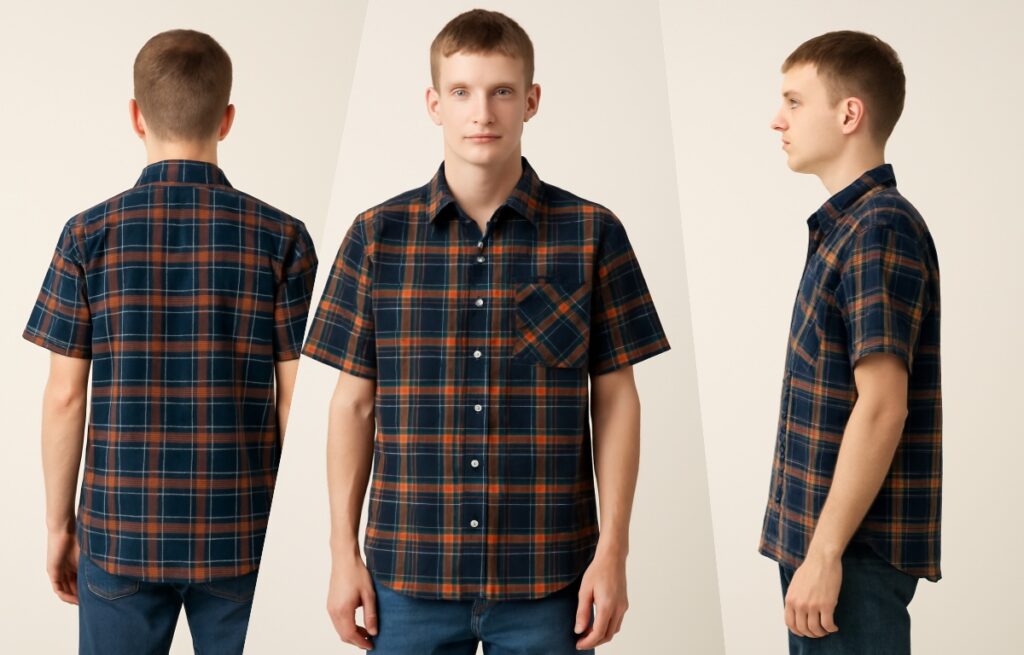
Few shirts carry as much history—and cultural weight—as the plaid shirt. From lumberyards to punk concerts, it keeps reappearing in new forms. It’s not just about pattern—it’s about statement.
A plaid shirt features a checkered pattern woven into cotton, flannel, or twill fabric, offering casual appeal, durability, and deep cultural associations across multiple fashion movements.
Let’s break down why this shirt continues to sell across decades and how to produce it with precision.
What makes plaid shirts different from other patterned shirts?
It’s more than print—it’s structure.
Plaid shirts are typically yarn-dyed with intersecting colored threads woven into a grid, making them more durable, textured, and visually deep than printed alternatives.
The pattern isn’t applied—it’s built into the fabric.
What technical features define a high-quality plaid shirt?
Pattern integrity is everything.
A proper plaid shirt aligns the pattern at key seams, uses durable fabric, and ensures wash stability—because even minor distortion ruins the grid.
Fabric, Pattern Matching, and Stitching
Fabric Structure
| Fabric Base | Why It Works |
|---|---|
| Brushed flannel | Soft handfeel, holds warmth |
| Cotton twill | Durable, textured, resists wrinkling |
| Midweight poplin | Lightweight and breathable |
Yarn-dyed construction ensures colors remain vibrant after washing. For heavier versions, pre-washing is essential to reduce shrinkage and maintain alignment.
Construction Essentials
- Side seam and pocket matching: The plaid must align perfectly
- Double chest pockets: Often flap style with bar-tacks
- Back yoke placement: Bias-cut or matched straight
- Flat-felled seams: Reinforce stress points, especially with flannel
- Topstitching: Clean lines that follow the pattern grid
We use laser or CAD cutting to ensure exact plaid alignment across garment panels.
Who wears plaid shirts and why?
This shirt spans function and fashion.
Plaid shirts are worn by outdoor workers, subculture icons, and casualwear buyers—each group wearing it for different reasons.
| Wearer Segment | Motivation |
|---|---|
| Workwear brands | Durable, warm, functional layers |
| Grunge/punk-inspired | Cultural symbol with rebellious roots |
| Streetwear consumers | Oversized, layered, relaxed look |
| Heritage labels | Timeless, Americana-inspired collections |
A well-cut plaid shirt can work in a forest—or on a fashion week runway.
What challenges do plaid shirts present in production?
The pattern exposes flaws instantly.
If plaids don’t match at seams, plackets, or pockets, the garment looks cheap—even if the fabric is premium.
Manufacturing Risks
- Pattern distortion in cutting: Requires stabilized rolls and slow feed
- Misaligned plackets or yokes: Breaks flow of the shirt front
- Uneven shrinkage: Ruins post-wash symmetry
- Sewing needle deflection: Can shift fine lines off-grid
- Bias-cut yokes: Adds stretch—must balance aesthetic with control
We often recommend batching by plaid type—simple vs. complex—to adjust QA inspection time accordingly.
How can brands stand out with plaid shirts?
The pattern may be common, but details make it special.
You can differentiate through fabric choice, cut strategy, and cultural positioning—making the plaid shirt fit your identity.
| Differentiation Focus | Brand Strategy Example |
|---|---|
| Fabric innovation | Organic brushed cotton, hemp-cotton blends |
| Style cuts | Oversized, shacket-style, boxy cropped |
| Design detail | Hidden snap placket, elbow patches, hood insert |
| Storytelling | Scottish roots, West Coast grunge, rural workwear |
| Pairing strategy | Sold with matching pants or layering vests |
What matters most: making it feel authentic to your audience.
Hawaiian Shirt
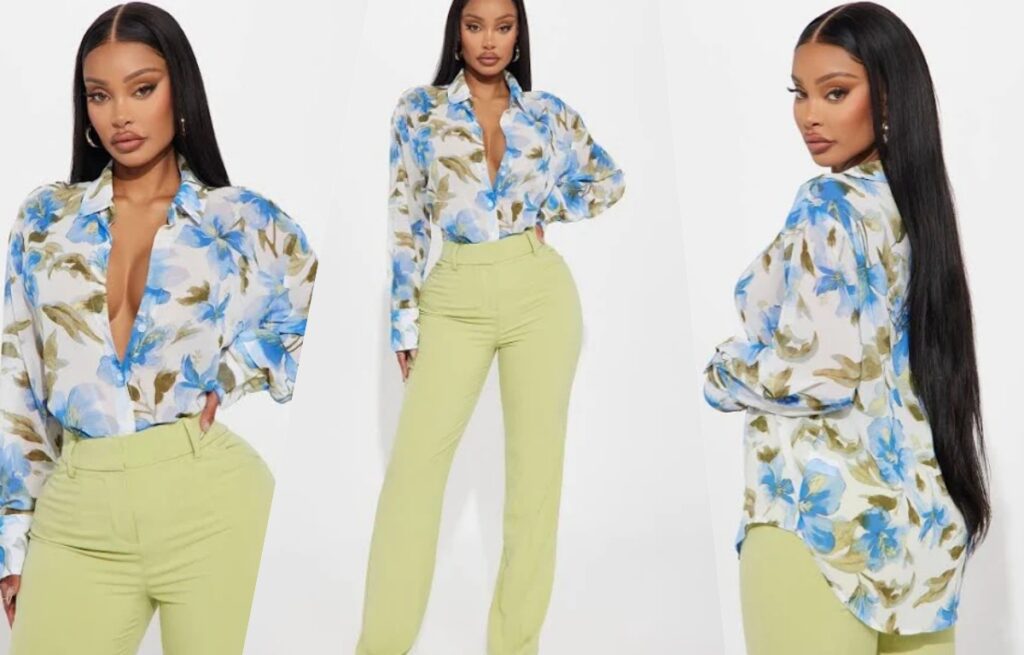
Hawaiian shirts aren’t just vacation wear—they’ve become a global symbol of laid-back cool. But what exactly makes them more than just a novelty item?
Hawaiian shirts are lightweight, short-sleeve button-ups featuring bold, tropical prints and relaxed fits. They offer breathable comfort, cultural depth, and unexpected versatility across casual fashion markets.
Let’s take a closer look at how this iconic shirt evolved and how manufacturers can execute it to meet market demands.
What defines a real Hawaiian shirt beyond its prints?
There’s more than meets the eye.
A true Hawaiian shirt has a camp collar, short sleeves, straight hem, and a loose fit made with soft fabrics like rayon or cotton lawn—distinct from standard button-ups.
It’s built for airflow, comfort, and effortless expression.
What technical construction details should factories focus on?
Prints may catch the eye, but construction defines the quality.
Pattern alignment, fabric drape, collar structure, and wash durability are key technical aspects that elevate Hawaiian shirts from tourist kitsch to high-quality casualwear.
Fabric, Fit, and Functional Design
Fabric Selection
| Fabric Type | Functionality |
|---|---|
| Rayon | Smooth, breathable, strong drape |
| Cotton lawn | Crisp, airy, slightly stiffer feel |
| Tencel or Modal | Sustainable, soft, high color retention |
Rayon remains the classic choice due to its fluidity and cooling properties, but it requires careful handling to avoid shrinkage or seam slippage.
Fit and Construction
- Camp collar: One-piece collar with no stand, lies flat without buttons
- Straight hemline: Built for untucked styling
- Boxy fit: Roomy through the body, sleeves not tapered
- Matte coconut buttons or tonal plastic: Preferred over shiny plastic
- Print alignment at front placket and pocket: Signals premium make
Most factories use rotary or digital printing for complex patterns, and pre-washing rayon is mandatory to control post-production shrinkage.
Who wears Hawaiian shirts and why?
They’re no longer limited to tourists.
Today’s Hawaiian shirts appeal to streetwear fans, resort wear buyers, and retro trend followers, all drawn to the relaxed silhouette and bold attitude.
| Buyer Profile | Motivation |
|---|---|
| Resortwear customers | Airy, easy-care shirts for vacations |
| Vintage/retro fans | 1950s and 80s revival styling |
| Streetwear consumers | Statement layer for oversized fits |
| Hospitality uniforms | Functional and themed yet comfortable |
They’ve even made appearances in business casual wardrobes in tropical climates.
What manufacturing challenges do Hawaiian shirts present?
The details are subtle but essential.
Hawaiian shirts require precise print handling, collar shaping, and fit consistency, especially when rayon is involved.
Production Considerations
- Fabric bleeding: Rayon dyes can run—requires reactive dyeing and pre-set
- Shrinkage control: Requires pre-shrink treatment before cutting
- Collar warping: Camp collar must lie flat—interface carefully
- Pattern matching: Pocket and placket prints must align
- Heat-sensitive finishes: Rayon needs low-temp pressing
Mistakes in alignment or collar shape instantly cheapen the shirt’s appearance. That’s why many premium labels source these from factories experienced in soft woven shirt construction.
How can brands modernize Hawaiian shirts without losing their roots?
Authenticity doesn’t mean being outdated.
Brands can refresh the Hawaiian shirt through modern silhouettes, minimalist interpretations, sustainable fabrics, and influencer collaborations.
| Modern Strategy | Execution Example |
|---|---|
| Sustainable angle | Tencel Hawaiian shirts with biodegradable buttons |
| Minimalist reinterpretation | Tonal floral textures, no bright colors |
| Genderless styling | Relaxed, oversized fits in neutral palettes |
| Capsule collaborations | Artist prints, influencer capsule drops |
| Cross-category styling | Matching short sets or resortwear packs |
The cultural identity remains—but the design evolves with the buyer.
Cuban Collar Shirt
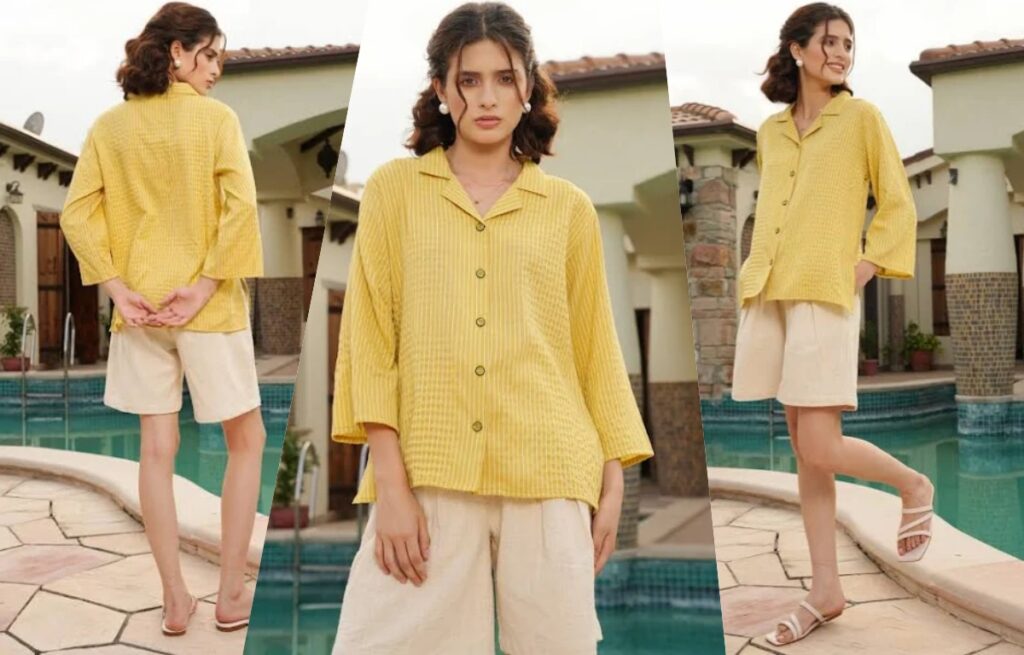
Cuban collar shirts blend relaxed aesthetics with vintage formality. They’re retro, but not outdated—offering something few shirts do: effortless charm and structure in one cut.
Cuban collar shirts feature a flat, open collar with no top button, a straight hem, and a breezy fit—making them ideal for casual and resort wear with a refined edge.
Let’s unpack what makes this shirt unique and how brands can produce it for modern consumers.
How is a Cuban collar shirt different from other open-collar shirts?
The distinction lies in its construction.
Unlike regular open collars, the Cuban collar has a one-piece, notched lapel-like design, creating a natural V-shaped neckline without the need for a collar band.
It’s both technical and stylistic—setting it apart from camp or spread collars.
What are the construction and fabric details that matter?
While it looks effortless, making one requires precision.
The success of a Cuban collar shirt depends on the softness of the fabric, the flatness of the collar, and the accuracy of the notch.
Fabric, Collar Shape, and Finishing
Fabric Considerations
| Fabric Type | Benefits |
|---|---|
| Rayon | Fluid drape, lightweight, summer-friendly |
| Linen blends | Textured yet breathable, vintage appeal |
| Tencel | Sustainable, soft, wrinkle-resistant |
| Poplin cotton | Structured option for formal-casual wear |
Rayon and linen are the most common, but newer blends like Tencel are gaining traction due to their eco profile and soft finish.
Collar Construction Details
- One-piece flat collar: No collar band, designed to lay open
- Notched lapel-style opening: Creates a defined neckline
- Reinforced interfacing: To retain shape without stiffness
- No top button: Intentionally designed for open-wear look
- Straight hem: Ideal for untucked use
Flatness and symmetry are critical—crooked collars instantly reduce the garment’s quality perception.
Who wears Cuban collar shirts and where?
It’s more than a resort staple.
Today, Cuban collar shirts appeal to vacationers, fashion-forward city dwellers, and menswear revivalists seeking retro silhouettes with modern fabrics.
| Audience Type | Key Appeal |
|---|---|
| Resortwear shoppers | Lightweight, stylish vacation wear |
| Streetwear consumers | Retro silhouette paired with wide-leg bottoms |
| Work-from-home users | Comfortable alternative to polos or tees |
| Fashion collectors | Inspired by mid-century vintage menswear |
Pairing it with tailored shorts or loose trousers completes the versatile, global-friendly look.
What are the manufacturing challenges and solutions?
The look is loose, but the production isn’t.
Cuban collar shirts require tight control over collar shape, fabric shrinkage, and lapel symmetry, especially with rayon or linen.
Factory-Level Execution Notes
- Collar bias-cut stability: Needs proper grain alignment to prevent warping
- Pre-washing for rayon: Controls shrinkage and twisting
- Notch seam alignment: Ensures collar symmetry
- Double stitching or flatlock at shoulder: Reinforces structural areas
- Hemline consistency: Straight cut, measured drop
Bulk production must be carefully graded across sizes to ensure that the neckline remains proportionally flattering on all body types.
How can brands modernize the Cuban collar for today’s market?
Retro meets innovation.
Brands can adapt the Cuban collar shirt by updating prints, using sustainable fabrics, or pairing it with matching sets for a fashion-forward appeal.
| Modern Strategy | Example |
|---|---|
| Minimalist approach | Solid neutral tones, monochrome lapels |
| Sustainability focus | Tencel + recycled polyester blends |
| Gender-neutral sizing | Oversized fits for all bodies |
| Capsule collection | Matching Cuban shirt + relaxed shorts sets |
| Influencer collabs | Drop collections targeting retro-core trends |
Its timeless aesthetic makes it perfect for both high street fashion and emerging casualwear brands.
Western Shirt
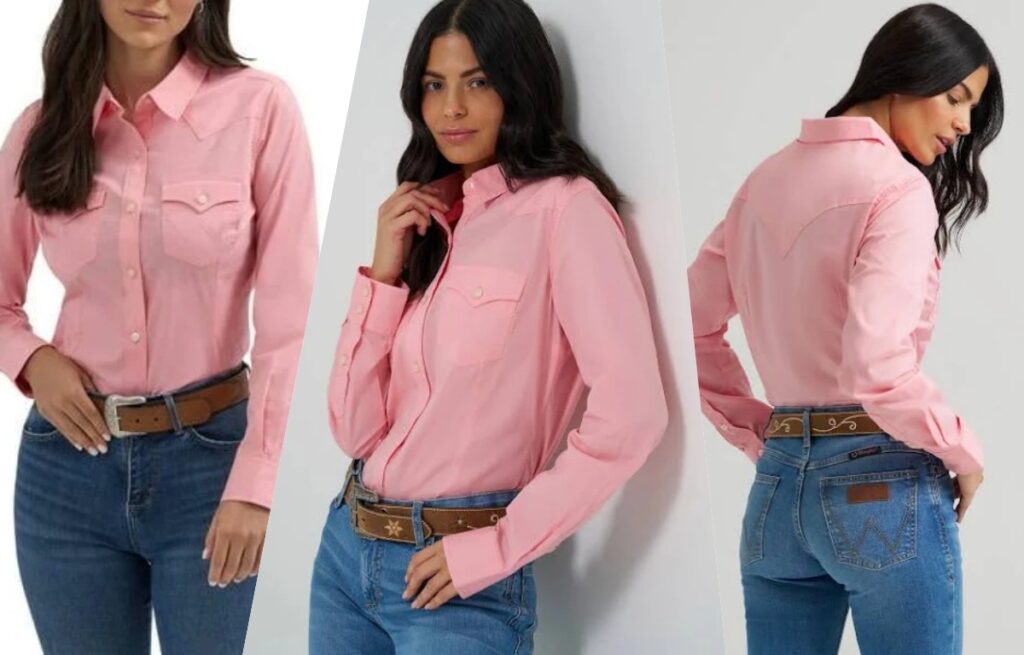
The Western shirt may have its roots in cowboy culture, but it has evolved far beyond rodeos and ranches. Today, it’s a fashion statement that bridges rugged Americana with tailored craftsmanship.
A Western shirt is defined by its pointed yoke seams, snap buttons, and structured silhouette—originally made for function, now celebrated for form and nostalgia.
Let’s take a closer look at what makes the Western shirt technically unique and commercially relevant.
What are the core design features that define a Western shirt?
The soul of the Western shirt is in its silhouette.
Key characteristics include front and back pointed yokes, pearl snap closures, flap pockets, and a slim, slightly curved fit.
These elements are not just visual—they serve historical and functional purposes.
What technical considerations go into fabric and construction?
Western shirts are typically more structured than casual button-ups.
They require firm yet breathable fabrics, reinforced seams, and precision yoke alignment to maintain their iconic shape and wearability.
Fabric Choices and Structural Details
Fabric Options
| Fabric Type | Purpose and Effect |
|---|---|
| Heavy cotton | Structure and durability |
| Chambray | Lightweight option for warm climates |
| Denim (mid-weight) | Classic rugged appeal without stiffness |
| Corduroy | Vintage texture and seasonal variation |
Key Construction Features
- Pointed Yokes: Provide structure across the shoulders and back
- Snap Closures: Faster and more durable than standard buttons
- Double-Flap Chest Pockets: Add balance to the front design
- Topstitching: Reinforces strength and adds bold visual lines
- Curved Hemline: Allows for untucked or tucked wear
- Tapered Fit: Slim fit across the waist for a tailored look
Attention to seam tension and topstitch alignment is critical to avoid puckering on yokes and front panels.
Who is buying Western shirts today?
Not just cowboys anymore.
The Western shirt now appeals to streetwear consumers, vintage lovers, and brands reintroducing heritage aesthetics into modern wardrobes.
| Audience Segment | Key Motivations |
|---|---|
| Heritage fashion fans | Nostalgia for Americana and authentic style |
| Streetwear followers | Contrast styling with modern sneakers or techwear |
| Vintage collectors | Seek out unique detailing like embroidery or piping |
| Country music lovers | Continue to wear it as a cultural staple |
Its style flexibility and strong structure make it adaptable across lifestyle, music, and subculture communities.
What are the manufacturing challenges when producing Western shirts?
The visual complexity increases the technical workload.
Western shirts demand precise symmetry on decorative yokes, evenly spaced snap placements, and durable stitching along high-movement areas.
Key Production Notes
- Pattern alignment: Yoke seams must mirror front and back for visual balance
- Snap testing: Snap buttons require strength tests for industrial washing
- Thicker thread for topstitching: Creates contrast lines and structural hold
- Double-needle seaming: Essential on shoulder, cuff, and yoke joins
- Embroidery quality control: Some Western styles feature piping or motifs that require high embroidery resolution
- Shrinkage management: Especially critical in heavy cotton or raw denim versions
Proper grading is essential to maintain chest mobility while preserving the fitted waistline, particularly in unisex or tall sizes.
How can modern brands refresh the Western shirt?
The Western revival isn’t just aesthetic—it’s cultural.
Brands can revitalize the Western shirt by adjusting the fit, softening the fabric, or fusing it with other shirt types (e.g. workwear, streetwear, or even utility shirts).
| Strategy Type | Implementation Example |
|---|---|
| Fit innovation | Oversized shoulders with cinched waistline |
| Fabric update | Sustainable cotton or recycled denim |
| Design fusion | Western yoke with utility pocket panels |
| Market niche focus | Limited editions for music festivals or collabs |
| Urban appeal | Tone-on-tone embroidery for subtle city style |
Collaborations with artists or musicians linked to Western aesthetics can also give it cultural relevance beyond the ranch.
Work Shirt
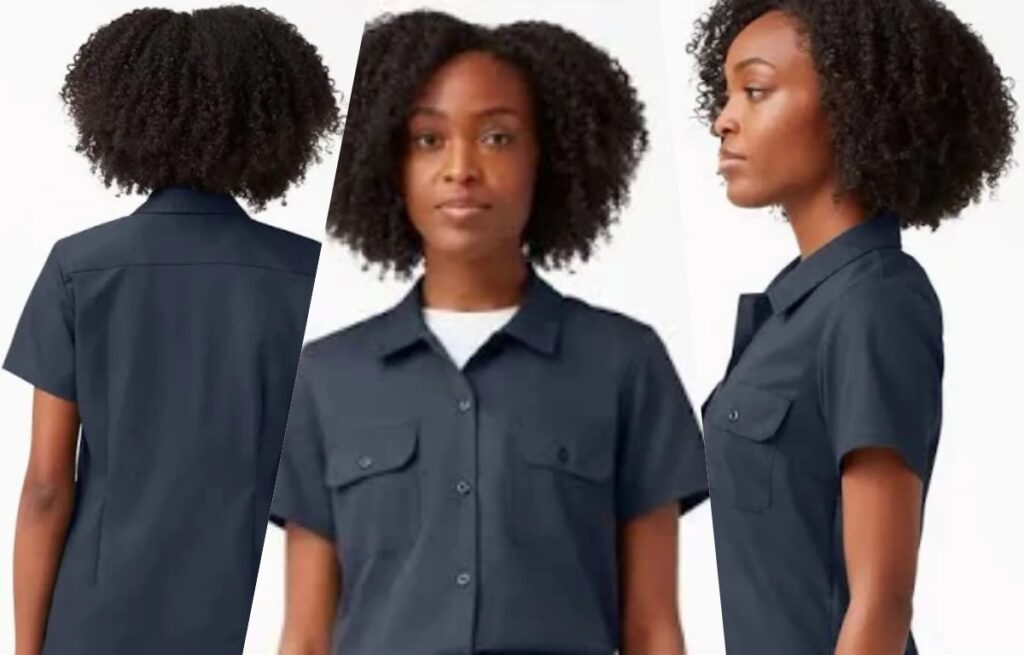
Originally built for durability and function in tough labor environments, the work shirt has evolved into a wardrobe essential across fashion and lifestyle markets.
A work shirt features reinforced stitching, utility pockets, and tough fabrics—offering a blend of industrial functionality and casual rugged aesthetics.
Its structure and simplicity continue to resonate with both blue-collar authenticity and modern minimalism.
What defines the structure and function of a traditional work shirt?
The original purpose was practical, not aesthetic.
A typical work shirt includes a boxy fit, double chest pockets, sturdy collar, and heavy-duty fabric built for physical work.
Every detail was developed with durability and ease of movement in mind.
What fabric and construction choices make a work shirt durable?
This garment starts with the material and finishes with reinforcement.
Work shirts typically use dense cotton, twill, or canvas, combined with reinforced stitching at stress points and bar-tacks at pocket corners
Technical Fabrication and Construction
Fabric Types & Benefits
| Fabric Type | Characteristics |
|---|---|
| Cotton twill | Tough, breathable, and naturally abrasion-resistant |
| Cotton canvas | Heavier, more rigid, excellent for outerwear |
| Cotton-poly blend | Adds wrinkle resistance and tensile strength |
| Ripstop | Used in tactical work shirts for tear prevention |
Construction Techniques
- Double or triple-needle stitching on major seams
- Bartack reinforcement at pocket corners and plackets
- Box pleats or side gussets for shoulder mobility
- Melamine or plastic buttons for heat and pressure resistance
- Collar stays or button-down points to prevent flaring
Work shirts also tend to be preshrunk or treated to reduce fabric warp after industrial laundering.
Who wears work shirts today—and for what purpose?
Once exclusive to laborers, now worn by everyone from tech workers to stylists.
Modern work shirts are favored for their straightforward design, durability, and versatility—making them popular across trade industries, fashion enthusiasts, and casualwear consumers.
| Audience Segment | Use Case |
|---|---|
| Tradespeople | Daily wear for physical durability and utility |
| Designers/Creatives | Styling with functional, utilitarian themes |
| Streetwear fans | Layering piece with raw, masculine appeal |
| Outdoor workers | Long-wear comfort and sun protection |
Their practical heritage aligns with both functionality and anti-fashion trends like normcore or utilitywear.
What are the key manufacturing challenges of work shirts?
These shirts seem simple but demand precision.
Manufacturers must balance heavy fabrics, flat seams, and uniform symmetry while maintaining mass production efficiency.
Manufacturing Notes
- Fabric weight calibration: Must ensure breathability while preserving structure
- Uniform seam allowances: Required for clean topstitching, especially on pockets
- Automated bartacking: Needed for stress-bearing areas without compromising output speed
- Panel alignment: Especially on multi-pocket designs to avoid asymmetry
- Shrinkage testing: Pre-wash or enzyme treatments are often necessary
Factories working with work shirts usually invest in high-speed flatbed sewing machines and automated buttonhole systems for consistent output.
How do brands adapt the work shirt for modern fashion?
Design tweaks are subtle but intentional.
Many brands now create hybrid work shirts by adjusting silhouette, reducing pocket bulk, or introducing premium fabrics to elevate utility into lifestyle.
| Adaptation Type | Fashion Implementation Example |
|---|---|
| Fit customization | Tapered waist, relaxed shoulder |
| Material upgrade | Brushed cotton, Japanese selvedge twill |
| Minimalist rework | Pocketless front, hidden placket |
| Lifestyle branding | Embroidery with streetwear labels or collabs |
| Gender-neutral line | Oversized cuts marketed as unisex utility pieces |
By keeping the original DNA but evolving design subtly, brands can appeal to both workwear purists and style-conscious consumers.
Safari Shirt
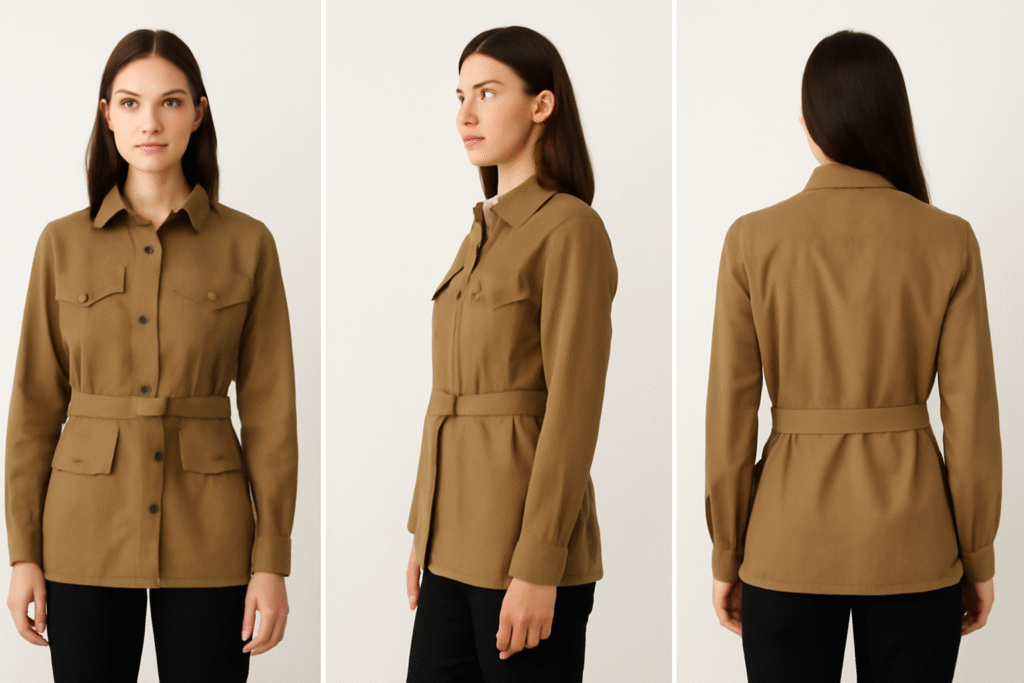
Originally designed for hot climates and rugged terrains, the safari shirt has found its place in both adventure gear and elevated casual fashion.
The safari shirt is defined by its multiple utility pockets, breathable fabrics, and military-inspired silhouette—designed for function but adapted for modern style.
Its evolution reflects the blending of utilitarian practicality and fashion-forward reinterpretation.
What key elements define a classic safari shirt?
The shirt is built around practicality and environmental adaptation.
Classic safari shirts feature four front pockets, epaulettes, a belted or adjustable waist, and are made with breathable, durable fabrics like cotton or linen blends.
These elements were originally meant for mobility, storage, and climate adaptability during outdoor expeditions.
What technical fabrics and construction methods support the safari shirt’s durability?
Durability must coexist with breathability.
Safari shirts typically use midweight cotton poplin, linen, or cotton-nylon blends with reinforced seams, bar-tack stitching, and double-needle finishing.
Technical Fabrication & Construction
Common Fabric Types
| Fabric | Features |
|---|---|
| Cotton poplin | Crisp feel, high breathability, good structure |
| Linen blend | Lightweight, heat-dispersing, adds a natural drape |
| Cotton-nylon mix | Increased durability, moisture-wicking capability |
| Ripstop | High tear resistance for rugged terrain |
Key Construction Techniques
- Double-stitched seams for added tensile strength
- Bartack reinforcements at pocket corners and epaulette bases
- Box pleats or back vents for movement
- Topstitched pockets and flaps for clean structure and durability
- Ventilation eyelets in armpits for airflow in high-temp zones
These technical details allow the shirt to maintain its shape and performance in outdoor environments.
Who wears safari shirts today—and for what purpose?
It has evolved from field gear to fashion staple.
Safari shirts are favored by outdoor enthusiasts, fashion consumers, and travel wear brands alike for their balance of comfort, functionality, and rugged appeal.
| User Segment | Application Scenario |
|---|---|
| Outdoor travelers | Layered lightweight protection in hot environments |
| Fashion-forward buyers | Used as a statement piece with military utility vibes |
| Photographers/field crew | Multi-pocket practicality for tools and gear |
| Safari/lodge workers | Uniform aesthetic with function built-in |
Today, it’s not just about practicality—it’s also about aesthetic positioning and lifestyle branding.
What are the challenges and nuances in manufacturing safari shirts?
This garment demands more than average precision.
With multiple functional features—pockets, flaps, epaulettes, waist belts—safari shirts require advanced pattern making and seam balancing to avoid misalignment and fabric distortion.
Manufacturing Considerations
- Pocket placement precision is critical to avoid asymmetry
- Reinforced stitching at stress points like belts and buttonholes adds complexity
- Belt channel integration must not interfere with side seams
- Fabric preshrink treatments are often needed to prevent garment warping
- Back yoke and armhole mobility must be fine-tuned for comfort without compromising the structured look
Manufacturers often rely on a combination of automated pocket-setting machines and skilled finishing workers to achieve consistent quality in safari shirt production.
How are brands reimagining the safari shirt for modern consumers?
Designers are now elevating form without abandoning function.
Fashion brands adapt safari shirts by streamlining pockets, introducing performance fabrics, and emphasizing silhouette through cropped fits or oversized looks.
| Brand Strategy | Execution Style |
|---|---|
| Minimalist approach | Reduced pockets, slimmer fits, soft shoulder cuts |
| Performance fusion | Quick-dry nylon blends, hidden ventilation panels |
| Elevated luxury | Italian cottons or Japanese linen with horn buttons |
| Utility revival | Cargo-styled with cinch belts and tactical stitching |
| Gender-inclusive cuts | Boxy shapes with flexible sizing and neutral styling |
The result is a modern product that remains rooted in its original purpose but speaks to today’s design expectations.