Skip to content
Logo printing on T shirts is more popular than ever — but can every shirt material handle it?
Yes, it is absolutely possible to print logos on T shirts. The final result depends on the printing method and the fabric used.
In this post, I’ll walk you through the different fabric types, printing techniques1, and key tips for ensuring your logo prints come out clean, durable, and professional — whether you’re a brand, a team, or a supplier.
Understanding Logo Printing on Different T Shirt Fabrics?
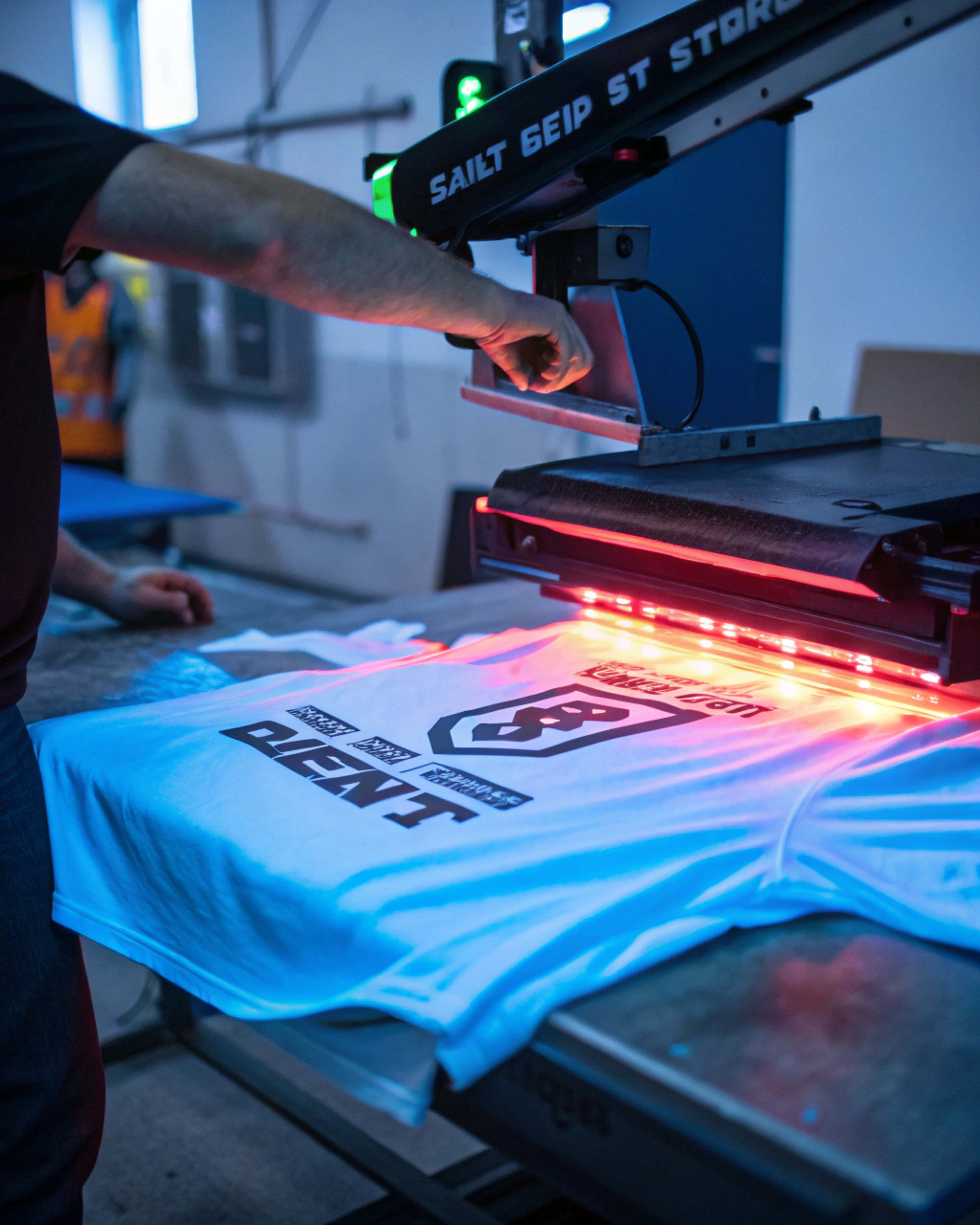
Heat Press Printing
Not all fabrics behave the same under heat, ink, or pressure.
The fabric you choose will directly affect the print quality, clarity, and wash durability of your logo.
Which T Shirt Fabric Works Best for Screen Printing?
Screen printing is known for vibrant colors and long-lasting results — but it works better on certain fabrics.
Cotton, especially combed or ring-spun cotton, is the best fabric for screen printing2. It absorbs ink well and holds detail clearly.
| Fabric Type | Screen Print Compatibility | Notes |
|---|---|---|
| 100% Cotton | Excellent | Soft hand feel, deep ink absorption |
| Cotton-Poly Blend | Good | Slightly less absorbent, but acceptable |
| 100% Polyester | Challenging | Requires special ink and pretreatment |
Avoid coarse or uneven fabrics if your logo includes small text or intricate lines.
Can You Print Logos on Polyester or Blended Fabrics?
Yes, but you need to choose the right printing method.
Polyester and blends can be printed on, but they require specific inks and lower temperatures to avoid distortion or dye migration.
Polyester reacts differently to heat. If you’re using sublimation or heat transfer3, it’s often a preferred material. However, for screen printing, low-bleed inks and careful curing are necessary to avoid color shifts.
Blends like 60/40 cotton-poly offer a balance — they’re easier to print than 100% poly and more durable than cotton alone.
Popular Printing Techniques for Logo T Shirts?
There’s more than one way to print a logo. Each method has its pros and cons based on the fabric.
The three most popular methods are screen printing, heat transfer, and DTG (Direct-to-Garment).
How Does Screen Printing Compare to Heat Transfer on Different Fabrics?
Screen printing is more durable, but heat transfer is more flexible with design complexity.
For high-volume and bold logos, screen printing is the best. For multi-color or small runs, heat transfer offers better flexibility.
| Method | Durability | Best Use Case | Suitable Fabrics |
|---|---|---|---|
| Screen Print | High | Bulk orders with simple graphics | Cotton, blends |
| Heat Transfer | Medium | Small orders, complex/multi-color | Poly, cotton, blends |
| Sublimation | High | All-over or photo prints on poly | 100% polyester only |
Use heat transfer vinyl (HTV) for single-color logos on polyester sportswear. It has excellent edge definition and stretch.
Is Direct-to-Garment (DTG) Printing Suitable for All T Shirt Fabrics?
Not all fabrics respond well to DTG.
DTG is best suited for 100% combed cotton fabric4s. Synthetic fabrics like polyester often repel the ink and may result in fading or blotches.
DTG works like an inkjet printer — spraying water-based ink directly onto fabric. For vibrant prints and longer durability, DTG needs a smooth, absorbent surface.
If you must use DTG on a blend, choose a 60/40 cotton-poly blend with a white or light-colored base.
Durability of Logo Prints on T Shirt Fabrics?
Once printed, you want the logo to last — even after 20 washes.
Fabric type, ink compatibility5, and curing method all impact how long your logo stays sharp.
Why Does Fabric Type Affect Logo Longevity After Washing?
Different fibers hold ink differently.
Cotton absorbs ink deeply, which anchors the print well. Polyester resists moisture, so ink sits on the surface and is more likely to crack or peel.
| Fabric | Logo Durability After 20 Washes | Reason |
|---|---|---|
| 100% Cotton | High | Deep ink penetration |
| Cotton Blend | Medium-High | Balanced absorbency |
| Polyester | Medium | Surface prints, may peel or fade |
Also, pre-washed or enzyme-treated fabrics offer better surface consistency and reduce shrinkage — which helps logos stay aligned and clean.
How to Prevent Cracking or Fading of Logos on Shirts?
Even good prints can go bad if not cured or washed properly.
Ensure proper ink curing (especially in screen printing), avoid over-drying in heat transfer, and educate your customers on care instructions.
Tips to improve durability:
- Use low-bleed, stretchable inks for poly and blends
- Set heat press temperatures correctly to avoid scorching
- Avoid tumble drying or harsh detergents during washing
- Use plastisol inks for longer-lasting prints on cotton
- Apply pre-treatment evenly when using DTG printing
When logos crack or fade, it’s usually a problem of temperature or ink incompatibility — not just the fabric.
Choosing the Right T Shirt Fabric for Your Logo Project?
There’s no one-size-fits-all fabric — it depends on your project’s goal.
Cotton is best for retail, while polyester shines in sports and promotional markets. Blends offer a good middle ground.
Is Cotton Always the Best Choice for Logo Printing?
Cotton is a safe and consistent choice.
For screen printing and DTG, 100% combed cotton offers the best combination of ink absorption, comfort, and image clarity.
Benefits of cotton:
- Rich color depth
- Smooth print finish
- Skin-friendly and breathable
- Works with most inks and printing methods
However, cotton shirts can shrink slightly and may wrinkle more than synthetic blends.

When Should You Use Polyester or Performance Fabrics Instead?
If you’re printing for athletes, workers, or giveaways — cotton may not be ideal.
Polyester dries quickly, resists wrinkles, and is more durable in tough environments.
Polyester and blends are preferred when:
- Moisture-wicking is needed (gym or sportswear)
- Lightweight, cool-touch feel is desired
- Budget constraints demand a lower-cost option
- Heat transfer or sublimation is the preferred method
Performance blends (like poly-spandex) are great for fitness brands, but make sure your printing partner has experience handling stretch fabrics.
Tips for Getting Professional-Quality Logo Prints?
Great logo shirts don’t just depend on fabric. Preparation, printing, and post-printing care matter too.
Working with experienced printers and providing clear design files will make a big difference.
How to Prepare Your Logo Design for T Shirt Printing?
Before printing, your logo should be optimized for fabric printing.
High-resolution vector files (AI, SVG, EPS, or PDF) are ideal for scaling, editing, and color separation.
Checklist before sending your logo:
- Use CMYK for screen and DTG printing
- Convert text to outlines (fonts may not transfer)
- Ensure resolution is 300 DPI minimum
- Simplify colors if using screen printing
- Avoid gradients unless using DTG
Poor design prep often results in blurry or misaligned prints — even on premium fabrics.
Why Working with Experienced Printers Ensures Better Results?
A good printer understands how ink reacts to fabric, heat, and pressure.
Experienced printers know how to adjust curing time, ink type, pressure, and placement depending on the shirt material.

Benefits of working with pros:
- Accurate Pantone matching
- Less print bleeding or distortion
- Better wash tests and QC
- Faster turnaround with fewer misprints
- Knowledge of compliance (REACH, OEKO-TEX inks)
If you’re working with bulk orders, always request a sample first — and don’t hesitate to ask for fabric compatibility tests.
Conclusion
Yes, it’s absolutely possible to print logos on shirts — but fabric choice, print method, and execution all affect the outcome. For best results, choose the right fabric for your purpose, match it with a suitable printing method, and always work with professionals who understand how to make your logo look great and last long.
-
Learn about various printing techniques and their best use cases for T shirts. ↩
-
Discover the advantages of screen printing for vibrant and durable logo designs. ↩
-
Explore the flexibility and applications of heat transfer printing for logos. ↩
-
Find out why cotton is often the go-to choice for high-quality T shirt printing. ↩
-
Explore the importance of ink compatibility for achieving high-quality prints. ↩