Skip to content
When I first entered the apparel industry, I thought “apparel production” was simply about stitching fabrics together. But after years of running Modaknits and working with international brands, I’ve learned it’s a far more intricate process. Apparel production is the beating heart of the fashion supply chain—it’s where creative concepts transform into tangible garments ready for retail shelves.
In business terms, apparel production1 refers to the complete end-to-end process of turning a design into a market-ready garment, overseen and executed by apparel manufacturers2. It involves multiple interlinked stages, from sourcing raw materials to cutting, sewing, quality checking, packaging, and shipping. Without a clear understanding of this process, a fashion brand risks delays, cost overruns, and inconsistent quality.
For new fashion entrepreneurs, recognizing the scope of apparel production is crucial to making smart operational decisions. Every step—from choosing the right fabrics to setting realistic lead times—directly impacts brand reputation and profitability. A well-structured production plan doesn’t just ensure efficiency; it allows for flexibility when market trends shift or unforeseen challenges arise. The most successful brands treat their production partners as strategic allies, leveraging their expertise in material sourcing, technical construction, and compliance to consistently deliver products that meet both design vision and market demand.
Understanding the Connection Between Apparel Production and Apparel Manufacturer Meaning
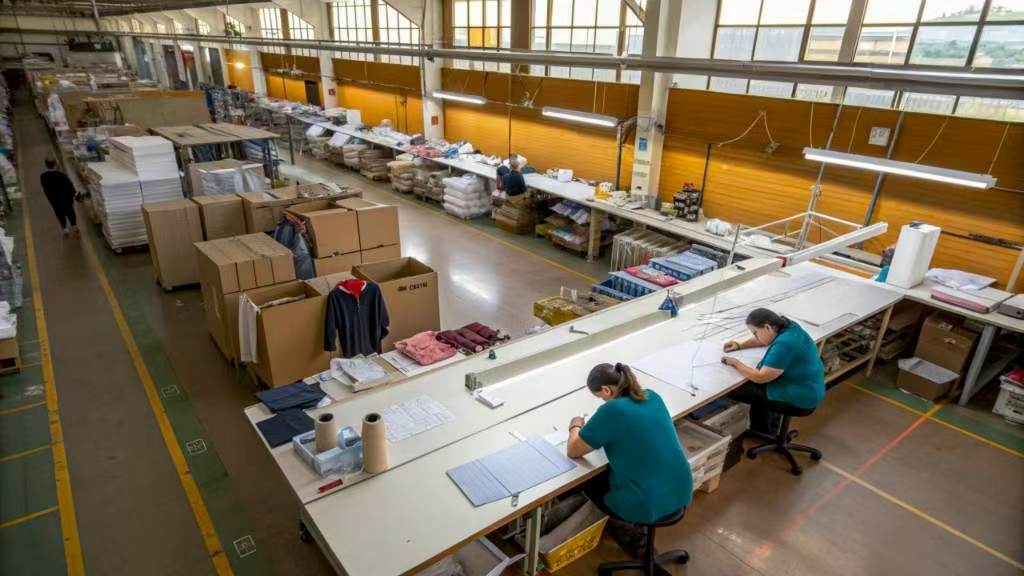
Pattern making
How does “apparel production” relate to the role of an apparel manufacturer?
Simply put—production is what defines an apparel manufacturer. As a manufacturer, my role is not limited to operating sewing machines. I manage design translation3, fabric sourcing4, pattern development, production planning, quality control5, and delivery logistics. The type of manufacturer you work with—OEM, ODM, or full-package—will dictate how much of the production chain they handle.
Why is production the core function of apparel manufacturing companies?
Without production, “manufacturer” is just a label. Here’s why it’s our core:
- Revenue Generation – It’s the stage where a brand’s creative ideas turn into saleable inventory.
- Brand Consistency – Production directly affects product quality, fit, and brand perception.
- Operational Efficiency – A well-managed production system saves time and cost while reducing waste.
Key Stages of the Apparel Production Process
What steps are involved from design concept to finished garment?
From my own experience, the stages look like this:
- Design & Tech Pack Creation – Translating creative sketches into detailed production blueprints.
- Material Sourcing – Selecting fabrics, trims, and accessories that meet the design’s functional and aesthetic goals.
- Pattern Making – Creating the physical and digital templates used for cutting fabric.
- Sample Development – Producing prototypes for fit and quality checks.
- Bulk Production – Cutting, sewing, and assembling garments in volume.
- Finishing – Adding labels, washing, ironing, and final touches.
- Packaging & Shipping – Preparing the product for distribution.
How do sampling, bulk production, and quality control work in practice?
- Sampling: A safeguard step to test design, fit, and construction before mass production.
- Bulk Production: The scaling phase where approved samples are replicated.
- Quality Control: Inspections at fabric, mid-production, and final stages to maintain consistency.
Types of Apparel Production Models
What is the difference between cut-and-sew, knitwear, and fully automated production?
| Production Model | Description | Best Suited For |
|---|---|---|
| Cut-and-Sew | Fabric is cut into pieces and sewn together by skilled operators. | T-shirts, hoodies, sportswear. |
| Knitwear | Garments are knitted directly from yarn, often with fewer seams. | Sweaters, socks, cardigans. |
| Fully Automated | Uses advanced machinery and minimal manual work. | Fast fashion basics, large-volume orders. |
How do OEM, ODM, and full-package production differ in scope?
- OEM (Original Equipment Manufacturer) – Client provides designs, manufacturer produces.
- ODM (Original Design Manufacturer) – Manufacturer designs and produces, client applies branding.
- Full-Package Production – Manufacturer handles design, sourcing, production, and logistics.
Global Hotspots for Apparel Production
Which countries are leading in cost-effective apparel manufacturing?
- China – High capacity, advanced technology, and diverse fabric sourcing.
- Bangladesh – Competitive labor costs, excellent for large-scale basics.
- Vietnam – Technical expertise in sportswear and high-quality stitching.
Why are certain regions preferred for luxury, fast fashion, or activewear production?
- Luxury – Italy and France for artisanal craftsmanship.
- Fast Fashion – Turkey, China, and Bangladesh for rapid lead times.
- Activewear – Vietnam, Taiwan, and China for performance fabrics.
Why Understanding Apparel Production Matters for Brand Owners
How does production choice affect cost, quality, and brand positioning?
- Cost – Labor, materials, and logistics vary significantly by country and process.
- Quality – High-skill labor and specialized machinery elevate product standards.
- Brand Positioning – “Made in Italy” signals luxury; “Made in Bangladesh” signals value.

What mistakes should startups avoid when selecting a manufacturing partner?
- Choosing purely based on lowest price.
- Skipping sample approval before bulk production.
- Ignoring certifications for sustainability or compliance.
- Failing to define clear timelines and payment terms.
Cost Structure of Apparel Production
From my factory’s perspective, here’s the typical cost breakdown for a mid-range women’s blouse:
- Materials (40%) – Fabric, trims, labels.
- Labor (25%) – Cutting, sewing, finishing.
- Overhead (15%) – Machinery, electricity, factory rent.
- Logistics (10%) – Shipping, customs, handling.
- Quality Control (5%) – Inspections, defect management.
- Miscellaneous (5%) – Packaging, admin.
Risk Management and Quality Control
To avoid production disasters:
- Pre-Production QC – Check fabric shrinkage, colorfastness, and defect rates.
- Inline QC – Inspect random batches during production.
- Final QC – 100% inspection or AQL (Acceptable Quality Level) checks before shipment.
Pro Tip: Hire an independent third-party QC agency if you cannot visit the factory.
Global Apparel Production Hub Profiles
China – Best all-rounder with vast supply chain and modern equipment.
Bangladesh – Ideal for budget basics, but requires strong QC oversight.
Vietnam – Strong in technical wear, higher costs but excellent craftsmanship.
Turkey – Fast turnaround for Europe, skilled in denim and knitwear.
USA – Higher labor costs, but ideal for small-batch premium production.

Future Trends in Apparel Manufacturing
- Automation & AI – 3D pattern making, AI-assisted quality inspection.
- Sustainable Materials – Recycled polyester, organic cotton.
- Nearshoring – Moving production closer to sales markets to cut lead times.
Pro Manufacturer Tips for Brand Owners
- Always start with a small test order before scaling.
- Negotiate payment terms that align with your cash flow.
- Keep communication frequent and detailed—avoid vague instructions.
- Visit the factory in person or via video before signing contracts.
Conclusion
As someone who’s spent years in this industry, I can say apparel production is as much about relationships and strategy as it is about machines and fabrics. The right manufacturer can be your greatest business ally. The wrong one can drain your budget and damage your brand reputation.
-
Explore this link to understand the intricate process of apparel production and its significance in fashion. ↩
-
Learn about the essential functions of apparel manufacturers and how they impact the fashion supply chain. ↩
-
Discover how design translation transforms creative ideas into market-ready garments. ↩
-
Understand the importance of fabric sourcing in ensuring quality and meeting design goals. ↩
-
Find out how effective quality control can enhance product consistency and brand reputation. ↩